Today is the 100th birthday of the US National Parks Service!
Read More “Celebrate the Centennial of the US National Parks Service with a Free Chapter”
the blog from Environment and Society
Read More “Celebrate the Centennial of the US National Parks Service with a Free Chapter”
In a presidential election year such as this, I as an American citizen am constantly inundated by the displays of political theater that have come to mark the quadrennial spectacle of our democracy: the conventions, photo ops, caricatures, impassioned speeches, and more. 2016 has been unique in that the specter of populism—which, to paraphrase Marx, has long haunted the United States of America—has come to overshadow “politics as usual.” Americans have watched in wonder on television and social media as populists Donald Trump and Bernie Sanders took the nation by storm (albeit with a few major ideological and strategic differences between them). However, with all of the showmanship and wonder surrounding the election of our country’s most powerful individual, it cannot be forgotten that the currents that drive national waves are playing out in unique ways across our country, in communities large and small alike.
Read More “Where the Grass Is Greener: The Case for Anthropology in an Age of Populist Sentiment”

As a Gregory Bateson scholar, I have long been fascinated with the notion that art and science might complement one another in the effort to bring forth, understand, and represent the “wholeness” of our more-than-human worlds. Far from pantheistic, Bateson’s notion of wholeness refers to the complex, nonlinear, multiscale relationships by means of which organisms, ecosystems, states of mind, cultural predispositions, and the socio-natural worlds we live in continuously unfold into being. Alas, the tenets of modern science that dominated many disciplines for most of the twentieth century were characteristically reductionist, thus inhibiting scientists from acknowledging and understanding the entangled nature of “natural” and of social phenomena. Even in light of the epistemological revolution that systems thinking portends, the representation of complexity and patterns that connect itself posed—and continues to pose—challenges to scientists and science communication experts.
Read More “The Art of Seeing: Grasping More-Than-Human Plant Worlds beyond Objectified “Nature””

When standing in the middle of the transit hub in Charlotte, the noise of buses and passengers overwhelms the senses. Over twenty bays serve at least that many bus lines, and the roof amplifies brake sounds, honking, engine noises, and chatter. My students astutely suggested that interviews would be nearly impossible to record. But over several years, we collected interviews and surveys in this space, studying how transit riders in Charlotte accessed fruits, vegetables, and other foods. We wrote reports for our partner organization, Friendship Gardens, about the perception and use of the mobile farmers market they provided at the transit hub on Thursday afternoons.
Read More “Nicole Peterson: Challenges for Urban Food Access in an Era of Big Data”
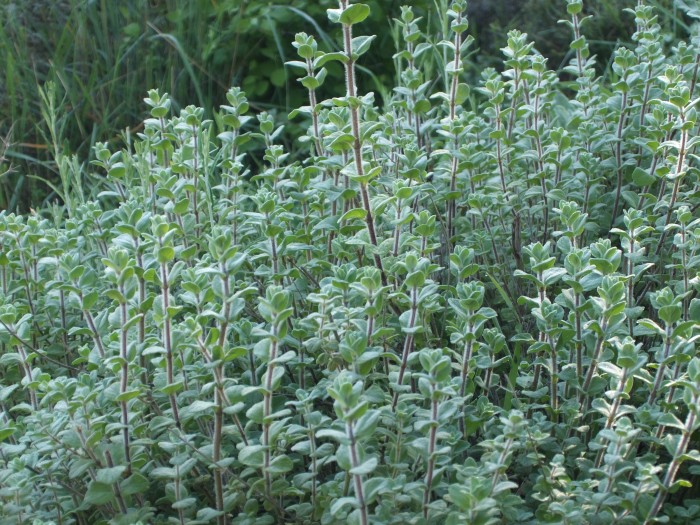
The 2016 issue of Environment and Society focuses on “Plants and Peoples.” In some of the humanities and social sciences, human-plant studies, like those of human-animal relations, are perhaps in danger of being subsumed by the broader rubric of a multispecies approach to ecological assemblages. Perhaps this will be a fruitful path to take, but it may also betray a lack of intellectual commitment to what are after all quite recent engagements with, and foregrounding of, human-nonhuman relations and political conditions. Maybe we shouldn’t let the Questions of the Animal and the Plant escape our attention quite yet, before we have satisfactorily traced their complex meanderings through our sociopolitical ecologies. There are still radical stories to tell before they escape, or are rendered into the all-encompassing Gaia of a multispecies approach. As a contribution to this storytelling, here is some “plant-thinking” in the context of recent ecological developments in Palestine/Israel.

The latest Environment and Society featured article is now available! This month’s article, “Contradictions in Tourism: The Promise and Pitfalls of Ecotourism as a Manifold Capitalist Fix,” comes from Volume 3 (2012). Robert Fletcher and Katja Neves review an interdisciplinary literature exploring the relationship between tourism and capitalism focused on ecotourism in particular.
Visit the featured article page to download your copy of the article today before it’s gone! A new article is featured every month.
ROBERT FLETCHER is associate professor in the Sociology of Development and Change group at Wageningen University in the Netherlands. He has conducted ethnographic research in North, Central, and South America concerning the practice of ecotourism as a strategy for environmental conservation and sustainable development in addition to working for many years as an ecotourism guide and planner in a variety of locations. He is the author of Romancing the Wild: Cultural Dimensions of Ecotourism (Duke University Press, 2015).
KATJA NEVES is associate professor of Sociology of the Environment at Concordia University, Montreal, Canada. She has recently completed two research projects funded by the Social Sciences and Humanities Research Council (SSHRC) Canada (a Standard Research Grant and an Insight Development Grant) to investigate the contemporary reinvention of urban botanical gardens around the world as agents of biodiversity conservation. Results of this research will appear in her forthcoming book, Post-Normal Conservation: The Re-Ordering of Biodiversity Governance and Environmental Subjectivity, which accounts for the emergence of urban socio-natures and the establishment of multistakeholder governmentality within the context of post-2008 austerity discursive economic frameworks. In 2016, Dr. Neves began a new five-year SSHRC-funded project (an Insight Research Grant) titled Botanic Gardens and the Politics of National and Transnational Environmental Governance. It tackles newly emerging systems of environmental governance while going beyond extant accounts of neoliberal biodiversity conservation. Additional information can be found here.
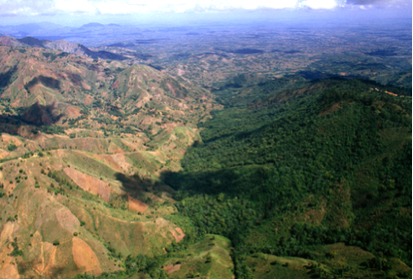
Haiti has been the unfortunate recipient of many an exaggerated moniker, including the poorest country in the Western Hemisphere, the Republic of NGOs, and the most deforested country in the Americas—to name just a few.
Concerning this latter label, virtually every single popular media description, development narrative, and academic account addressing deforestation in Haiti over the past five decades opens with the cliché citation of a grim and staggering statistic: only 2 percent of Haiti is forested.
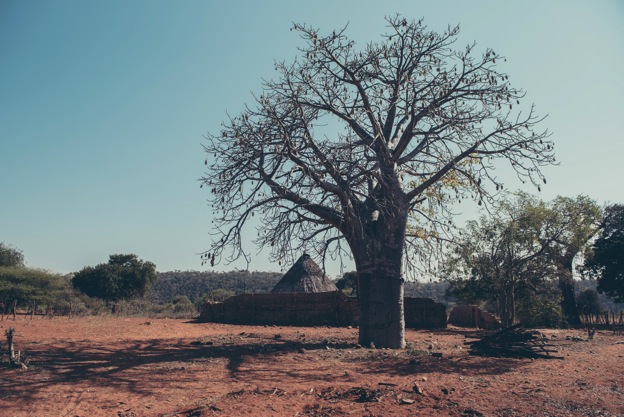
Superfoods and superfruits are terms we have increasingly become accustomed to. Although these terms are variably defined (click here, or here, or here), as their names suggests, these are foods that are marketed as being nutrient rich. In fact, one website touts these foods as “ancient abundant energy,” claiming that they provide the “planet’s best and most powerful” sources of “natural nutrition.” The “superfood” term does not originate from dietetics or nutritional science but is in fact widely understood as a clever marketing tool.[1] Despite the relative lack of evidence to support claims of these foods as the “most powerful,” the superfood trend remains a powerful attracting force. For example, you would be hard-pressed to find someone willing to pay more than $5 for a blueberry smoothie, but if you called it a “superfood smoothie,” my guess is that many urban gym goers would be convinced that their breakfast shake is providing them with all the nutrients and energy that they need for the day, and therefor they might not be bothered by a higher price tag. If I were reading this right now, I would be asking “And so, if a wealthy urbanite wants to spend $8 on a smoothie, how is this an issue that should feature on a blog focused on environment and society?”
Read More “Superfoods: The Impacts of Marketing “Nutrient Powerhouses” on Edge-Dwellers”

The latest Environment and Society featured article is now available! This month’s article, “Mapping the Food Movement: Addressing Inequality and Neoliberalism,” comes from Volume 2 (2011). Teresa Marie Mares and Alison Hope Alkon bring together academic literature tracing contemporary social movements centered on food, unpacking the discourses of local food, community food security, food justice, and food sovereignty.
Visit the featured article page to download your copy of the article today before it’s gone! A new article is featured every month.
TERESA MARIE MARES is assistant professor of anthropology at the University of Vermont and is affiliate faculty with the graduate program in Food Systems. She received her PhD in 2010 from the University of Washington in sociocultural anthropology. She is currently studying food access issues among Latino/a farmworkers in Vermont.
ALISON HOPE ALKON is assistant professor of sociology at the University of the Pacific. Her research examines food systems from an environmental justice perspective, focusing on issues of food access, racial identity formation, and inequality. She also uses efforts to create sustainable local food systems as a lens through which to understand the green economy more broadly. She is co-editor of Cultivating Food Justice: Race, Class and Sustainability (2011).
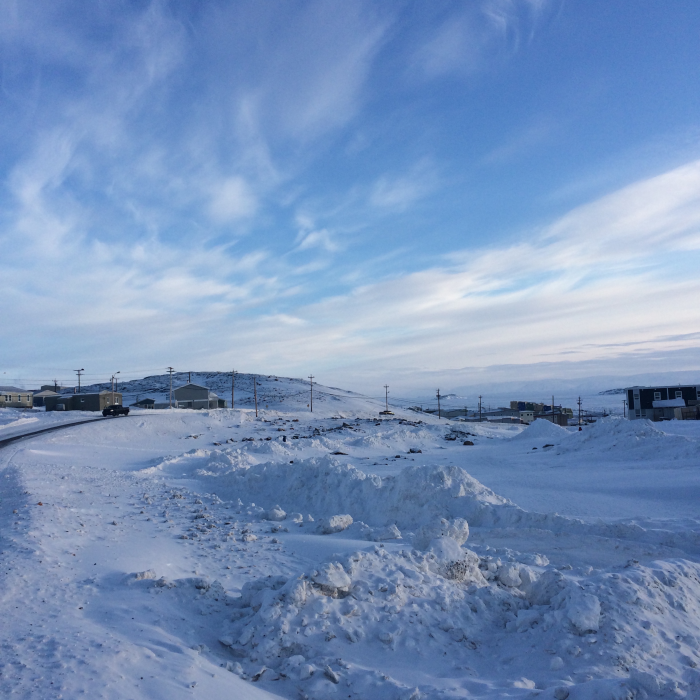
Despite action in Paris, we still need to listen to Inuit peoples in climate change research to better inform decision-making in the years to come
Arctic Indigenous peoples have thrived under some of the globe’s most extreme environmental conditions. Despite the dramatic impacts of climate change on the Canadian Arctic, which is occurring at twice the global rate, Inuit peoples in Canada aim to continue living and hunting on their traditional lands at the top of the world. But without adequate access to adaptation funding, the next generations of Inuit may not be able to effectively do so. Arctic leaders at COP21 this past December in Paris stressed that the unprecedented pace of anthropogenic climate change has made adaptation much more difficult and that northern communities need assistance to adapt to climate change. However, while there is some mention of Indigenous peoples, the final agreement doesn’t appear to have any commitment to work with them.
Read More “Can We Hear Them Now? Listening to Inuit Voices in Arctic Policy and Research”