Blog

The Trouble with Bats: Valuing Urban Naturecultures

This post is presented in this week’s series recognizing Earth Day, Friday, April 22.

“Qu’est-ce qu’on va faire à propos des chauves-souris?”

What are we going to do about the bats?

I sit among a small cluster of locals and expats as we sip on coffee and soft drinks sweetened by locally grown sugarcane. We are crowded around a collection of bistro tables pushed together in the center of a busy café. The tropical sky overhead is clear, with not a single cloud in sight. No birds. No bats either.

They came for the bats—not to kill them. No, we are here to discuss ways of relocating the unwelcome creatures elsewhere. Elsewhere could be anywhere—just as long it was away from the towns, away from the orchards. In short, away from humans.

Blog

Kiribati and Climate Change: The Untold Story

This post is presented in this week’s series recognizing Earth Day, Friday, April 22.

On 16 November 1989, Kiribati Minister of Home Affairs and Decentralization Babera Kirata addressed the general forum at the Small Island States Conference on Sea Level Rise in Malé Island. Highlighting his nation’s concern over the emerging greenhouse effect theory, he stated:

Over the centuries the question of rising in sea level was never heard of. Our ancestors had lived happily for centuries on our islands, without fear that one day, our beautiful homes may be lost as a result of the deterioration in the environment. We in this present generation have inherited those small islands and we are very proud to be owners of the beautiful homes, which our ancestors had secured for us … The ground water would easily become saline, making it impossible to obtain potable water, and agriculture would be destroyed. The plankton upon which fish live on will disappear, and the livelihood of Kiribati people, who depend on fish, would be seriously affected. The effect of rising in sea level, accompanied by strong winds and high waves would be disastrous for Kiribati. (Kirata 1989: 2–3)

Blog

Why Won’t “Overpopulation” (Finally) Go Away?

This post is presented in this week’s series recognizing Earth Day, Friday, April 22.

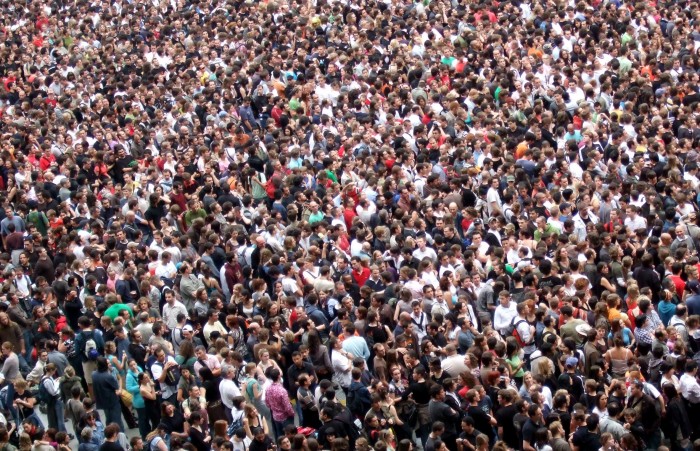
The age-old specter of “overpopulation,” it seems, is back in vogue among environmentalists once more. “Our population,” writes celebrity biologist E.O. Wilson on the first page of his new book Half-Earth, “is too large for safety and comfort.” Celebrity economist Jeffrey Sachs agrees, arguing in his own new book on sustainable development that “our starting point is our crowded planet.” Meanwhile, in Life on the Brink: Environmentalists Confront Overpopulation, an eclectic collection of writers come together to “reignite a robust discussion of population issues among environmentalists, environmental studies scholars, policymakers, and the general public.” At the same time, the Foundation for Deep Ecology has launched a campaign called Global Population Speak Out, supported by a collection of evocative photographs, to explore “connections between the size and growth of the human population and key sustainability issues.” This focus has been reinforced by recent projections that the global population may reach nearly ten billion by 2050, revising previous assertions of an imminent level-off at nine billion or less. Despite decades of debate and concerted efforts to point out the problems in its framing, “overpopulation,” it seems, is squarely back on the environmental agenda yet again.

Blog

A Research Question: Bees, Theories, and Whether Posthumanism Comes to Matter

1

In responding to Eduardo Kohn’s recent scholarship on How Forests Think, Bruno Latour has written:

The test is still to come: how could an ethnographer … equipped with such a philosophical anthropology find ways to make his or her ontological claims understood in negotiating what a forest is made of, when faced with forestry engineers, loggers, tourists, NGOs, or state administrators? (2014: 265–266)

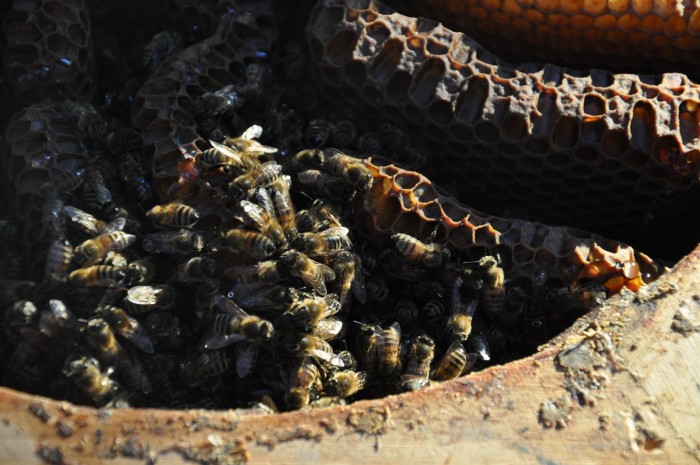
Indeed, I wonder the same thing. How might anthropology’s recent “posthuman” and “multispecies” turns be useful? These ontologically inspired theories elegantly dismiss the duality of nature/culture and hold forth a vision of symmetry in the world, yet doing so, as Lucas Bessire and David Bond have argued, is an “unmoored form of speculative futurism” that sidesteps the political and historical realities of life (2014: 441). So I wonder, in politically and historically forged spaces, how can these theories be made useful? Exploring the practical value of anthropology’s recent posthuman/multispecies approaches in politically charged agricultural border zones, such as to aid the honeybee populations who face dire global collapse, is precisely what I wish to do.

Blog

Anthropocene Science: There May Be Trouble Ahead

Now and then scientists act in concert to speak truth to power. Back in the 1970s, for example, they invented and used the idea of a “nuclear winter,” which became a semantic weapon that helped de-escalate the Cold War arms race between the communist countries and members of NATO. Today the daily war against Earth is a prime focus: teams of scientists have coined new terms to sound the alarm about humanity’s various misuses of the nonhuman world. Chief among them is the Anthropocene. It describes human impacts on Earth of such scope, scale, and magnitude as to initiate a new phase of the planet’s 4.5-billion-year history. “Anthropo” means people, “cene” an extended period: “the age of humans,” as a rough translation. Originating in environmental science at the turn of the millennium, the Anthropocene may soon graduate from an academic buzzword to a keyword—that is, one of those terms that animates inquiry within and between a plethora of disciplines over a long period of time (in the ways that “globalization” and “genetic modification” have done since the mid-1990s).

Blog

New Featured Article!: “Origins, Uses, and Transformation of Extinction Rhetoric” Available as Free PDF

The latest Environment and Society featured article is now available! This month’s article, “Origins, Uses, and Transformation of Extinction Rhetoric,” comes from Volume 1 (2010). Richard Ladle and Paul Jepson trace the historical origins of the extinction concept and discuss its power to influence policies, agendas, and behaviors.

Visit the featured article page to download your copy of the article today before it’s gone! A new article is featured every month.

RICHARD LADLE is Titular Professor of Conservation Biogeography and Director the 21st Century Conservation Lab at the Federal University of Alagoas. He is  a Senior Research Associate at the School of Geography and the Environment, Oxford University, where he was formerly the Course Director of the MSc degree program in Biodiversity, Conservation, and Management (2003–2009). He has diverse and interdisciplinary research interests that span all aspects of the theory and practice of conservation.

PAUL JEPSON directs the MSc in Biodiversity, Conservation and Management at the University of Oxford. He transferred to academia from a career in conservation policy, working in the UK, Indonesia, and Indochina, and he now leads an interdisciplinary conservation governance laboratory working to generate novel and creative insight to help ensure the relevance and impact of conservation in the twenty-first century.

Blog

Public Statement on Zika Virus in Puerto Rico

This essay was originally published on Savage Minds on 15 March 2016.

This call to action was written by Adriana Garriga-López, Ph.D. (Kalamazoo College), and Shir Lerman, M.A., M.P.H., PhD Candidate (University of Connecticut), with Jessica Mulligan, Ph.D. (Providence College), Alexa Dietrich, Ph.D., M.P.H. (Wagner College), Carlos E. Rodríguez-Díaz, PhD, MPHE, MCHES (University of Puerto Rico), and Ricardo Vargas-Molina, M.A. (University of Puerto Rico), through the auspices of the American Anthropological Association’s Zika Interest Group, as part of the rapid response mechanism of the Society for Medical Anthropology. The authors are members of the Society for Medical Anthropology’s Zika Interest Group.

Blog

“Something Wicked This Way Comes”: Energy, Modernities, and the AnthropoScene

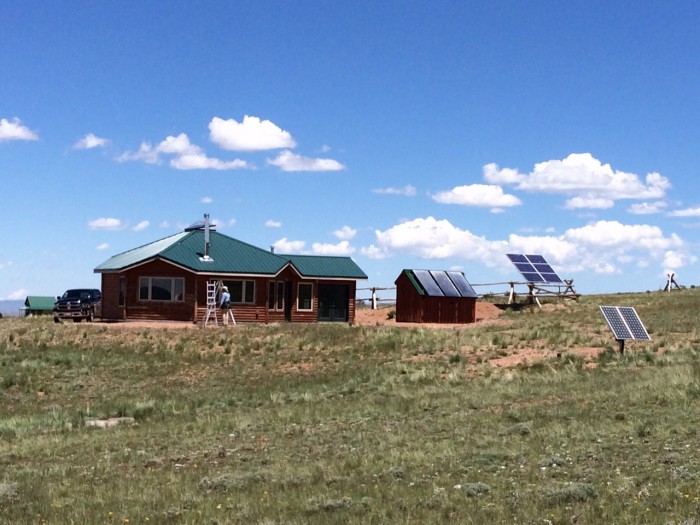
The verdict of the Fifth Assessment Report (AR5) by the Intergovernmental Panel on Climate Change (IPCC) is clear: we are the dominant species on this planet, and our documented role in the global system gives many (but not all) confidence that the Anthropocene is well named. We need to understand the interactions, impacts, and development of systems to attempt either adaptation or mitigation with respect to our changing climate, recalling that unintended consequences must always be counted. As they say, there is no planet B, no other place where externalities can be stored for later disposal. Of course, wicked problems like climate change are nothing new. They resist resolution because they are difficult to define/multicausal (unlike the ozone hole); have incomplete or changing parameters, such that “solving” one part of problem generates new ones; and have no clear solution, just better or worse options (Rittel and Webber 1973). Wicked problems are socially complex and generally require behavioral or cultural changes of significant proportions. Examples of these, such as climate change, energy transitions, water management, and biodiversity loss, are also the hallmark of the Anthropocene: they are “socionatural” transformations that we have set in motion ourselves, and the ones I have mentioned all have strong connections with each other. Here, I focus on energy.

Blog

A Conversation on Climate Change in the Papua New Guinea Islands

Ranguva Solwara Skul, Kaselok Village, New Ireland Province, Papua New Guinea

Participants: Sekunda Aini, Michael Tarere, Ambrose Kolmaris, Hagar Boskuru, Bernard Miller Silakau, Wilson Tonias, GomanMatas

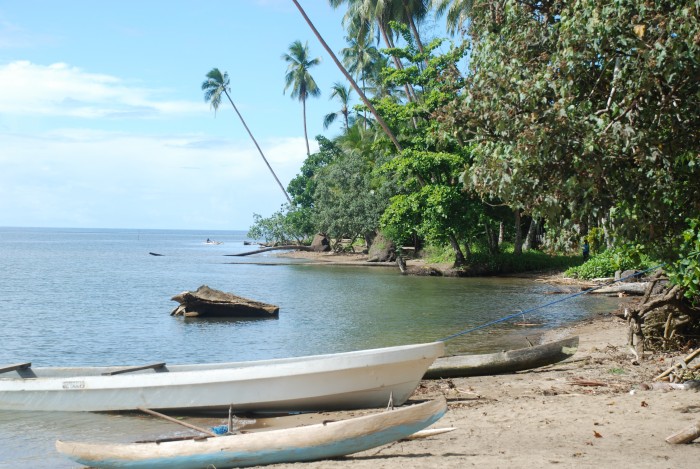
On 13 December 2015, the authors and participants gathered at the headquarters of Ailan Awareness, a locally owned environmental NGO in New Ireland Province, Papua New Guinea, to talk about climate change. Eight of the nine of us reside in Lovongai Village in the nearby island of New Hanover. The majority of our conversation was focused on changes that were occurring in that particular village, with useful comparisons being made to “mainland” New Ireland. This was, in part, a local response to the United Nations Climate Change Conference (COP21) held in Paris earlier in the month.

Blog

New Featured Article!: “Transforming Participatory Science” Available as Free PDF

The latest Environment and Society featured article is now available! This month’s article, “Transforming Participatory Science into Socioecological Praxis,” comes from Volume 5 (2014). Brian J. Burke and Nik Heynen evaluate the participatory traditions of citizen science and sustainability science, finding that they often fall short of the transformative potential because they do not directly confront the production of environmental injustice and political exclusion.

Visit the featured article page to download your copy of the article today before it’s gone! A new article is featured every month.

BRIAN J. BURKE is an assistant professor in the Goodnight Family Sustainable Development Department at Appalachian State University. From 2012 to 2014 he was a postdoctoral researcher with the Coweeta Listening Project. His research aims to support movements for social justice and environmental sustainability by examining their ethical visions and strategies and the challenges they face. Drawing on political economy and political ecology, he studies how material and sociocultural forces shape processes of social and socionatural change in specific contexts. His work has included projects on urban environmental activism on the US-Mexico border, rural cooperatives in Latin America, alternative economies in Colombia, and environmental knowledge.

NIK HEYNEN is a professor in the Department of Geography at the University of Georgia and director of the Coweeta Listening Project. His research utilizes a combined urban political ecology/urban political economy framework to investigate how economic, political, and cultural processes contribute to the production of material inequality and uneven urban environments. His three main research foci relate to the analysis of how social power relationships, including class, race, and gender, are inscribed in the transformation of nature, and how in turn these processes contribute to interrelated and interdependent connections between nature, space, and social reproduction.