Blog

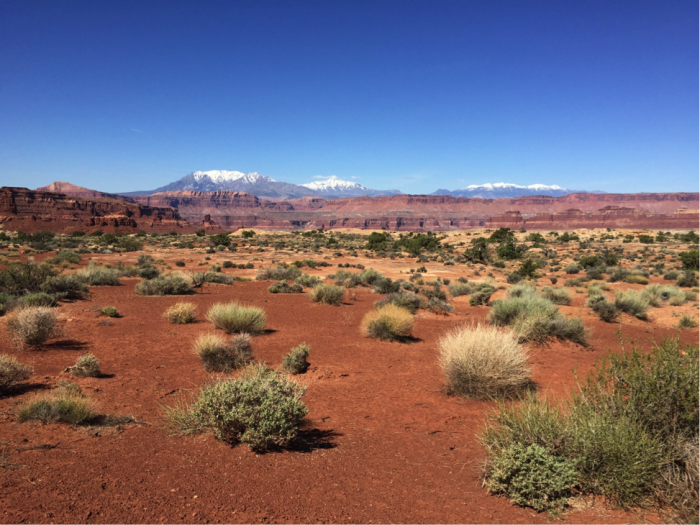
Bears Ears: In Defense of Public Lands

bears ears |berz irz| (noun) def. (1) the organs of hearing in a bear; (2) a geological feature over 8,700 feet tall consisting of two sandstone buttes in southeastern Utah; (3) a prominent landmark featured in the sacred geography of several Native American tribes in the Four Corners region of the United States; (4) the newest National Monument in the United States that has become central to struggles over land rights in the western United States

Blog

New Featured Article!: “Climate Changing Small Islands”

The latest Environment and Society featured article is now available! This month’s article, “Climate Changing Small Islands: Considering Social Science and the Production of Island Vulnerability and Opportunity,” comes from Volume 1 (2010). In her article, Amelia Moore argues that climate change has influenced the way in which small island nations are viewed and understood by the international climate community.

Visit the featured article page to download your copy of the article today before it’s gone! A new article is featured every month.

Blog

Mauritian Energyscapes: Compromise and Contestation

“I went there. You don’t want to go, trust me. You can’t breathe. [There’s a] heavy smell of petrol in the air that can’t be good.”

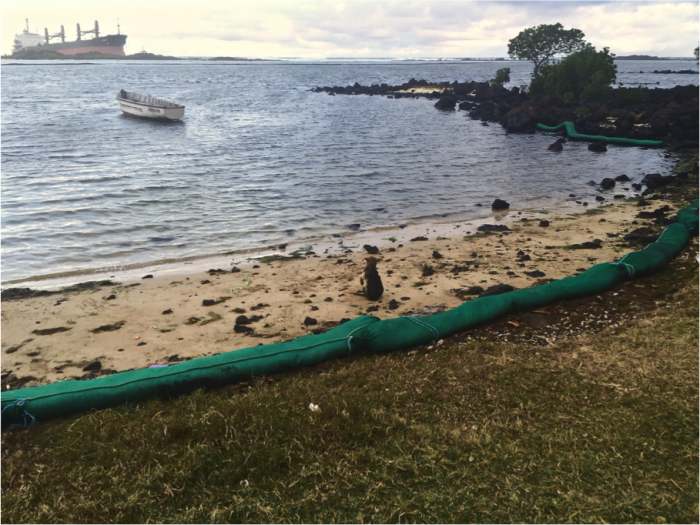
In the early morning hours of 21 June 2016, disaster struck just off the shoreline of the Indian Ocean island nation of Mauritius. MV Benita, a Liberian bulk carrier en route to southern India, ran aground on a sandy atoll just shy of the village of Le Bouchon on the island’s southeast shore.[1] For a small island developing state such as Mauritius, any sort of large-scale environmental event becomes cause for alarm. The scale of ecological destruction and the fallout of MV Benita were catastrophic.

Blog

Interview with Keely Maxwell, General Anthropologist for the EPA

This post is presented in this week’s series recognizing Earth Day, Saturday, April 22.

Keely Maxwell is an environmental anthropologist. She develops and applies interdisciplinary research to environmental problem solving. Keely has conducted research in the Machu Picchu Historic Sanctuary, Peru, and now works on community resilience. She is a former American Association for the Advancement of Science (AAAS) fellow, as well as a mom of two, and she works at the US Environmental Protection Agency (EPA).

Disclaimer: Keely is talking purely in a personal capacity and not as a federal employee. She is expressing her personal opinion, not official EPA policy.


Blog

The Afterlife of Coal

This post was presented as part of a series recognizing Earth Day, Saturday, April 22, 2017. It is being re-featured on the blog in 2021 as part of the Themed Collection: Pollution & Toxicity.

Coal mining communities in Appalachia have been framed as both victims and villains within the discourses of our emerging Trumpian late industrial narrative. Indeed, the US presidential election of Donald Trump has enacted an existential ratcheting up of the vitriolic moral divisions between “coastal elites” and “flyovers,” unhinged from the banality of previous circulations of those essentialist stereotypes. But a closer look past these inscriptions may reveal a different reality about the relationship between Appalachian coal mining communities and the environments in which they live, one that points to a more distributed agentive collusion between coal mining families, coal, and the toxins that augment the life of the matter within broader Appalachian ecosystems.

Blog

Climate Skepticism, Denial, and the Question of Belief

This post is presented in this week’s series recognizing Earth Day, Saturday, April 22.

One thing I’ve noticed is that when it comes to climate change, many talk about it in terms of belief. I hear this from students, pundits, and even academics. One of the first questions that seems to come up is whether or not someone believes in climate change or the veracity of climate science. But is belief really the issue?

Blog

Happy Earth Day from EnviroSociety!: Free Access to Journal Articles

Each year, Earth Day—April 22—marks the anniversary of what many consider the birth of the modern environmental movement in 1970. Earth Day 1970 capitalized on the emerging consciousness, channeling the energy of the anti-war protest movement and putting environmental concerns front and center. The very first Earth Day celebration brought 20 million Americans to the streets to peacefully demonstrate for environmental protection.

Blog

Landscapes of Change, Inertia, and Species Coexistence

Humans are adapted to change. I’ll illustrate this point using feeding and diet as an example.[1] Our nutritional niche is arguably among the broadest on the planet, rivaling most other species in its eclectic omnivory and diverse patterns of food consumption; we are gustatory generalists extraordinaire, flexible, and adapted to shifting landscapes of food availability. Such biological flexibility has been the subject of lively discussion among biological anthropologists and evolutionary biologists. The Variability Selection Hypothesis (Potts 1998), for example, posits that humans (and our hominin forebears) are best adapted not to any particular sort of ecological circumstances but instead to change itself. This makes sense from a climatological and ecological vantage: the most dramatic and frequent climate oscillations in the past 27 million years have occurred recently, in the past 5 to 6 million years—dates corresponding with the evolution of our lineage. We continue to adapt as new foods have been introduced, with continually shifting gut microbiomes and new alleles. The phylogenetic inertia[2] of our biological and ecological flexibility has clearly served us well over evolutionary time: we are a true cosmopolitan species, occupying virtually every habitat type on the planet.

Blog

New Featured Article!: “Placing Plants in Territory”

The latest Environment and Society featured article is now available! This month’s article, “Placing Plants in Territory” comes from Volume 7 (2016), a special issue on people and plants edited by Kay E. Lewis-Jones. In their article, Sarah Besky and Jonathan Padwe use plants to think about territory, a concept that is at once a bulwark of social theory and an undertheorized category of social analysis. Through examples of how plants operate in different domains, they illustrate the analytical potential that a more-than-human approach to territories provides.

Visit the featured article page to download your copy of the article today before it’s gone! A new article is featured every month.

Photograph by Rania Hatzi via Flickr (CC BY-NC-ND 2.0)
Blog

Reading Rousseau in the Anthropocene

I’m a critical environmental anthropologist, which means I make my living by having serious doubts about every term in this aspirational self-description. Writing and teaching under such a sign has always been hard, but it’s gotten even harder lately, for painfully obvious reasons. For example, this semester, for the second time, I am teaching a midlevel course for undergraduates called “Theories of Human Nature.” As with so many anthropology courses at my university, the title is deceptive: instead of theories of human nature, my innocent charges are stuck with a relentless series of stories demonstrating that there is no such thing as human nature and that any effort to appeal to it inevitably entails the denigration of many would-be humans and the degradation of what is left of nature in the name of some dubious onto-political cause or other (see Haraway 2007; Soper 1995). By the end of the semester, I would normally hope my students would have become as suspicious of the word “human” as they are of the word “nature,” and downright outraged to hear them juxtaposed in an argument.