Blog

New Featured Article!: “Agroecology and Radical Grassroots Movements’ Evolving Moral Economies”

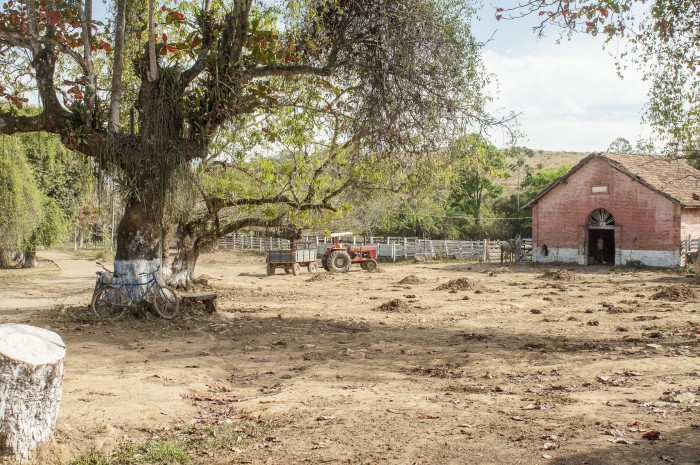
The latest Environment and Society featured article is now available! This month’s article—”Agroecology and Radical Grassroots Movements’ Evolving Moral Economies”—comes from Volume 5 (2014). In his article, David Meek focuses on the role of agroecology in rural proletarian social movements, drawing on a case study of the Brazilian Landless Workers Movement, one of the most vocal agroecological social movements.

Visit the featured article page to download your copy of the article today before it’s gone! A new article is featured every month.
Blog

New Featured Article!: “Explorations in Ethnoelephantology”

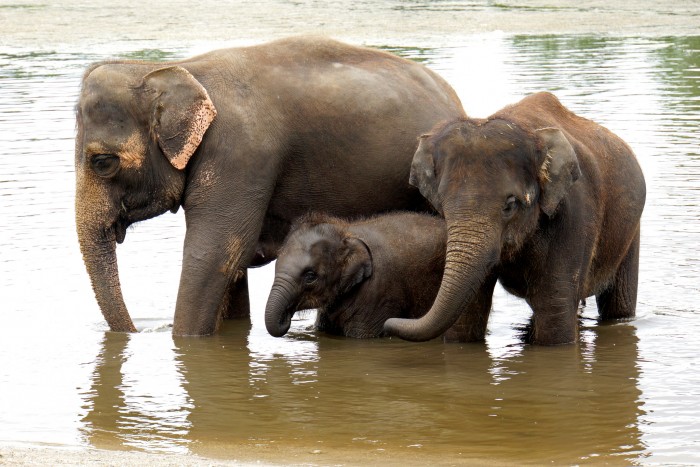
The latest Environment and Society featured article is now available! This month’s article—”Explorations in Ethnoelephantology: Social, Historical, and Ecological Intersections between Asian Elephants and Humans”—comes from Volume 4 (2013). In his article, Piers Locke charts the emergence of an interdisciplinary research program and discursive space for human-elephant intersections under the rubric of ethnoelephantology

Visit the featured article page to download your copy of the article today before it’s gone! A new article is featured every month.
Blog

A Political Ecology of Ohio’s Opiate Crisis

“After moving here to the east side of town, after living on the west side my whole life, I had really really bad dizzy spells, which I was admitted for time after time, and which they called it Pot’s disease, where the blood pressure bottoms out. But I was never sick … I don’t remember ever being sick at all until we moved to where we are.”

These are the words of Connie, a 40-something grandmother and church pastor. Connie, by her own admission, does not look the part of a stereotypical heroin addict: she is five feet tall, with short bright red hair and a big personality. She talks openly about her love for Christ and family. Connie is a recovering heroin addict who has now been clean for two years. She has struggled with illness over the past two decades, having many surgeries performed. Her doctors prescribed a variety of opiates over this time to help her cope with her illness. Eventually, one day, she tells me that her opiate addiction led her to try heroin:

Blog

Salt, Seeds, and Flamingos: On the Politics of Infrastructural Ecology in Turkey

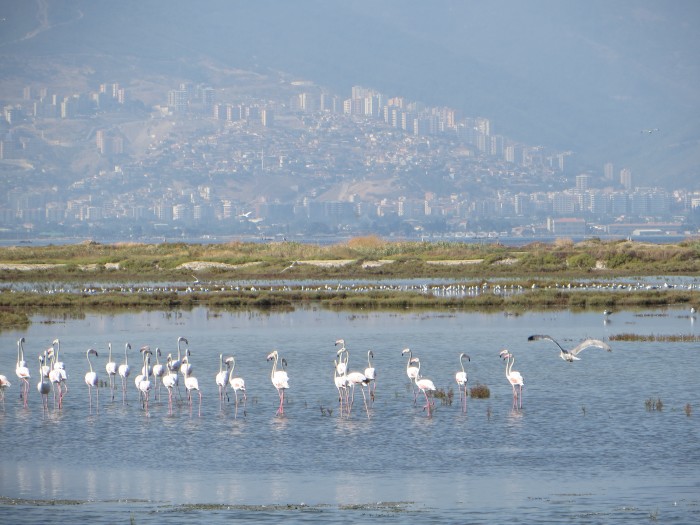
In June of 2017, as I prepared to leave Izmir, my friend Esra gave me, as a gift, two jars of sea salt mixed with herbs and finely ground sun-dried vegetables. Handmade labels indicated this was salt from the Gediz Delta (a large river delta on the Bay of Izmir) and that “Zeytinci” Fadime had prepared the mix. Esra herself, she told me, helped her friend Fadime abla, an experienced organic farmer who lives in one of the former Greek Orthodox villages at the edge of the Gediz Delta, not far from the city of Foça. The vegetables were from Fadime’s garden, and the salt from the delta’s saltpans, Çamaltı.

Blog

New Featured Article!: “From a Blind Spot to a Nexus”

The latest Environment and Society featured article is now available! This month’s article—”From a Blind Spot to a Nexus: Building on Existing Trends in Knowledge Production to Study the Copresence of Ecotourism and Extraction”—comes from Volume 3 (2012). In her article, Veronica Davidov investigates how instances of copresence between ecotourism and resource extraction are marginalized in literature about ecotourism and extraction, constituting a “blind spot” in academic literature.

Visit the featured article page to download your copy of the article today before it’s gone! A new article is featured every month.
Blog

Can Markets Save Agricultural Diversity?: Quinoa as a Case Study

Quinoa’s Exceptional Interspecific Diversity

Quinoa (Chenopodium quinoa) has been cultivated in the Andean highlands for millennia. Domesticated five thousand to seven thousand years ago by agriculturalists living along the shores of Lake Titicaca, quinoa is one of only a handful of crops to survive in the Andean Altiplano’s harsh clime. In fact, quinoa thrives at altitudes between 2,500 and 3,900 MASL, where frequent droughts, constant aridity, and extreme diurnal temperature fluctuations present a formidable environment for most agricultural production (even hardy crops like maize and sweet potatoes that thrive just 1,000 meters closer to sea level, for instance, cannot bear fruit on the Altiplano).

Blog

To Be Human Is to Live as if There Is Hope

One February day, I visited organic farmers Liz and Mike Lane in their southwestern Wisconsin farmhouse. Wounded old cats wandered around in the yard, where goats stuck their muzzles through slats in the fence. The clapboard farmhouse was not as neat as a pin. Seed catalogs, seed packets, CSA sign-up sheets, tax documents and forms, and piles of newspapers, books, and almanacs covered every surface of the dining room. The couple looked exhausted. We settled in the living room and they told me about the CAFO that had moved in around the corner.

Blog

Some Chemical and More-Than-Human Transformations of Sugar/Energy

Oblivious, or maybe not, to a warming planet and intense global discourse around renewable bioeconomy futures, a tiny sugar molecule one day is synthesized and then makes its way into a cell wall of a sugarcane plant in the southern region of Brazil. This is not the type of sugar that would be found on the kitchen table. The molecule remains there for the life of the plant, offering fibrous structural support for the towering stalks as they grow up to five meters tall. This sugar compound is called cellulose and is found in all plants and several types of microbes. It is the earth’s most abundant biopolymer made on land and its largest carbon reservoir (Li et al. 2014). While not on the kitchen table per se, cellulose is likely in it (if the table is wooden).

Blog

New Featured Article!: “Food Sovereignty”

The latest Environment and Society featured article is now available! This month’s article—”Food Sovereignty: A New Rights Framework for Food and Nature?”—comes from Volume 2 (2011). In her article, Hannah Wittman reviews the origins of the concept of food sovereignty and its theoretical and methodological development as an alternative approach to food security, building on a growing interdisciplinary literature on food sovereignty in the social and agroecological sciences.

Visit the featured article page to download your copy of the article today before it’s gone! A new article is featured every month.
Blog

Can We Have a Moment, Please?: The Potential of Multiple Perspectives on Beekeeping and Pollinators

A Mini Research Moment: Social Science and Pollinator Declines

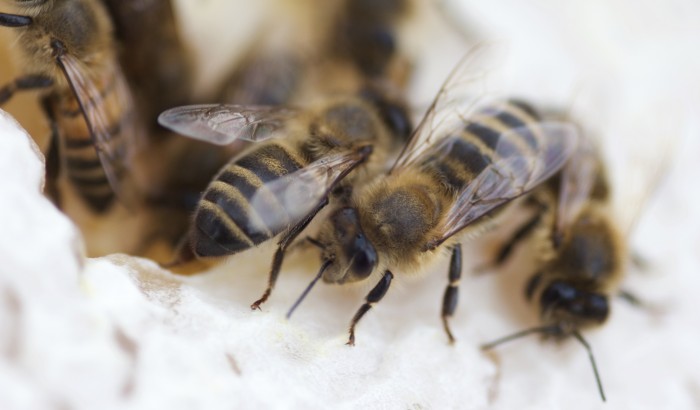
Honey bees and pollinators have been a core environmental news item in the English-speaking media for the past five to eight years: dying of mysterious illnesses, affected by pesticides, and as generally responsible for the production of many fruits and vegetables on which we rely. Honey bees in particular have had a long, close relationship with people, something often forgotten in the flurry of crises and new discoveries. However, their increasingly frequent presentation alongside polar bears and glaciers as emissaries of environmental collapse and human destruction means it is important to consider both the biological/ecological and the social when discussing honey bee and pollinator declines (Harries-Jones 2009; Mathews 2011). However, bridging this divide can be challenging—and we’d like to know how to do it more effectively.