Blog

Climate Change Resilience and Adaptation

The latest Environment and Society featured article is now available! This month’s article—”Climate Change Resilience and Adaptation: Perspectives from a Century of Water Resources Development”—comes from Volume 1 (2010). In their articles, Clive Agnew and Philip Woodhouse identify parallels between the problem of adaptive management presented by climate change and an earlier “global water crisis.” The article explores how adaptive strategies have successively emphasized three different principles, based on science, economics, and politics/institutions

Visit the featured article page to download your copy of the article today before it’s gone! A new article is featured every month.
Blog

Mino-Mnaamodzawin: Achieving Indigenous Environmental Justice in Canada

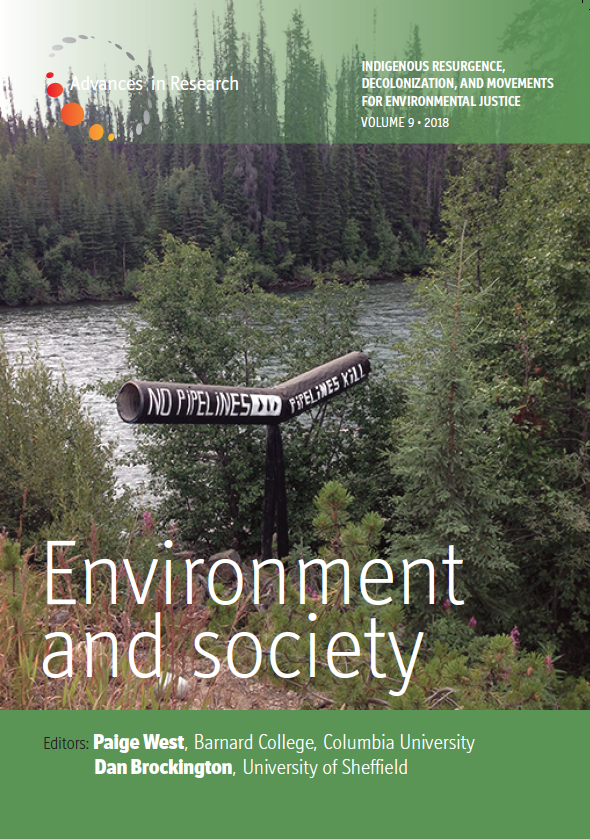
The latest Environment and Society featured article is now available! This month’s article—”Mino-Mnaamodzawin: Achieving Indigenous Environmental Justice in Canada”—comes from Volume 9 (2018). In her article, Deborah McGregor explores the potential for advancing environmental justice (EJ) theory and practice through engaging with Indigenous intellectual traditions, highlighting the emergence of the Anishinaabe philosophy mino-mnaamodzawin (“living well” or “the good life”) that considers the critical importance of mutually respectful and beneficial relationships among not only peoples but all our relations.

Visit the featured article page to download your copy of the article today before it’s gone! A new article is featured every month.
Blog

The Metrics of Making Ecosystem Services

The latest Environment and Society featured article is now available! This month’s article—”The Metrics of Making Ecosystem Services”—comes from Volume 8 (2017). In her article, Pamela McElwee traces how definitions and metrics of ecosystem services (ES) have evolved and how they are sued, such as in biodiversity offsetting and wetland mitigation programs. Using the idea of the creation and deployment of calculative mechanisms, the article discusses how these processes proceed in different ES contexts, assesses what work has to happen ontologically to make ES commensurable and circulatable, and speculates on what the opportunities for future pathways other than commodification are.

Visit the featured article page to download your copy of the article today before it’s gone! A new article is featured every month.

Blog

Extractive Conservation: Peasant Agroecological Systems as New Frontiers of Exploitation?

The latest Environment and Society featured article is now available! This month’s article—”Extractive Conservation: Peasant Agroecological Systems as New Frontiers of Exploitation?”—comes from Volume 7 (2016). In their article, Anne Cristina de la Vega-Leinert and Peter Clausing analyze to what extent conservation has become an inherent element of extraction. They scrutinize the Land Sparing versus Land Sharing debate by explicitly incorporating environmental justice issues of access to land and natural resources and contend that dominant conservation regimes, embedded within Land Sparing, legitimize the displacement of local people and their land use to compensate for distant, unsustainable resource use.

Visit the featured article page to download your copy of the article today before it’s gone! A new article is featured every month.
Blog

The Social Life of Blame in the Anthropocene

The latest Environment and Society featured article is now available! This month’s article—”The Social Life of Blame in the Anthropocene”—comes from Volume 6 (2015). In his article, Peter Rudiak-Gould shows how life in the Anthropocene reconfigures blame in four ways—it invites ubiquitous blame, ubiquitous blamelessness, selective blame, and partial blame—and reviews case studies from around the world, investigating which climate change blame narratives actors select, why, and with what consequences

Visit the featured article page to download your copy of the article today before it’s gone! A new article is featured every month.
Blog

New Volume of Environment and Society!

Berghahn Journals is pleased to announce that the latest volume of Environment and Society has recently published and is available online at www.berghahnjournals.com/environment-and-society.

Volume 9, guest edited by Jaskiran Dhillon, revolves around the theme of “Indigenous Resurgence, Decolonization, and Movements for Environmental Justice” and aims to set forth a theoretical and discursive interruption of the dominant, mainstream environmental justice movement by reframing issues of climate change and environmental degradation through an anticolonial lens. Specifically, the writers for this volume are invested in positioning environmental justice within historical, social, political, and economic contexts and larger structures of power that foreground the relationships among settler colonialism, nature, and planetary devastation. As always, editor’s introduction is freely available to all readers. Environment and Society 9 is rounded out by a section of book reviews on recent and relevant publications.

Blog

Valuing and Evaluating Marine Ecosystem Services: Putting the Right Price on Marine Environments?

The latest Environment and Society featured article is now available! This month’s article—”Valuing and Evaluating Marine Ecosystem Services: Putting the Right Price on Marine Environments?”—comes from Volume 5 (2014). In their article, Julian Clifton, Leanne C. Cullen-Unsworth, and Richard K. F. Unsworth explain how the flow of ecosystem services from coral reefs, seagrass meadows, and mangrove forests sustains the livelihoods of billions of people worldwide. Faced with the global degradation of marine and coastal ecosystems, policy makers are increasingly focusing on ecosystem service valuation techniques to encourage conservation and sustainable use of marine resources. The article provides a review and synthesis of the available information on economic valuation techniques as applied to tropical marine habitats.

Visit the featured article page to download your copy of the article today before it’s gone! A new article is featured every month.

Blog

Flagships or Battleships: Deconstructing the Relationship between Social Conflict and Conservation Flagship Species

The latest Environment and Society featured article is now available! This month’s article—”Flagships or Battleships: Deconstructing the Relationship between Social Conflict and Conservation Flagship Species”—comes from Volume 4 (2013). In their article, Leo R. Douglas and Diogo Veríssimo examine the multiple roles of flagships in conflicts including their part in human-wildlife conflicts and as symbols of broader sociopolitical disputes and show that the relationship between the co-occurrence of conflict and flagship species, while complex, illuminates important patterns and lessons that require further attention

Visit the featured article page to download your copy of the article today before it’s gone! A new article is featured every month.

Blog

Unintended Consequences: Climate Change Policy in a Globalizing World

The latest Environment and Society featured article is now available! This month’s article—”Unintended Consequences: Climate Change Policy in a Globalizing World”—comes from Volume 3 (2012). In her article, Yda Schreuder explains how the cap-and-trade system introduced by the European Union (EU) in order to comply with carbon emissions reduction targets under the United Nations Framework Convention on Climate Change Kyoto Protocol (1997) has in some instances led to the opposite outcome of the one intended. In fact, the ambitious energy and climate change policy adopted by the EU—known as the Emissions Trading Scheme (ETS)—has led to carbon leakage and in some instances to relocation or a shift in production of energy-intensive manufacturing to parts of the world where carbon reduction commitments are not in effect.

Visit the featured article page to download your copy of the article today before it’s gone! A new article is featured every month.

Blog

Abandoned Mine Lands and Collective Cleanup Efforts

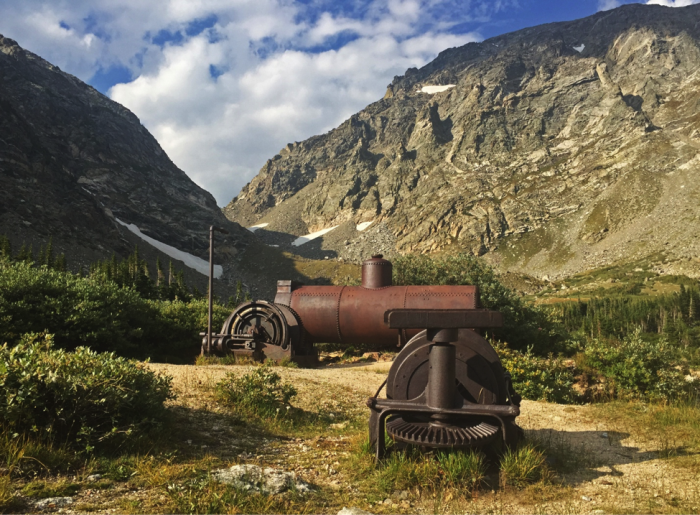
On 5 August 2015, a contractor working for the Environmental Protection Agency (EPA) accidentally breached a plug of waste rock at the Gold King Mine near Silverton, Colorado. Unbeknownst to the backhoe operator responsible for the breach, the plug was holding back three million gallons of acid mine drainage laced with numerous toxic metals such as zinc, cadmium, mercury, lead, and arsenic. Within hours, the yellow-tinged toxic waters from the Gold King Mine spread downstream from Cement Creek into the Animas River, eventually making their way into the San Juan River until being diluted by their entry into the Colorado River. En route, the waters heavily impacted the livelihoods of farmers, fly fishing guides, and rafting companies from Durango, Colorado, to the Navajo Nation in northern New Mexico.