When I first began to look at the issue of genetically modified organisms (GMOs) several years ago, my interest was in the larger contexts of their development and spread, as well as their impacts on the Global South. But the developments in the Global South are very much a part of the GMO story back home, where various versions of them are deployed in the GMO wars. The wars, rather than being settled, have only intensified over time. As I write this, a Monsanto-funded Missouri senator is grilling a prominent Ivy League physician about statements he made on the radio about the safety of GM foods. It’s interesting to turn my attention back to my own country to see how GMO issues are being used.
Author: EnviroSociety
Happy Earth Day from EnviroSociety!
In celebration of Earth Day, Berghahn Journals is delighted to offer free access to a special virtual journal issue that focuses on climate change and features articles from a range of history, politics, and anthropology journals—including EnviroSociety’s very own Environment and Society: Advances in Research.
Working With
One of the ways my professors in graduate school modeled the nebulous territory of contemporary anthropological ethics was to consistently refer to their incalculably diverse ethnographic subjects as those whom they “work[ed] with.” This was instead of referring to things they “work[ed] on,” but also instead of the perhaps disingenuous word “interlocutors” (Said 1988) or the clandestine suggestion of “informants”—all words and phrases that were and are still very much in circulation in anthropological texts and classrooms. The ready appeal of using the phrase “working with” is that it allows us to rhetorically sidestep the problem of the object, to step down from above or over from across to take up a position alongside another. The less-than-ready appeal of the phrase is that it renders radically indeterminate if not just plain absent the content of the work to be done. When I was a graduate student planning my first field study, this situated indeterminacy of “working with” afforded me the patience I needed to stay with the unexpectedness of fieldwork and to “slow down” (Stengers 2005) the rationalizing impulse of my thinking when it was inevitably confronted with something that disrupted my theoretical purposes. I still believe and teach my students to believe in this radical openness that characterizes the best, and perhaps most enduring, face of our somewhat tortured discipline.
Toxic Ecologies of Occupation
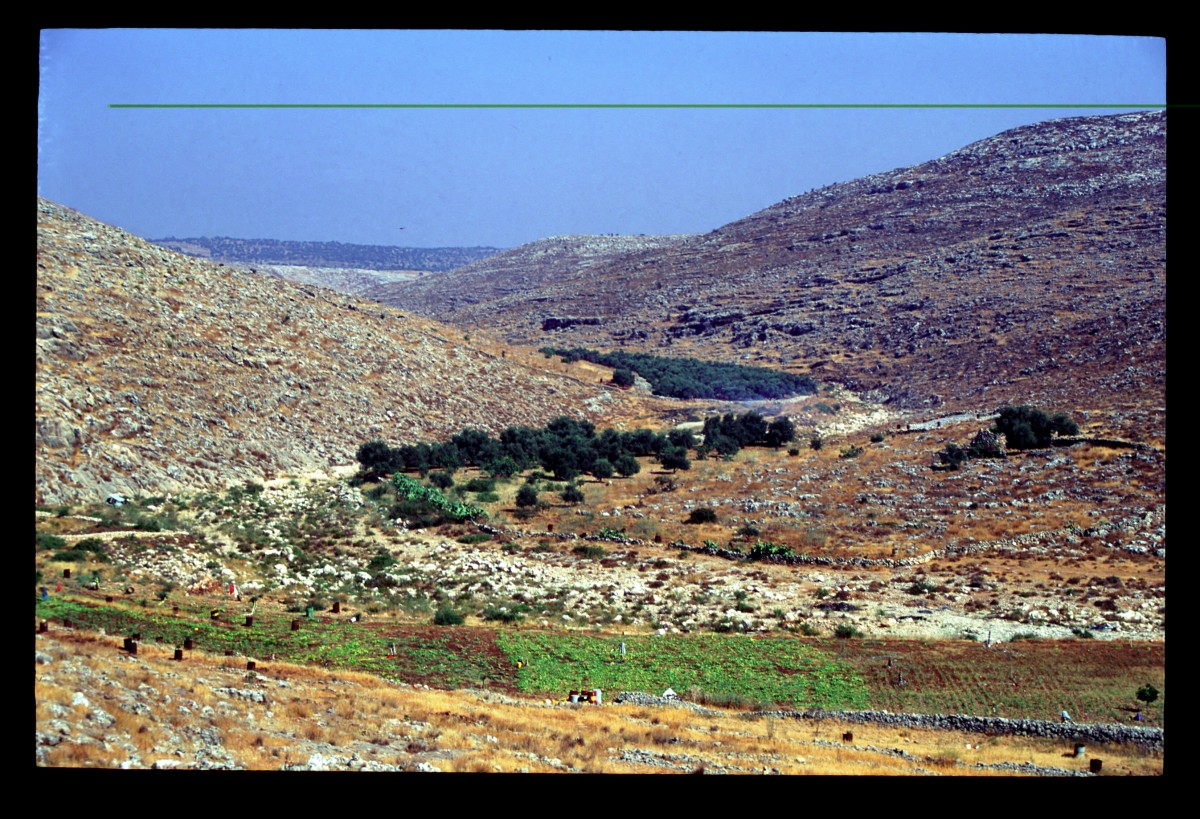
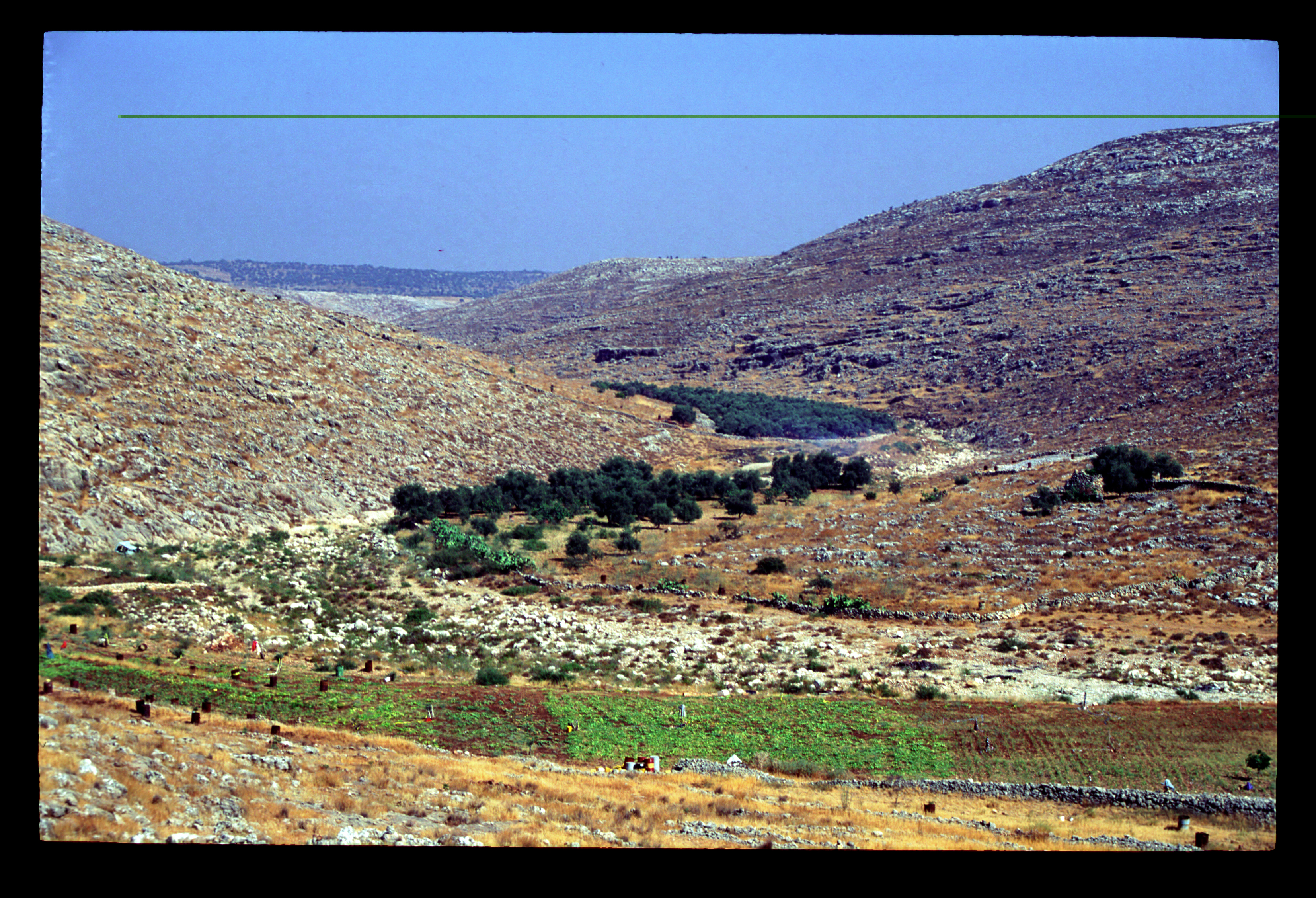
Brian Boyd: In June 2012, with a small group of Palestinian colleagues, I entered the Wadi en-Natuf in Palestine for the first time since 2000. In June 2000, it looked like this:
Since 2000, I have been involved in an archaeological project centered in and around the small (population 4,500) Palestinian town of Shuqba in the West Bank (Ramallah and Al-Bireh district). Shuqba gives its name to a large cave in the nearby Wadi en-Natuf, a river valley that runs close to the town. This cave was excavated by the British archaeologist Dorothy Garrod in 1928, during the turbulent early years of the British Mandate. Garrod is a central figure for women’s involvement in the history and practice of archaeology.
Building Bridges to Where?: Sustainability Collaborations and the Arts of Ethnography
I was in a group of ten or so engineers, business representatives, nonprofit workers, and a government employee, discussing whether we could develop a definition of social sustainability, which we understood as the third and neglected leg of the sustainability “stool” of environment, economics, and society. Like some other topics, it seemed that while we knew it when we saw it, we were hesitant to draft a definition or even a broad characterization. The reasons for and the degree of hesitancy varied from person to person, making the conversation even more difficult. Defining something meant limiting it, and our readings in the area warned us away from a specific delineation; we all seemed to shy away from a strict definition. Yet whether or not to characterize it was still up for debate—some in the group argued that this too would limit the scope of “social sustainability,” preventing us from engaging with those outside of this scope. Others found it a practical necessity to have some way to describe social sustainability, even if the characterization focused on its processes rather than its elements.
Read More “Building Bridges to Where?: Sustainability Collaborations and the Arts of Ethnography”
The “Three Cultures” Problem in Global Change Research
Has academic life become notably less balkanized since C. P. Snow delivered his famous “two cultures” lecture in 1959? Apparently not. In this week’s issue of Science (6 March 2015) appears an article extolling the virtues of the humanities. It argues that scientists too often define research problems narrowly, leading to technical “solutions” that address only symptoms (not causes) or even make the problems worse for those in society affected by them. Kevin Boehnke, the author, commends historians, philosophers, literary critics, and anthropologists to his readers—who are mostly physicists, chemists, engineers, and the like. Humanists’ focus on the intricacies of peoples’ identities, relations, values, and disputes, Boehnke argues, can allow scientists to better link their work to the wider world it so often alters (by accident or design). Nearly sixty years after Snow’s lecture, Boehnke’s article suggests that academic specialization cuts deep—so deep that the editors of Science have seen fit to let him reprise rather old arguments about the need for better links between STEM researchers and those who study the rich tapestry of “the social.”
Read More “The “Three Cultures” Problem in Global Change Research”
Problematizing Protected Areas by Introducing Edge-Dwellers
Similar to botanic gardens, protected areas such as nature reserves or game parks often appear as quaint institutions that are useful for public education and entertainment, not to mention their centrality to environmental conservation efforts. Indeed, nature reserves, safari parks, and marine protected areas are places that people flock to for holiday adventures. Visitors revel in the notion of being “in nature” or “in the wild” because it is “simple” or “serene.” Entire economies are built around eco-tourism, a growing global trend. Public health research even touts the benefits of living near green spaces for mental health and pollution-related health issues (Maas et al. 2006; Mitchell and Popham 2008).
Read More “Problematizing Protected Areas by Introducing Edge-Dwellers”
Anthropology, the Anthropocene, and the Military
In recent months, the United States Department of Defense spoke out on climate change. While many seemed surprised that the DoD had quietly been thinking about and planning for the effects of climate, the US military’s concern for weather conditions and climate change is actually nothing new. Military strategy has always tried to take into account weather conditions and their impact on battlefield conditions, troop morale, logistics, and the ability to maneuver. What is interesting about the US military’s concern with climate change is that it has been seemingly at odds with the “official” position of many of its key governmental supporters. While members of Congress and the Senate and members of the conservative or anti-science chattering classes may continue to deny the reality of climate change or the role of human activity in bringing about a new geo/environmental era, the military has quietly gone about studying and planning for the impact of this new reality for decades. Two recent reports, the “2014 Climate Change Adaptation Roadmap” and the “Strategic Sustainability Performance Plan FY 2014,” detail the military’s thinking about climate change, how changing environmental conditions will impact its ability to carry out missions, and how the DoD will also create new forms of missions and operations stresses and challenges.
Read More “Anthropology, the Anthropocene, and the Military”
Reproducing Empire, Subverting Hegemony?: Botanic Gardens in Biodiversity Conservation
Botanic gardens are often perceived as quaint institutions that host and display exotic plants for public education and entertainment purposes. Many people think of botanic gardens as living plant museums that attest to earlier times of botanical exploration and scientific discovery. Others see them as sites of respite from the hectic pace of modern living. Ironically, given the highly objectified characteristics of botanic garden natures, many seek these landscapes as a conduit for overcoming human alienation from “nature.” Perhaps for these reasons, for over a century now botanic gardens have become increasingly popular tourist sites, attracting millions of visitors each year. In fact, Dr. Richard Benfield’s research shows that visits to botanic gardens constitute a large percentage of the garden tourism industry, which is, in turn, one of the largest and fastest growing tourism sectors in the world. In the United States alone, “there were an estimated 78 million visitors to U.S. public gardens in a recent year—more than to Las Vegas and Orlando combined.”
Read More “Reproducing Empire, Subverting Hegemony?: Botanic Gardens in Biodiversity Conservation”
Dangerous Knowledge and Global Environmental Change: Whose Epistemologies Count?
The question of how the social sciences and humanities ought to relate to science, technology, engineering, and medicine (STEM) subjects is a recurrent one. It’s become a burning question in the world of “global change science” of late because the scope, scale, and magnitude of the human impact on Earth is unprecedented. Groups of otherwise sober geoscientists are sounding the alarm, as indicated by the concepts of the “Anthropocene,” “planetary boundaries,” and “global tipping points.” There’s been talk of a “new social contract” between global change researchers and the societies their inquiries are intended to serve. As part of this, geoscientists are now looking to those of us who study diverse human perceptions, norms, values, relations, institutions, and practices. As geoscientists recognize, we need to analyze, interpret, and change the habits of whole societies if we are to reduce and adapt to the enormous biophysical changes we are collectively instigating. Heide Hackmann and coauthors term this the “social heart” of global environmental change (2014). It implies that environmental social scientists and environmental humanists must step forward and make a difference now so that Earth future resembles something far less bleak than imagined by Cormac McCarthy in his shattering novel The Road.
Read More “Dangerous Knowledge and Global Environmental Change: Whose Epistemologies Count?”