Blog

Working With, Part II: On the Work of Collaboration in Coastal Alaska

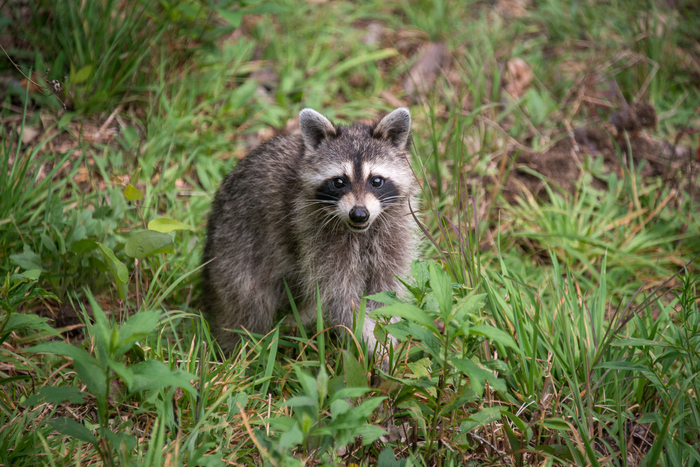
“Please join me and stand with the bears!” So ends a recent e-mail I received from an environmental organization campaigning to curtail old-growth logging in Southeast Alaska’s Tongass National Forest. The Tongass is the United States’ largest national forest and encompasses most of the land in Southeast Alaska. In November, the US Forest Service released a draft of a proposed amendment to the current Tongass management plan, whose ninety-day comment period extends through February 22.1 According to the message in my inbox, written by a wilderness advocate and bear-viewing guide, the draft amendment includes some important provisions to protect prime salmon habitat and forest livelihoods but leaves bears out in the cold. The proposed plan sacrifices the “bears’ necessities” to continued old-growth logging in the Tongass, the e-mail contends.

Blog

Solar, Sustainability, and Strategies in Sarawak

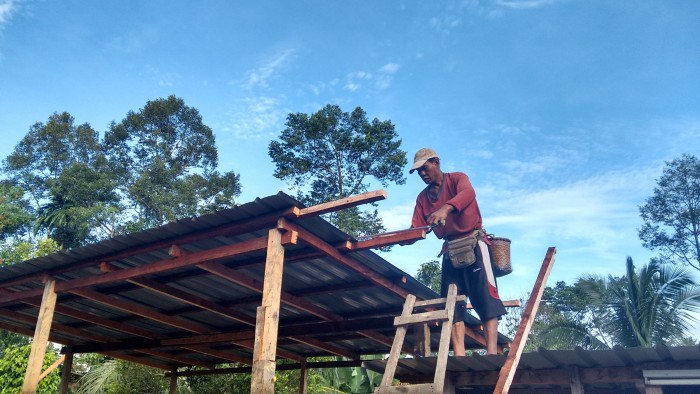
The orang solar (“solar men”) are finally here. The longhouse community has been lit in a pleasant buzz since awaiting the arrival of the technicians (described by my adoptive parents, as “orang solar”) who would install new solar panels. The week prior, the available men in the longhouse had worked every day on building the shed that would house the solar batteries within and the solar panels above.

Apai building the solar shed (December 2015)

Apai1 tells me that the solar batteries are arriving separately from Germany. He is so impressed with the origin of the batteries that he repeats this fact to me a couple of times. However, he worries, they might be delayed in the port, not in time for Christmas when the villagers’ adult children return for the holidays from working in the cities.

The solar panels are not the first that the village has had. The first sixteen solar panels were placed above the longhouse roof about a year ago, replacing the many village generators run on diesel. However, the electricity generated from the solar panels is enough for “lights and TV only”—not enough to run the iceboxes or a washing machine that sits idle in a bathroom where I bathe with a scoop and a bucket.

Blog

Olgeta Meri Igat Raits? (All Women Have Rights?)

The “David and Goliath” story Stuart Kirsch tells in Mining Capitalism (2014)—of global underdogs triumphing over a powerful mining company, aided and abetted by Global North activists—is replicated in another story from Papua New Guinea (PNG), albeit concerning a different mine: the Porgera gold mine in the PNG highlands, the country’s second largest mine (Columbia-Harvard 2015: 20). In brief, the Porgera Landowners Association (PLOA) and the Porgera-based Akali Tangi Association (ATA; commonly translated as Human Rights Association), operating in tandem with MiningWatch Canada (MWC),1 pressured Porgera Joint Venture (PJV) to give reparations to women who claimed to have been gang raped by PJV’s security guards. At the time, the Canadian company Barrick Gold Corporation, then regarded as the world’s leading gold mining company, was the majority shareholder. Although Barrick continues to manage the mine, it shares that honor with Zijin, a large Chinese gold company, which bought 50 percent of Barrick’s equity in May 2015.

Blog

Regeneration of Human-Modified Landscapes: The Irony of Antipathy to Resilient Animals

Lambert1

You hear a lot about resilience these days—for good reason. Our planet is undergoing profound ecological and climatological change, and we are now unequivocally in a geochemically distinct epoch (Anthropocene) with its own unique signature of human-produced aluminum, concrete, and plastics—direct by-products of the “Great Acceleration of population growth, industrialization, and mineral and energy use” (Waters et al. 2016: 2622). The resilience of species—including human—to this Great Acceleration has received considerable attention of late by social scientists, although the concept as applied to ecological systems has been around for several decades. As originally conceived by Holling (1973), ecologists define resilience as “the capacity of a system to absorb disturbance and reorganize while undergoing change so as to still retain essentially the same function, structure, identity, and feedbacks” (Walker et al. 2004: 5). However, it is not my goal to explore resilience per se; many superb reviews and analyses already exist (e.g., Jacka 2015). Instead, here I explore the irony of resilience from the perspective of human antipathy toward “pest” species.

Blog

New Featured Article!: “Introduced & Invasive Animals” Available as Free PDF Download

The latest Environment and Society featured article is now available! This month’s article, “Untangling Introduced and Invasive Animals,” comes from Volume 4 (2013). Crystal Fortwangler explores introduced and invasive species, untangling the ways disciplinary frameworks across the social sciences, natural sciences, and humanities examine introduced and invasive species and their relations with human societies.

Visit the featured article page to download your copy of the article today before it’s gone! A new article is featured every month.

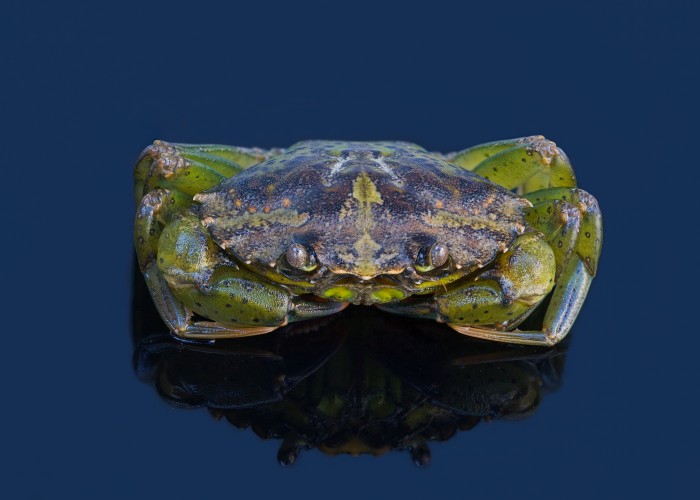
European green crab, Carcinus maenas (Photo: David Reed via Flickr)

Crystal Fortwangler is Assistant Professor of Sustainability and Environmental Anthropology at the Falk School of Sustainability. Most recently she was at Lafayette College where she held a Mellon Post-Doctoral Scholarship to help guide an emerging Environmental Studies program. Previously, she held a Visiting Assistant Professor position in Environmental Studies at Oberlin College. She has a joint-Ph.D. in cultural anthropology and natural resources/environmental studies, and owns a film company focused on exploring sustainability in conversation with human and animal welfare. She emphasizes ethical and justice frameworks in sustainability and engages the social sciences and humanities as part of applied and action-oriented projects. Her research and films explore how we can simultaneously best pursue conservation & marine protection, social and economic justice, and animal welfare. Key to her work is also considering how sustainability is communicated to various audiences.

Blog

Supermythologies and Superenvironments

I’ve been thinking a lot about superheroes and their worlds. This past term I taught a class, The Anthropology of Superheroes, where the big question posed was, “How can we study superheroes as anthropologists?” In addition to reading graphic novels and discussing cosplay and real-life superheroes, we also did collaborative event ethnography (Brosius and Campbell 2010) at the Alamo City Comic Con. I called it a swarm ethnography. I’ll admit, I’m a bit of a nerd and certainly a fan of the genre. However, what really interest me about superheroes are the imagined futures and alternative multiverses in which they live.

Blog

Copses of Corpses: Uneasy Synecdoche and Nonhuman Suffering of Climate Change

This post is the final in a series on the 2015 United Nations Climate Change Conference (COP21) held in Paris, France, from 30 November to 12 December 2015.

The suffering of trees suddenly bothers me. As a child, I had a close friendship with a tree. I did not anthropomorphize him in the least; he was already the cognizant creature he was, and I was honored he would listen to me. He never spoke back, mind you, but I knew he understood. We had different languages but communication, of course, is more than verbal. I would hug his trunk and feel a sense of calm after telling him my stories. I visited for many years after leaving home. We lost contact at some point as adult life took over my mind. More recently, I have written a grammar of trees drawing on random thoughts from other trees I’ve met. I suppose it’s an attempt to find a language that could allow me to speak a bit more with my childhood tree friend. I regret that we’ve have lost touch.

Blog

There Is No Planet B: A Message from NYU’s Gallatin Global Design Professors – Part 2

This post is part of a series on the 2015 United Nations Climate Change Conference (COP21) held in Paris, France, from 30 November to 12 December 2015. Part 1 can be found here. For the latest on the Gallatin professors’ initiatives, be sure to follow Global Design NYU on Twitter.

In advocating Global Design, we do not regard the periphery as our antagonist. The periphery is defined by boundaries—disciplinal and spatial, as well as intellectual. What we propose is to collapse the global and the local, since environmental problems are not limited to a particular location. We call on all practitioners of architecture, the related design disciplines, and all the actors and agents who imagine their practices scaling to address different aspects of the environment to become active agents of social change.

Blog

There Is No Planet B: A Message from NYU’s Gallatin Global Design Professors – Part 1

This post is part of a series on the 2015 United Nations Climate Change Conference (COP21) held in Paris, France, from 30 November to 12 December 2015. Part 2 can be found here. For the latest on the Gallatin professors’ initiatives, be sure to follow Global Design NYU on Twitter.

NYU’s Gallatin Professors Stake Out a New Initiative
Climate change effects pose drastic challenges to the architecture, landscape architecture, and urban design communities. The immediate response has been a turn toward a host of energy-saving technologies or behavior modifications. What has rarely been addressed, however, is the problem of scale. How can the designer ensure that global solutions do not come at the expense of local traditions, cultures, and environments? By placing human coherent, emotional, technological, and social needs at the center of our environmental concerns, we propose a new Global Design initiative.

Blog

Climate Change and Disenfranchisement: A View from Fiji

This post is part of a series on the 2015 United Nations Climate Change Conference (COP21) held in Paris, France, from 30 November to 12 December 2015.

“Right up here you’ll see the point they landed on.” I’m walking along a karst limestone ridge covered in luxurious vegetative growth. I’m in the village of Nagigi on the island of Vanua Levu in the Republic of Fiji, and my guide, Masivesi Madigibuli, is taking me to see the point of first landing for his people. As we walk, Masi points out a hidden cartography of the island. The undulations in the karst ridge are actually the foundations of former structures, and as we get on our hands and knees, we see giant shells—clam, snail, oyster—all dwarfing their modern relatives.