Blog

Images and rituals of resistance at COP30

At the heart of the Brazilian Amazon, in Belém do Pará, my field research at the 30th Conference of the Parties to the United Nations Framework Convention on Climate Change (COP30/UNFCCC) involved me in circumstances I could never have imagined and which led me to write this account.

A fire broke out in the tents of the Blue Zone, the area restricted to accredited delegations, and sent me running without a backward glance, dropping my field notebook with my annotations on two weeks of intense activities as I fled. These notes not only contained factual information of events and interlocutors but also the impressions, hesitations, scenes and contacts I had accumulated since my arrival in the city. At that moment, the loss felt overwhelming.

I feared I would never be able to assemble back together what I had observed and experienced. But an anthropologist friend reminded me of Edmund Leach and the story of how he lost part of his fieldnotes before writing Political Systems of Highland Burma (1954). Another recalled that Berta Gleizer Ribeiro, a Brazilian anthropologist, had experienced a similar situation on expeditions through Amazonia. As later debates have shown, Leach did not write out of thin air. He reconstructed his notes from memory, added new observations and integrated historical materials (Sanjek 1990). Even so, the loss provoked later reflections on the relationship between data, memory and ethnographic writing.

In Fire, Loss, and the Sorcerer’s Apprentice (1990), Roger Sanjek discusses the status of fieldnotes, their material risks and symbolic effects. Drawing on diverse similar experiences lived by anthropologists, he describes situations where fire and other hazards threatened researchers’ fieldnotes. In my case, the blaze forced me to turn to photographs for support and question the methodological nature of what we conventionally call ‘data.’

Unlike my notes, the photographs I took survived online in the cloud. Revisiting them, I realised they functioned as an index of my trajectory, my observational stance, the angles from which I accompanied the rituals, protests, press conferences and informal gatherings. They, too, are a form of data production.

I photographed every event I attended. The images enabled me to reconstruct locations, events, sequences and interlocutors. Using them as cues, I was able to access records on official websites and social media, compiling objective information about dates, venues, institutions and participants. Much of this data is still digitally available today.

However, the photographs also returned something to me that official records failed to capture: they became an ethnographic device. They documented my participation in COP30’s rituals, understood here in the sense proposed by Peirano (2002) with all their communicative and performative dimensions.

Both inside and outside the Blue Zone, the conference was organised as a sequence of diplomatic, legal and performative rituals: plenary sessions, press conferences, marches, symbolic trials, people’s tribunals, negotiations and blockades. It is within this environment that I situate what I have elsewhere termed ‘social fires’ – processes of social contestation that expose fissures in the hegemonic models of climate governance (Bronz 2026).

The meanings associated with fire, heat and warming have been part of the symbolic repertoire of environmental struggles for decades. They also connect to the concept of overheating proposed by Eriksen (2016), designating a historical moment marked by the acceleration and dealignment between economic political, and social systems. From this perspective, COP can be understood as a laboratory of this ‘overheated’ globalisation, a space where multilateral decisions, diplomatic negotiations, science and activist mobilisations intertwine in a constant sense of urgency.

In this essay, I present a selection of images from a wider collection to illustrate the power of these social fires in rituals of mobilisation. The images are accompanied by brief explanatory texts without any intention of exhausting their analytical potential or the complexity of the ritual dynamics in which they are embedded.

Boat regatta at the People’s Summit, 12 November 2025

Indigenous participants assemble during the Boat regatta, which brought together more than 200 vessels in Guajará Bay.

The People’s Summit, one of COP30’s major parallel events, has become established as an explicit counterpoint to the institutional language of official negotiations. The boat regatta in Guajará Bay, a ritual marking its inauguration, symbolically shifted the conference’s centre to the river. The vessels formed a scene of collective mobilisation, making Amazonia visible as an active political space. The image illustrates how local forms of territorial occupation produce a climate politics that contrasts with the technical abstraction of multilateral agreements.

Before departing, indigenous leaders performed a ritual in front of dozens of cameras. The scene was composed of various layers: in the foreground, mobile phones captured painted bodies and indigenous chants; the boats of social movements forming a chorus alongside the Greenpeace ship, symbolising transnational ecology; and the river stretching out behind as a backdrop.

People’s tribunal and ancestral jury, 13 November 2025

Ancestral Jury organised by the Articulation of Indigenous Peoples of Brazil (APIB) at Aldeia COP.

The Ancestral Jury: Trial of Projects on Indigenous Lands, organised by the Articulation of Indigenous Peoples of Brazil (APIB), represented one of the most intense moments of political contestation. By putting mining, energy and infrastructural projects on trial, the tribunal delivered a direct critique of the developmentalist model underpinning global climate governance. The photograph captures not only an act of denunciation but the creation of an alternative political authority in which territory emerges as the central criterion for justice.

The spatial arrangement, the division of roles, the sequence of speeches and the repurposed legal aesthetics all contribute to the ritual dimension of the event. Indigenous lawyers wore robes adorned with indigenous designs. The form of western law was appropriated and transformed, placing the Brazilian state and corporations in the dock.

The Climate March, 15 November 2025

The Climate March united diverse agendas of resistance to imposed models of climate governance. The march represents a form of expressive collective action in the sense proposed by Chaves (2002), bounded in time and space, invoking established symbolic references and seeking to awaken solidarity beyond the mobilised group. By occupying the streets of Belém, it demarcated its own sphere within the social life of the Conference, emerging as a ritual capable of condensing interpretations and legitimacy.
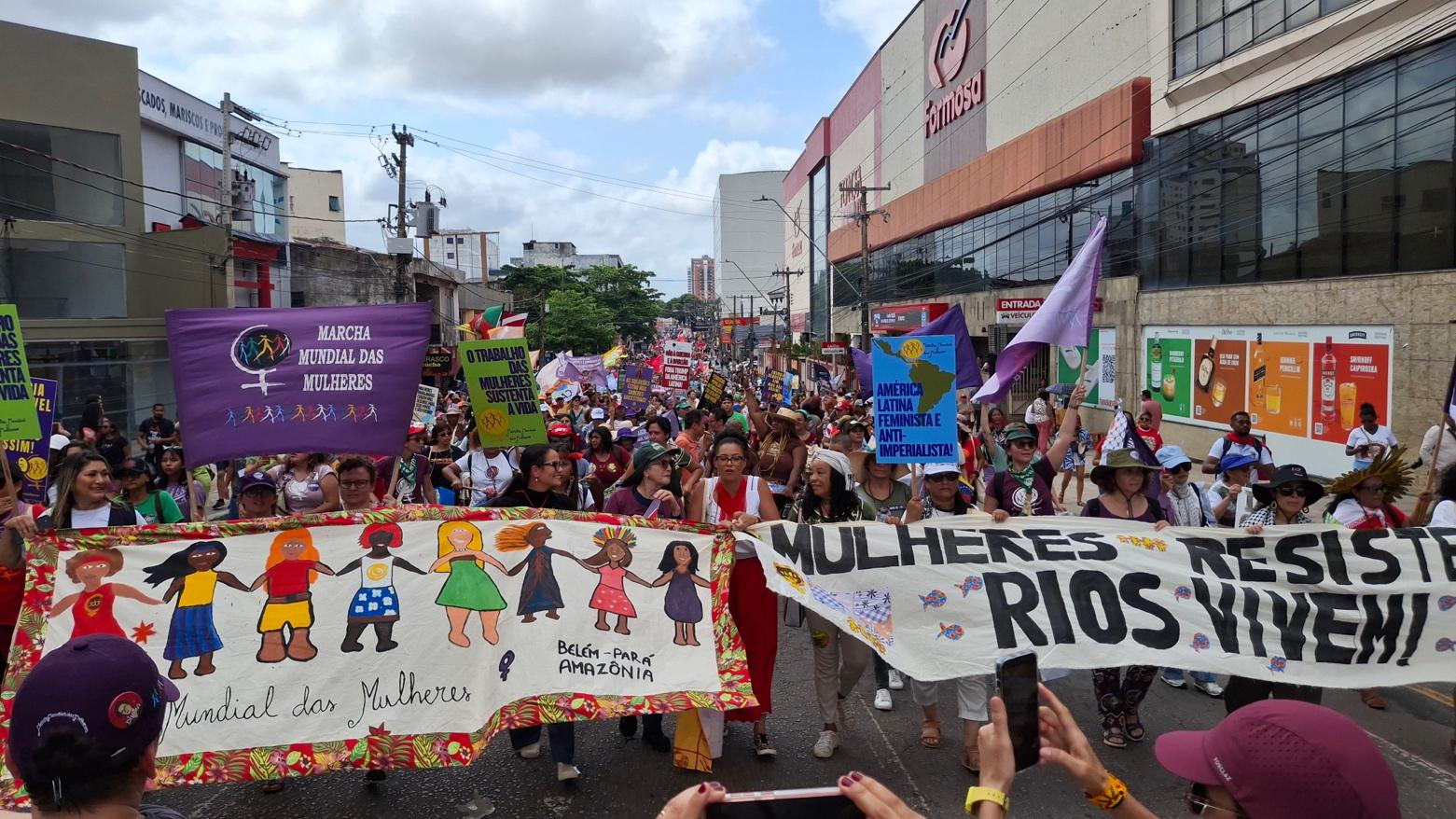
Women’s March during the Global Climate March, occupying the streets of Belém during COP30.
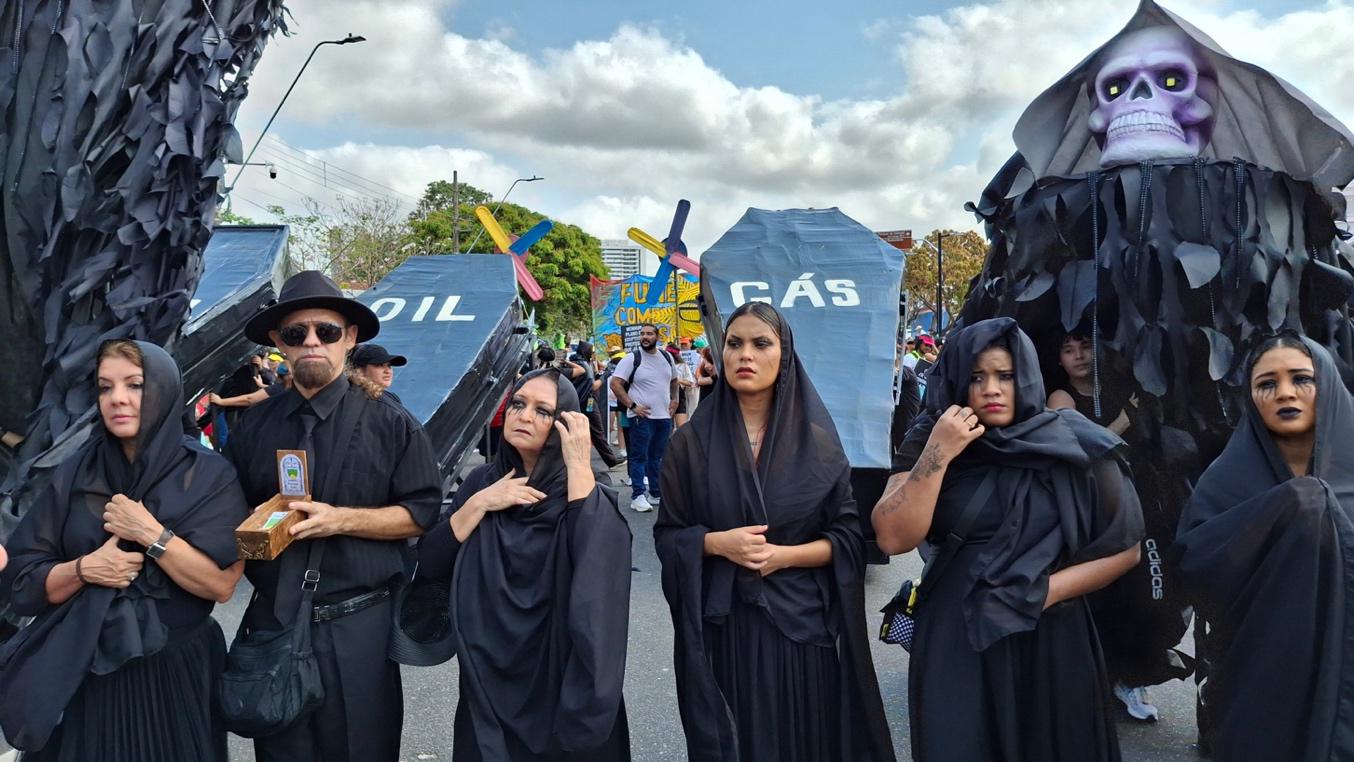
Manifesto against fossil fuel production during the Global Climate March, COP30.

The route taken, the organised blocks, the chants and banners, the presence of women, the theatrical protest against fossil fuel production and the performance of the Cobra Grande all formed a grand tableau, rendering visible the multiplicity of struggles. Outside the Blue Zone, climate politics was enacted as a contest over development models and ways of life. Efficacy here was not measured in documents but in the collective force of these presences.
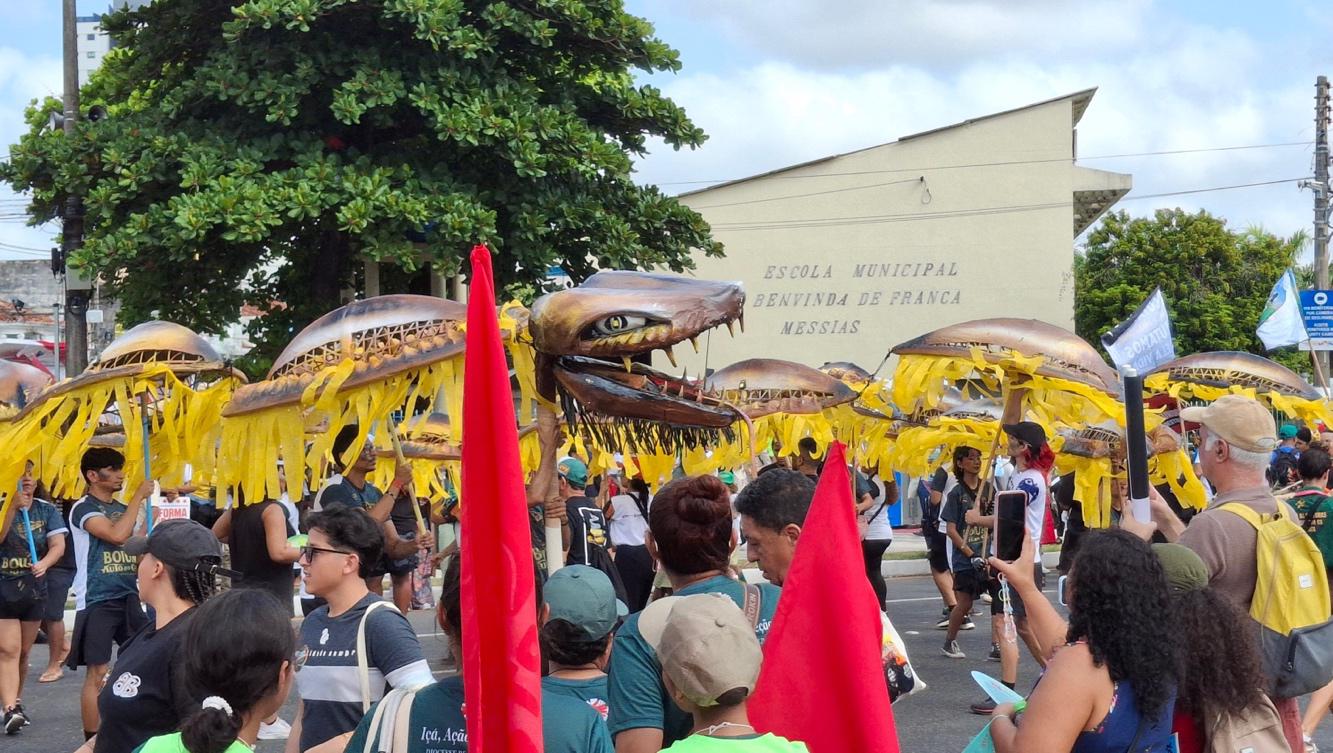
Cobra Grande during the Global Climate March, COP30, in Belém, Pará.

In this same territory, artist Azul Rodrigues, linked to the Climate Art Project, wore the ‘Cloak of the End of the World,’ materialising a question about ritual continuity in a devastated world. Inspired by the historic Tupinambá cloak but crafted from plastic waste, the artwork transformed refuse into denunciation. The substitution of feathers with strips of plastic ritualises devastation, weaving together themes of ancestry, coloniality, memory and environmental collapse. Through the images and performances created by artists and activists, the Climate March was also converted into a site of aesthetic elaboration and crisis communication.
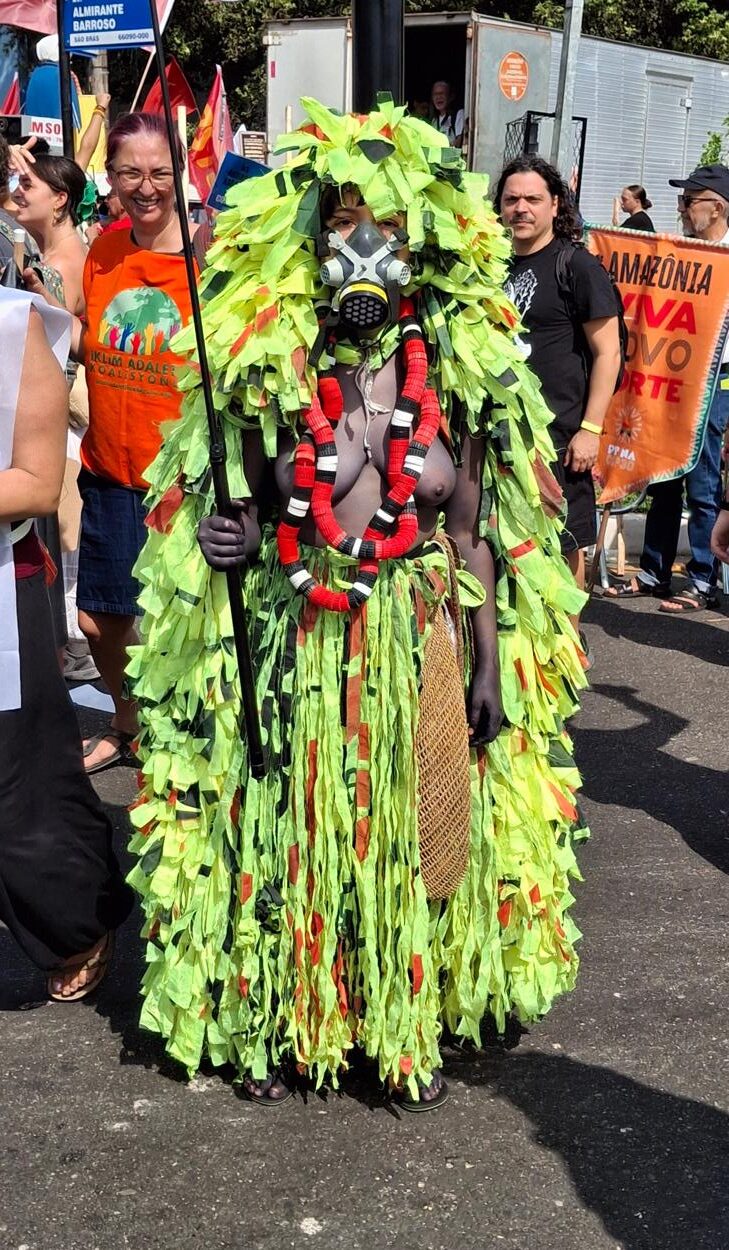
Azul Rodrigues wearing the “Cloak of the End of the World,” a plastic-waste reinterpretation of the historic Tupinambá mantle.

INDIGENOUS TERRITORIES IN THE GREEN AND BLUE ZONES, 10 to 21 November

The Green and Blue Zones were spaces where the event’s formality clashed with the political expressions of parallel events and Belém’s streets.

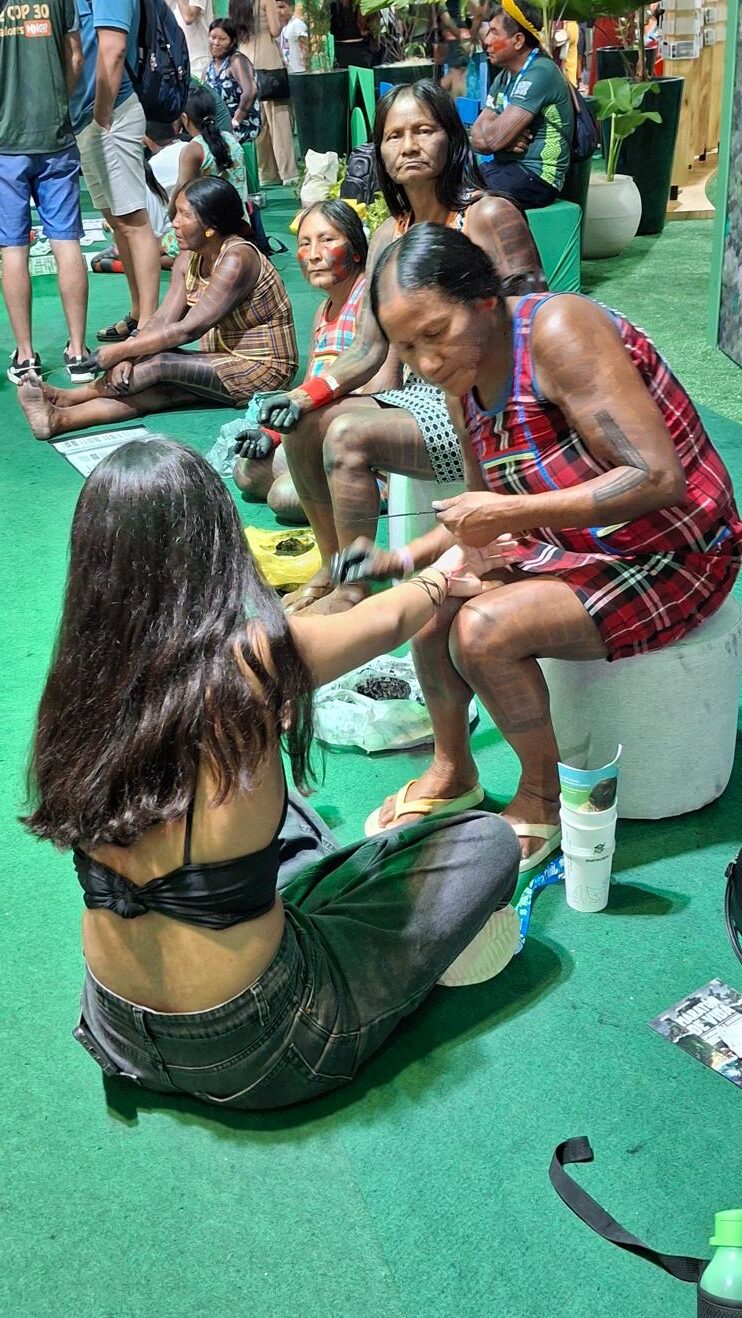
In the Green Zone, open to the public, indigenous people occupied the corridors selling craftwork and painting body designs, which became a popular trend among COP30 participants. Their presence was a striking contrast to the glowing corporate logos and official messaging. This undoubtedly comprised a form of ritualising the indigenous presence, as well as exposing or denouncing the ambiguities of COP30, where cultural recognition and aesthetic appreciation are dissociated from concrete territorial struggles.
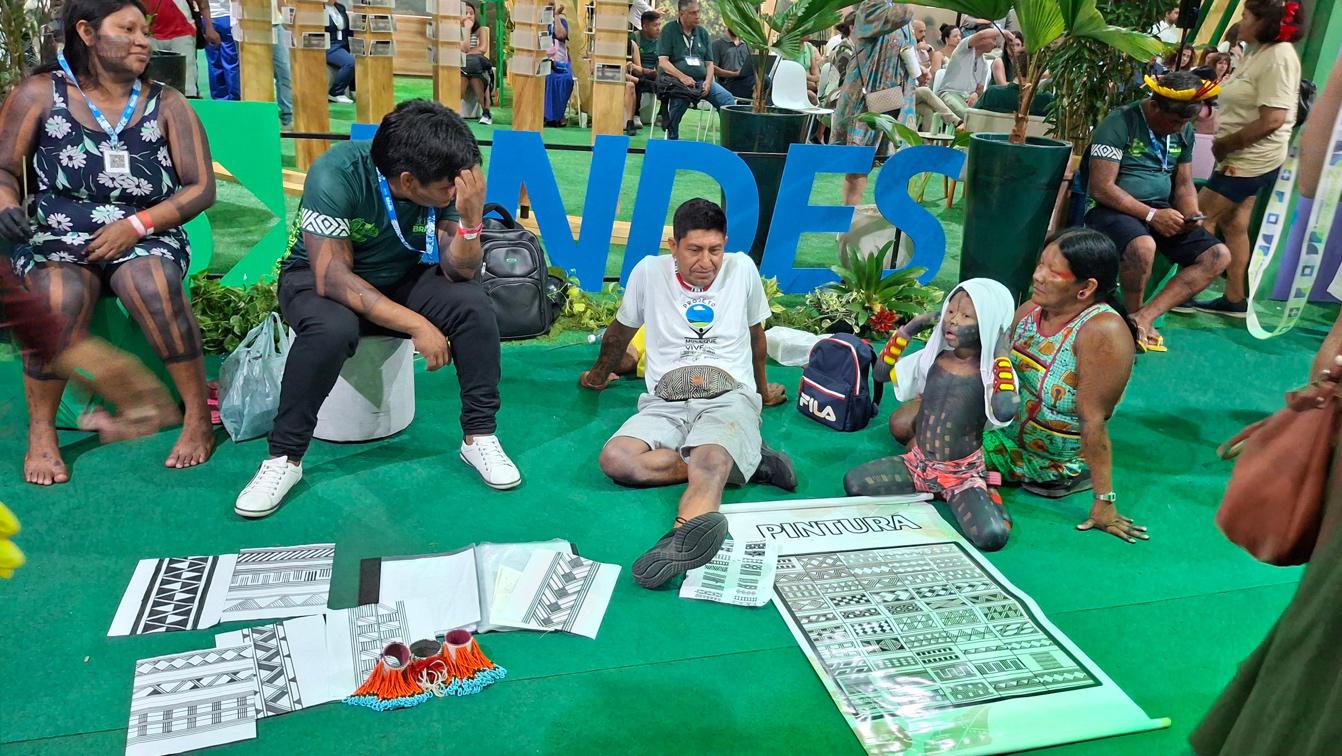
Indigenous artisans in the Green Zone corridors selling craftwork during COP30.
Indigenous artisans in the Green Zone corridors painting body designs during COP30.

I was not present when the Munduruku Indigenous people blocked the main entrance to the Blue Zone, but the images were widely reported in national and international media (for example, here and here). As a result, another image gained prominence– that of the COP30 president holding a Munduruku baby as he opened negotiations with Indigenous leaders.

Alessandra Munduruku was the Indigenous woman who led this action. Through it, she ritually marked the passage into the Blue Zone, where she and her group gave interviews and held meetings with authorities. This transition materialises a significant political shift. By occupying the institutional space of the COP as a public interlocutor, Alessandra challenges the historical regimes that have pushed indigenous peoples to the margins of decision-making.

Alessandra Korap Munduruku, Indigenous leader, giving an interview inside the Blue Zone.

In this brief account, I have compiled diverse images that distil forms of resistance and record what official documents fail to capture: the gestures, presences, performances and disputes that stretch the official grammar of climate governance. Revisiting these photographs, I realise they capture not just events but also the potential for symbolic displacement – through the eruption of alternative political languages both inside and on the margins of COP30. While the final texts reiterate limited commitments, the images preserve evidence of contestation and collective elaboration. It is in this interval between diplomatic formalisation and the public scene that the critical potency of Belém’s moment is inscribed.


Bibliography

BRONZ, Deborah. 2026. “Social Fires in Belém (Pará): COP30 beyond the Documents.” Manuscript submitted to AnthropoNews.

CHAVES, Christine de Alencar Chaves. 2002. A Marcha Nacional dos Sem-terra: estudo de um ritual político. In: PEIRANO, Mariza Gomes e Souza (ed.). O dito e o feito: ensaios de antropologia dos rituais. Rio de Janeiro: Relume Dumará: Núcleo de Antropologia da Política/UFRJ. Pp. 133-148

ERIKSEN, Thomas Hylland. Overheating: an anthropology of accelerated change. London: Pluto Press, 2016.

PEIRANO, Mariza Gomes e Souza. 2002. O dito e o feito: ensaios de antropologia dos rituais. Rio de Janeiro: Relume Dumará: Núcleo de Antropologia da Política/UFRJ.

SANJEK, Roger. 1990. Fire, Loss, and the Sorcerer’s Apprentice. In: Fieldnotes. The makings of anthropology. Ithaca and London: Cornell University Press. Pp. 34-34.


Deborah Bronz is Professor of Anthropology at the Fluminense Federal University (UFF). She is a Young Scientist of Our State research fellow funded by the Rio de Janeiro State Research Support Foundation (FAPERJ) and Vice-Coordinator of the Amazonian and Environmental Studies Group (GEAM/UFF). She is also a member of the Traditional Peoples, Environment and Major Development Projects Committee of the Brazilian Association of Anthropology (ABA). She attended COP30 as part of the observer delegation of the American Anthropological Association (AAA).
Blog

Hey Max Planck! You can help us and join the line: On badges and the politics of visibility at COP30

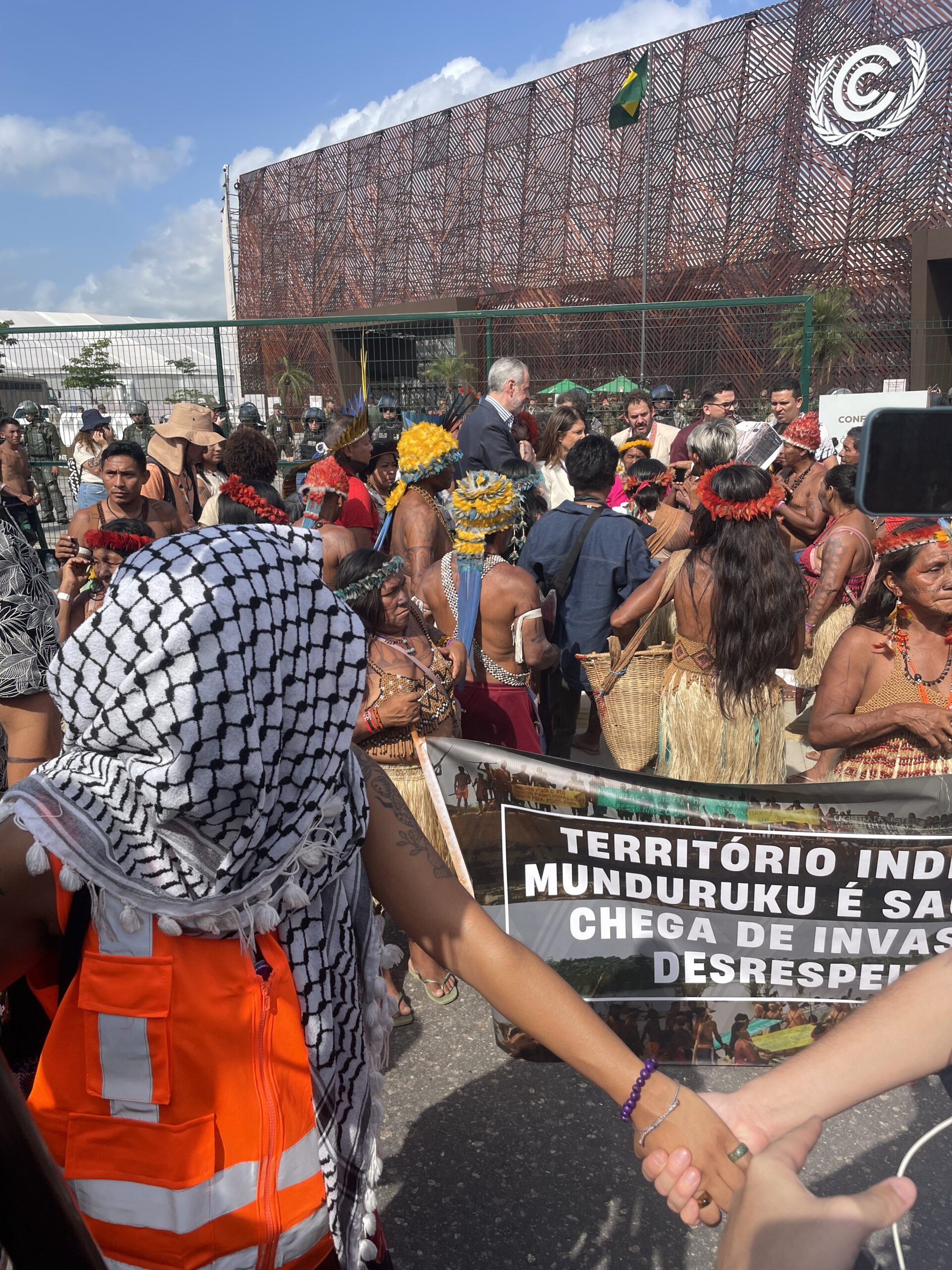
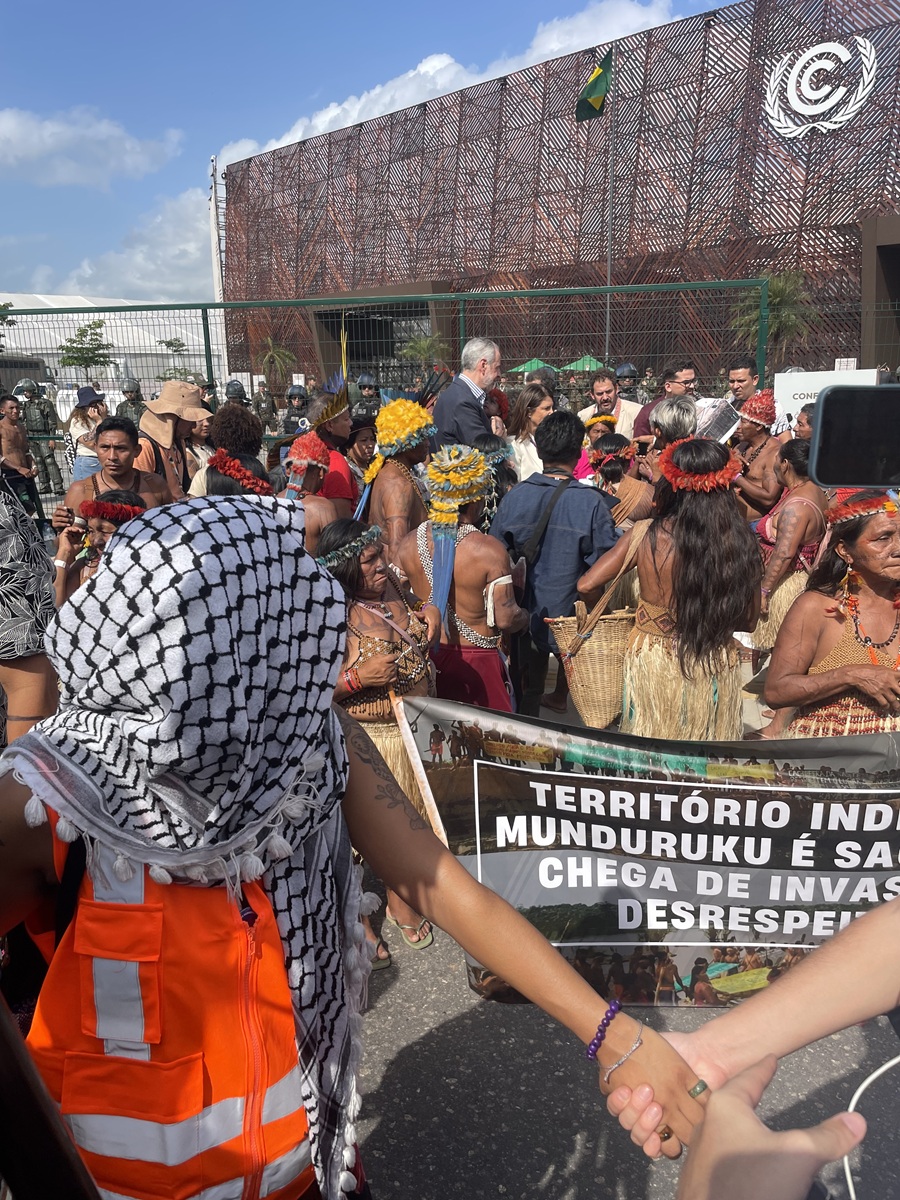
On most days, delegates are rushing through the gate on their way from the city into the premises of COP30’s restricted Blue zone. Not today. On this morning, activists are blocking the gate. On this side of the fence, throngs of delegates congest the street. It is a motley crew of diplomats, lobbyists, activists and observers, many sporting COP30 badges with photo, full name and institution listed. Police cars and ambulances dot the crowd, their lights flashing on. Many people keep moving through the crowd, apparently looking for another entry into the Blue Zone or a refuge from the glaring equatorial sun. Many others stay on, watch what is happening around the gate.

image 1: Activists blocking the gate at COP30

The gate is being blocked by Indigenous activists. Their dresses and feather gowns identify them as Indigenous people from the Amazon not very far from here. Some hold spears; and as the president of the COP30 and his entourage gets close, they start singing, swaying back and forth in a slow two-step dance. Like many others around me, I do not understand what they are singing. But the images and Portuguese slogans on their placards help to get a sense of what this is about. Apparently, they demand abandoning plans to construct hydropower dams on the rivers as well as the termination of illegal gold mining on the lands they call home.

Around the chanting, spear-carrying activists, another activist group has formed a ring. These are mostly white people holding themselves by the hand, in solemn silence and with their backs to the Indigenous protesters, so as to shelter them from the onlookers and police. Many in this outer line wear shirts imprinted with climate activist slogans or strings of buttons, added the occasional reflective west or Palestinian Keffiyeh, and, of course, official COP30 badges. Scuffles erupt with photojournalists trying to break through their line in order to get a better shot at how COP30’s president is now engaging in a conversation with a woman who seems to be a spokesperson of the Indigenous activists, apparently listening to their demands.

COP30 badge

At one point, someone shouts at me “Hey, Max Planck! You can help us and join the line!” I register the voice, and know immediately that she addresses me. I carry my badge, identifying me visibly as an ‘observer’ sent by ‘Max Planck Society’ privileged with access to negotiations in week one. She must have grasped that I was torn between two roles (that of an observer and that of an activist), hovering around the activist line but watching the discussion between Indigenous activist and COP30 president unfold (rather than turning my back to these, and facing the crowd in a gesture of protection, as the other climate activists do). In forcing me to take a stand, the woman’s voice also highlights the mutual identification of people, affiliations and roles indicated in the tiny pieces of paper, plastic and fabric badges are; and, by extension, the politics of visibility in and around these spaces of global diplomacy.

During COP30, badges had a peculiar social life. They regulated access to the restricted zone of negotiations, the Blue Zone, and come to distributed through opaque channels of individual constituencies to which a certain number of badges had been allotted. As such, badges were subject of maneuvering, where badges were fought over or split among colleagues. Some appeared wearing their badges reluctantly, while others adorned them with glaring activist buttons (showcasing allegiances and enabling efficient organizing) or with buttons from earlier COP meetings (signaling veteran status). At the same time, badges were subject of envy for people wishing to enter the Blue Zone; and the ubiquity of badges in the streets of COP30’s Belem flooded by 50000 delegates certainly contributed to creating the festive and hopeful atmosphere enveloping the city throughout week one.

In the Blue Zone – governed by UN security protocol enforced by UN’s own security forces – badges serve as an extension of the passport. But rather than citizenship, badges testify professional affiliations and membership to delegations. COP30 badges qualified holders as ‘members of party’, ‘party overflow’, ‘observer’ or ‘journalist’, each granting different rights of access to negotiation rooms on the premises. Sometimes, the roles were not immediately clear: I have met employees of humanitarian organizations filling in as diplomats for poor countries; and many of the unusually high number of fossil fuel lobbyists present at COP30 will have similarly worn badges by country delegations.

Being Max Planck inside an activist blockade highlights a number of tensions stemming from doing activist research. Anthropologists have frequently explored the dilemmas of doing fieldwork among activists holding political visions close to their own. What is more important, they ask, producing evidence or joining the struggle? And how could one make up for either in cases where it’s simply not possible to do justice to both at one and the same time? Joining the line out there by the gate on that morning, I am debating internally whether this is just a tactical decision in fieldwork (getting me closer towards participant observation among climate activists) or whether I am simply living up to Charles Hale’s challenge when he says that cultural critique without joining the fight is just lazy (Hale 2006). But there’s more. It also signals the tensions emerging from being simultaneously a scholar, an activist and a delegate, and how much the role of a delegate shapes the possibilities of activist scholarship within this peculiar environment – this temporary mini-city catering to 50000 delegates convening to decide on humanity’s actions towards climate change.

A few days later, on a Sunday, which is an official day of rest of COP30 negotiations, I run into the woman again. We’ve both booked a trip with a responsible tourism collective, visiting women’s initiatives and herbal gardens on one of the many estuarine islands adjacent to Belem. On the boat, I learn that while we both qualified as observers, we were on fairly different trajectories and, therefore, subject to alternative politics of visibility. She had travelled to COP30 sent as delegate by a European Christian organization, aiming to witness and support efforts toward climate justice. In contrast, I had travelled to Belem as a delegate by a German Foundation pursuing fundamental research in the sciences and humanities. I was supposed to study, much less to witness or support.

Out there by the gate, a few days earlier, there hardly was time to reflect on matters of affiliation and strategizing. I remained absorbed by the dynamics of the protest as it unfolded around me. I was occupied with the appearance of suaveness by COP30’s president as he listened to activists, the bows and arrows piercing the air, the swaying of people moving in and out of the crowd, and the soldier’s disconcerting quiet as they overlooked the protest in riot gear, holding to their guns. The possibility of violence was palpable. After all, it seemed impossible to ascertain how security forces dealt with such kinds of direct action and whom they would count as perpetrator if things went south. At the very least, the protest’s transgressive and provocative nature had motivated many people in the crowd to tactically conceal parts of their identity. While many of the people around me carried their badges open, many others rather chose to conceal their badges. Quickly hidden under their shirts or blouses, affiliations were masked, while the characteristic, brightly printed lanyards on use during COP30 would still give away their being delegates.

Between being called upon as Max Planck and disappearing name tags, badges appear as critical elements within environmentalist action at COP30. On one level, they seem to join a number of visual cues allowing for an identification of persons (adding to printed shirts, Keffiyeh or feathered bands). On another level, they signal a tactical maneuvering with affiliations and the status of being a delegate. While some used buttons, printed shirts or flags carrying slogans as methods of broadcasting activist demands inside the premises, others chose to temporarily conceal their affiliations betting on the force of bodies on the streets precisely as an illegible mass to make demands. In showing or concealing their badges, people were not only engaged in keeping their names to themselves or not, they were also shifting gears in the politics of visibility. In this view, tactic positioning of badges complicates the means and ends of confrontational politics in or around the restricted spaces of diplomatic activity.


Arne Harms is an environmental anthropologist. Harms is a Senior Research Fellow working at Uni Münster and Max Planck Institute for Social Anthropology, in Halle (Saale), Germany. Read more about Arne’s work here: https://www.eth.mpg.de/harms


References

Hale, Charles R. 2006. “Activist Research v. Cultural Critique: Indigenous Land Rights and the Contradictions of Politically Engaged Anthropology.” Cultural Anthropology 21 (1): 96–120.

Blog

Skill, Sticky Hands, and the Serenity Prayer

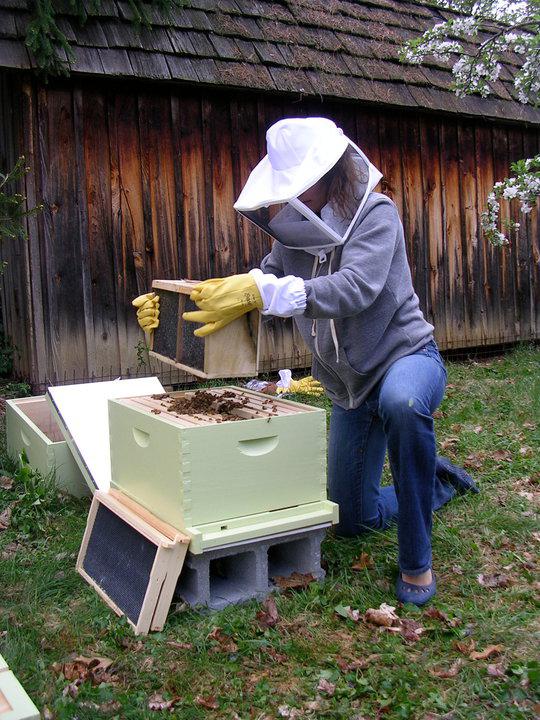
I was hesitant when, in 2009, my then-boyfriend, Tyler, asked if I were interested in keeping bees. I did not much care for honey and was alarmed by the prospect of stings. But when we ended up renting an apartment with a small orchard in the yard, we decided to give it a shot. We proudly documented the first few weeks and months, with photos that I now recognize as miscaptioned; the oversized gloves I wore on the day I dumped our new bees into a hive make me laugh now! Everything we learned showed how much more we had to figure out. One year, some equipment stored in our apartment became infested with wax moths, a common pest, which we only noticed when the moths began fluttering around our main living area in large numbers. Still, we got through the ups and downs and managed to keep one and then two colonies alive for a few years.

Clumsy beginnings

Bees gather nectar for honey from the flowers from several square miles around their hives and so, over time, I came to feel that I had a stake in the local environment and flora. I began to pay more attention to the succession of blooms, grateful for the odd out-of-reach maple flowers in early spring, the last asters in fall, and the abundance in between. Plants that I had once dismissed as common I now saw as charismatic totems of the seasons in the northeastern United States: dandelions in spring, sumac in summer, a dozen varieties of goldenrod in fall. I checked the weather more often, worrying when a dry summer stayed dry.

“We begin with noticing,” declared a recent essay: noticing the ecological entanglements that we are caught up in but so often overlook (Tsing et al., 2017, p. M7). Noticing was how I began. It was only later that I heard honey bees described as a “gateway bug,” but it was that idea—that keeping bees can lead to new connections to the landscapes around them—that prompted my research over much of the last ten years. And the core of that research was getting my own hands dirty, literally: smudged with sticky, fragrant resin from the hives, or swollen after a sting, or dusted with gold, gingerly helping Tyler, now my husband, saw off his wedding ring after a bad sting of his own.

Is more intimacy with and knowledge of wild bits of nature the necessary basis for a deeper effort to protect it? Writer Paul Kingsnorth’s “Confessions of a recovering environmentalist” suggests that this kind of “real, felt attachment” to the Earth motivates people more powerfully than abstract notions of “sustainability” (2017, p. 68). This is the rationale for the many calls for “reconciliation with nature” through activities like gardening and ecotourism (von Essen and Hansen, 2019, p. 1), activities intended to challenge to what environmental researcher Holly Jean Buck has called the “disenchanted” Anthropocene (2015). News of environmental change can feel far-off and hypermediated, with consumers’ choices at the end of long, complex supply chains creating butterfly effects over which we have no control. By contrast, Buck writes, “enchantment can enable the passion, care, revulsion, action, networks, sense of place, relationships, and so on that help bring about … socioecological transformations, offering greater momentum for mobilization” (2015, p. 372).

A key site of enchantment is relationships to nonhuman animals. Donna Haraway’s When Species Meet is perhaps the definitive scholarly reference on such encounters. Haraway writes about how we humans might recognize and build on alliances with nonhumans, learning to “pay attention” (similar to the observation above, about noticing) to members of companion species and the many other creatures with whom we are interdependent (2008, p. 19). Such relationships and encounters with nonhuman animals are facilitated by “embodied,” immediate practices (Buck, 2015, p. 372). Beekeeping is shockingly intimate and humbling, a dizzying rush that engages all five senses simultaneously. To inspect a hive is to handle alien creatures who appear to scarcely notice the beekeeper, but who might also attack en masse at any moment.

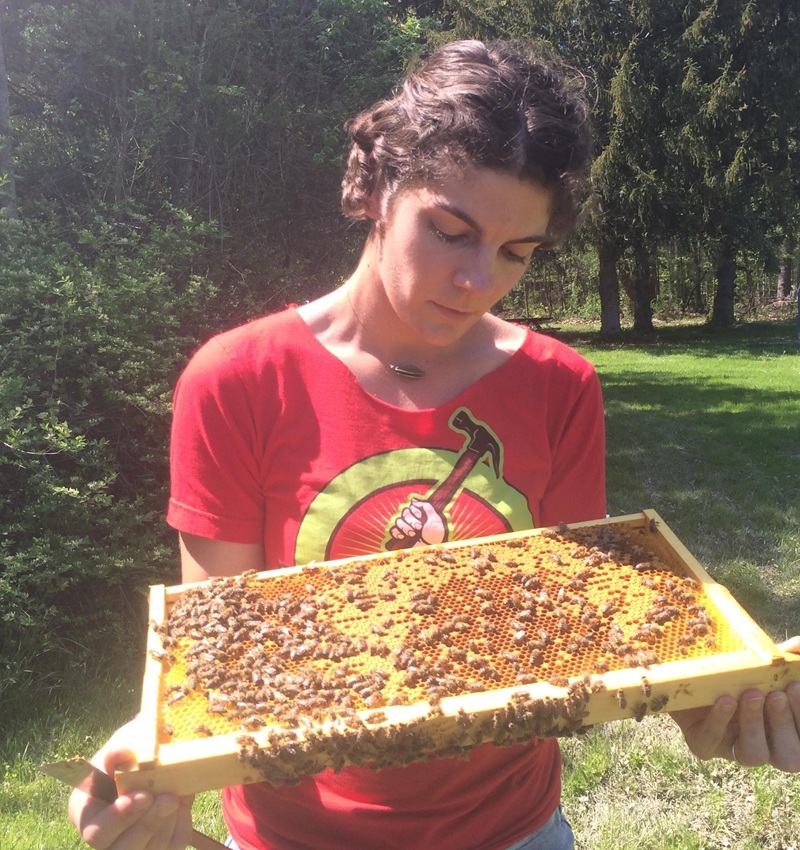
More adept handling of the bees

Environmental humanist Stephanie LeMenager has written about “skilling up” as a way to think about these relationships with other species and a necessary task of the Anthropocene (2021). UK researcher Emily Adams has described how beekeepers must develop the ability to “read” the bees and their work in the hive (2018), gaining “skilled vision” and the “education of attention.” Skill is perhaps by definition responsive to context and conditions, negotiating the limits of other materials or creatures; for LeMenager, skills are in part about “working with recalcitrant non-humans” (2021, p. 210) (emphasis added).

While any agricultural endeavor requires at least some attention to basic natural phenomenon, beekeeping arguably requires more such attention than most, as bees fly and forage freely. Less can be controlled in beekeeping, and more must be responded to. A beekeeper must accept what cannot be changed or undone, and also change what she can, if necessary (by medicating the bees, moving them, replacing the queen, etc.). The skilled beekeeper recognizes the difference. This formulation is derived from the “Serenity Prayer” (God, grant me the serenity to accept the things I cannot change, courage to change the things I can, and wisdom to know the difference), which has been proposed as a mantra for the Anthropocene (Robbins and Moore, 2013).

Indeed, skill is not just doing; it is knowing, and knowing more often means doing less. A skilled beekeeper knows enough to take anticipatory actions, for instance, staying a few steps ahead of a colony that might swarm. As well, the skilled beekeeper also knows when not to meddle; from the outside of the hive, she can see whether foragers are bringing back pollen, which indicates that larvae are being fed and might allow her to avoid or delay manipulating the colony in some way.

Some of these are advanced skills, but there is also a minimum floor: if beekeeper is not sufficiently skilled to manage the many threats to her colony—parasites and disease, starvation in lean months, exposure to agricultural pesticides—her colony is nearly guaranteed to die. Indeed, if the first thing a beekeeper learns is how to pay attention to the ways that her bees are situated in a broader environment—and therefore how her practices must be, in order to be skillful—the second thing is the long list of pests and diseases that threaten those bees. In brief, honey bees are being parasitized by Varroa mites, which entered the United States in the 1980s and are the number one direct stressor of honey bees here (Genersch, 2010).

As I have described elsewhere, beekeepers are divided about how to manage their mites, mostly along the lines of what is considered “natural” (Andrews, 2019). Conventional and commercial beekeepers largely insist on the need to skillfully apply pesticides (miticides) directly to honey bee colonies to kill the mites, but a significant fraction of beekeepers, particularly newer ones, see miticides as anathema to caring for bees. But the idea that using miticides is not natural and therefore bad for the bees is part of a false dichotomy. More bees survive when their inevitable mites are managed.

A rich vein of scholarship dispenses with the idea of untouched nature and the related, misplaced sense of nostalgia for “pure” nature, which complicate imperatives around conservation and sustainability today (Marris, 2011; Shotwell, 2016). Recognizing the honey bee’s dual nature—both wild and livestock, at the interface of agriculture and the environment—is in keeping with these anti-dualist conceptions of nature. In other words, the idea of the Anthropocene has been a useful tool for me to make management decisions about my own bees and understand tensions in beekeeping more broadly.

My tolerance, even celebration of miticides, makes my research somewhat contrarian within social scientific literature. But it is based on my own long-term learning curve as I lost colonies over the years to poor mite management. My mite levels were sky-high the one year that my colonies were a part of a mite monitoring study, an embarrassing lapse in front of colleagues. Regular work is needed to avoid such losses: monthly mite checks during the summer and fall, hive manipulations to reduce mite numbers, the careful application of miticides, ideally re-checking mite numbers after such interventions, and more. All of this effort kept mites centered in my research, as I knew it was centered for so many other beekeepers. I wrestled with choices: do I use a mite management technique that has a low tolerance for error and requires more trips to the hive, but which is easier on the bees than one that is simpler and faster to administer? Critiques of development warn against the substitution of labor and skill by “overrides” (Weis, 2013), but I came to appreciate why overrides or other substitutions have gained so much ground.

Still, have I let the pendulum swing too far? Have I let my worries about mites eclipse broader questions about the political economy of honey bee health or environmental health more broadly? Beekeepers are working against the global spread of not just Varroa mites but other pests and diseases, so-called novel ecologies, and unprecedented land use change in a “permanently polluted world” (Liboiron, Tironi, & Calvillo, 2018, p. 332). The challenges to beekeeping are broadly socialized, and putting the responsibility for bees’ health entirely on the shoulders of beekeepers is nonsensical: widespread change is needed.

Ten years after our initial foray into beekeeping, Tyler and I found ourselves managing half a dozen colonies—until two toddlers took our attention elsewhere. I look forward to when my hands will again be sticky and fragrant with honey and resin (instead of drippy popsicles and God knows what else), grounding my research in ecological enchantment.


Ellie Andrews is a geographer and political ecologist currently working in the Critical Environments Lab at the Colorado School of Mines. She teaches and conducts research on energy, climate change, and social change.


References

Adams, E. C. (2018). How to become a beekeeper: Learning and skill in managing honeybees. Cultural Geographies, 25(1), 31–47.

Andrews, E. (2019). To save the bees or not to save the bees: Honey bee health in the Anthropocene. Agriculture and Human Values, 36(4), 891–902.

Buck, H. J. (2015). On the possibilities of a charming Anthropocene. Annals of the Association of American Geographers, 105(2), 369–77.

Genersch, E. (2010). Honey bee pathology: Current threats to honey bees and beekeeping. Applied Microbiology and Biotechnology, 87(1), 87–97.

Haraway, D. (2008). When species meet. University of Minnesota Press.

Haraway, D. (2016.) Staying with the trouble: Making kin in the Chthulucene. Duke University Press.

Kingsnorth, P. (2017). Confessions of a recovering environmentalist and other essays. Graywolf Press.

LeMenager, S. (2021). Skilling up for the Anthropocene. In J. M. Hamilton, S. Reid, P. van Gelder, & A. Neimanis (Eds.), Feminist, queer, anticolonial propositions for hacking the Anthropocene: Archive (pp. 207–22). Open Humanities Press.

Liboiron, M., Tironi, M., & Calvillo, N. (2018). Toxic politics: Acting in a permanently polluted world. Social Studies of Science, 48(3), 331–49.

Marris, E. (2011). Rambunctious garden: Saving nature in a post-wild world. Bloomsbury USA.

Robbins, P., & Moore, S. (2013). Ecological anxiety disorder: Diagnosing the politics of the Anthropocene. Cultural Geographies, 20(1), 3–19.

Shotwell, A. (2016). Against purity: Living ethically in compromised times. University of Minnesota Press.

Tsing, A., Swanson, H., Gan, E., & Bubandt, N. eds. (2017). Arts of living on a damaged planet. University of Minnesota Press.

von Essen, E., and Hansen, H. P. (2019). Reconciliation, welcoming of the wild, and the desire to turn back time. The Journal of Transdisciplinary Environmental Studies, 17(1), 1–4.

Weis, T. (2013). The ecological hoofprint: The global burden of industrial livestock. Zed Books.

Blog

Article 9.1 and the Road to Implementation

Photograph captured by Marium Sheikh during the Sharm el-Sheikh Mitigation Ambition and Implementation Work Programme negotiations/

The sixty-second sessions of the Subsidiary Body for Scientific and Technological Advice (SBSTA) and the Subsidiary Body for Implementation (SBI) of the United Nations Framework Convention on Climate Change (UNFCCC), colloquially referred to as SB62, emphasized a shared understanding among parties and observers of the need for intersectional approaches to climate mitigation. Delegates recognized that a one-size-fits-all strategy is ineffective, and instead, responses and goals must be tailored to the diverse geographical, socio-political, environmental, and cultural contexts of affected communities.

One of the key themes at SB62 (held in Bonn, Germany in June 2025) were the necessity for financial strategies that go beyond funding commitments to include accountability frameworks for ensuring that resources are used as intended. Discussions stressed the importance of transparency, responsible finance deployment, and mitigating strategies to avoid duplication of existing and past projects in Least Developed Countries (LDCs) and Small Island Developing States (SIDS) region.

Notably, during the Sharm el-Sheikh Mitigation Ambition and Implementation Work Programme, developed Parties proposed to establish a virtual platform for tracking climate finance flows for better financial deployment and project governance. The idea was quickly rejected by many LDC and SIDS delegates, who argued that it duplicated previous failed initiatives and risked wasting resources without producing concrete results. Party delegates from LDCs and SIDS nations clearly highlighted their needs throughout the meetings, yet the

developed parties failed to take their requests into consideration. Instead, Parties from more developed nations began proposing a country platform that allowed investors to find projects on a secure virtual platform while also allowing projects to seek financiers globally. However, the issue and clear ask by most LDCs and SIDS was prioritizing projects based on immediate climate issues. Most LDCs and SIDS delegates refused to support the country platform as it had no quantifiable outcome promising implementation and on-the-ground results.

This rejection indicated the need for equity-focused impact assessments during project planning. Such assessments could help ensure that funding allocations reflect real community needs and avoid redundant or ineffective interventions. Despite proposals emphasizing finance tracking, measuring, and reporting, these measures often fall short of enabling effective capacity building at the local actionable level. Moreover, the lack of established definition of “Climate Fund” creates transparency and statistical issues in investment reports. The gap in understanding and acknowledging these immediate needs created a great deal of frustration for LDCs and SIDS. Tensions were evident as the discrepancy in understandings set the tone of the negotiations. Parties from developing countries called for efforts to be effectively established instead of fragmented projects that are not resourced, financed, and thought-out.

Simply investing money will not solve the issue. Projects must address the country’s climate needs and acknowledge specific, context-based climate change driven resource gaps such as limited access to water, electricity, education, infrastructure, health care etc. As noted in The Impact of Climate Change on the Development Prospects of the Least Developed Countries and Small Island Developing States (Gul et. al., 2025), “LDCs have a per capita Gross Domestic Product of less than $900 and very low levels of capital, human and technological development.” The recurring debate and inability to increase long term investment value of each project by taking every contributing factor into account has been reflected time and time again with financial promises that come without governance and accountability and cannot meet the urgency of climate adaptation needed to withstand the climate disasters that are now common occurrences for most LDCs and SIDS.

What investees fail to consider is the inability of their approach to address effective climate solutions. While LDCs’ representatives were present in negotiations, their input was not considered, and the upper hand in funding negotiations shifted towards developed country parties. Many highlighted how developed nations continue to fall short of their financial commitments that were made during the Conference of Parties (COP) 29, particularly those tied to Article 9.1 of the Paris Agreement, which states, “Developed country Parties shall provide financial resources to assist developing country Parties with respect to both mitigation and adaptation in continuation of their existing obligations under the Convention.” This emphasizes the developed Parties’ responsibility towards LDCs and SIDs, and the reluctance in investing and providing resources that has been widening the sustainable development gap between nations which will delay climate mitigation and justice. The donor-centric investment efforts means that countries are unlikely to meet their mitigation goals without climate assessments that identify the key factors that potentially hinder climate efforts for the investee country. Capacity constraints are a major hinderance due to the unavailability of skilled labor and inadequate infrastructure which impacts project implementation and the risk of running short on funding. Gul et al. (2025) highlights how making country platforms focused on national and international investment can be made durable by shifting the focusing from the investor to adaptation needs that are locally driven and an effort to build capacity as the platform grows.

A significant breakdown occurred in negotiations toward the end of SB62 where LDCs and SIDS firmly reinstated their needs when they were being pushed into the margins. Delegates repeatedly raised their nameplates, and frustration was evident in their voices and gestures, as developed Parties dominated the negotiations and minimized their immediate needs. The atmosphere in the room grew tense, with some delegates visibly upset at the lack of meaningful progress. Despite these efforts, parties could not agree on an inclusive plan for COP 30 in Belem. The Arab Group emphasized that delaying adaptation finance also delays climate solutions and sustainable development. Pushing vital decisions on implementation and funding forward to 2026 impacts the climate future of LDCs and SIDS who are at increasing climate risk every year. According to the Arab Group, Article 9.1 has repeatedly faced similar breakdowns in previous negotiations, where compliance was either ignored or the needs of investee countries were sidelined. Without governance and strategic planning for financial investments, projects inevitably face multiple obstacles and often result in partial or no outcomes. While everyone was eager to reach consensus and end the session on a positive note, it was unreasonable to move forward without ensuring that LDCs and SIDS were supported, which delayed agreements once again.

The inability to reach consensus and funding needs despite formal agreements remains a recurring and deeply concerning issue. For tangible progress and results, climate finance must be informed by the lived realities of those most affected and not by institutions far removed from the climate impacts on ground. This requires establishing a clear guideline of what “climate finance” truly means, then establishing transparent reporting framework before and after financial deployment that reflects the local needs and obstacles of project members on the ground. As the negotiations move toward COP30, the credibility of the Paris Agreement will depend on whether developed nations translate commitments into actionable and long-term value driven outcomes. SB62 highlighted the increasing value of equity, and how without a thorough anthropological analysis of financial governance, climate finance will remain an empty and unattainable promise at a time when sustainable development is critical to this planet’s future.

Photograph captured by Marium Sheikh during the Sharm el-Sheikh Mitigation Ambition and Implementation Work Programme negotiations/


References

Gul, M., Holland, E., Hassan, A., & Upson, L. (2025). The realities of country platforms for LDCs and SIDS: Ten key lessons. International Institute for Environment and Development (IIED). https://www.iied.org/sites/default/files/pdfs/2025-04/22630g.pdf

International Institute for Environment and Development. (2025). The Realities Of Country Platforms for LDCs and SIDS: Ten Key Lessons. IIED. https://www.iied.org/sites/default/files/pdfs/2025-04/22630g.pdf

United Nations Office of the High Representative for the Least Developed Countries, Landlocked Developing Countries and Small Island Developing States. (2009). The impact of climate change on LDCs and SIDS. United Nations. https://www.un.org/ohrlls/sites/www.un.org.ohrlls/files/the_impact_of_cc_on_ldcs_and_sids_for_web.pdf


Marium Sheikh is a student at the University of Calgary with a background in business, climate equity, anthropology, and research. She studies how global production systems, markets, and resource extraction drive climate change and deepen social inequalities and make them more vulnerable to climate disasters. Her work explores food insecurity, sustainable consumption, climate finance, and just energy transition.

UNFCCC
Blog

UNFCCC SB62 Evaluation: Participation, Power, and Pluralism

As a researcher who has a deep involvement in Indigenous communities in Brazil, I frequently receive questions from community members about how climate decisions are made and who has the authority to speak for whom. These questions, and the urgent need for more transparent and equitable processes, prompted my participation at UNFCCC SB621 in Bonn as an observer. My aim was to understand how decisions are formed within the Subsidiary Bodies process, which directly influences COP-level negotiations. I sought to experience firsthand how pluralism and representation are, or are not, reflected in action within the UNFCCC framework. The UNFCCC’s Subsidiary Bodies comprise the SBI, which addresses implementation issues, and the SBSTA, which provides scientific and technical advice to the climate negotiations (See Chakrabarty and Tater 2025).

Participation, Language Barriers and ‘Just Transition’

While attending, I was struck by the energy and commitment of delegates and observers alike. The sense of urgency was clear. People care deeply about climate change and climate justice. But as the sessions progressed, it became clear that participation is not always matched by influence. Minority and Indigenous representatives were present in the rooms, often making strong, thoughtful interventions. However, I also witnessed how some of these voices were sidelined or subtly undermined, whether through a lack of translation, procedural shortcuts, or rhetorical strategies designed to rush consensus.

In one session, for example, I observed a Brazilian Indigenous participant struggle to follow the discussion due to a missing interpretation. At other times, I heard phrases like “we don’t have time for more detail” or “why are we returning to this point?”, comments that risk silencing legitimate concerns. Yet, those same marginalised voices continued to assert their presence, often with admirable persistence and clarity. Their fight to be heard revealed not only their commitment but also the uneven terrain on which global climate discussions still take place.

Two key areas where this disparity was particularly evident were the discussions around Just Transition and the Loss and Damage Fund. These themes, by definition, should focus on the experiences of those most affected by climate change, yet much of the debate was framed by larger, more powerful parties. In the Just Transition dialogues, I noticed that while many delegations expressed interest in inclusive, equitable pathways, there was little clarity or agreement on how this would be financed or implemented. Indigenous and minority representatives made clear that a transition cannot be called “just” if it does not include them, not only as recipients of aid but as co-architects of solutions. Similarly, in the Loss and Damage debate, there was an acknowledgement of need, but limited progress on ensuring accessible and transparent funding channels for the most vulnerable.

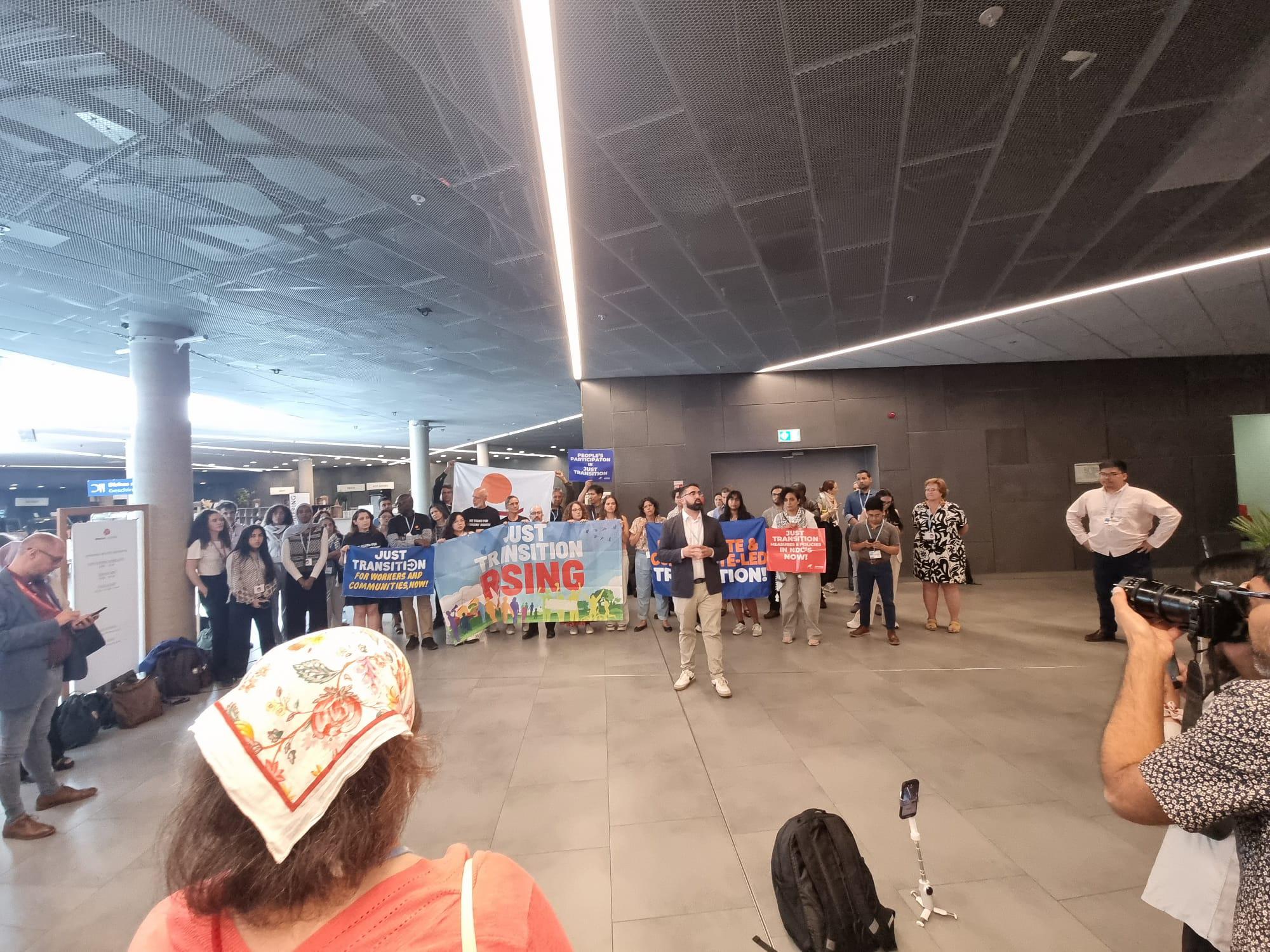
One particularly powerful moment came during a demonstration by some observers attending the conference, who raised urgent questions about the definition of “just transition.” Their message was clear: any transition that overlooks the social impacts of climate change, on workers, on displaced communities, on marginalised populations, is not truly a ‘Just’ Transition. They called attention to the specific realities of countries most affected by climate disruption, such as Caribbean Island nations, where rising seas and intensified storms are already threatening lives and livelihoods. These voices reminded the rest of us that climate justice is not just about carbon, it’s about inequality, memory, and survival. The protest wasn’t disruptive; it was a necessary intervention into a space where procedural language can easily erase lived realities. It underscored the need for climate governance that listens not only to policy, but to people, and especially to those who have historically been excluded from shaping the future.

UNFCCC. Copyright: Vera da Silva Sinha, 2025

Power and Pluralism

Having longstanding experience working with Indigenous communities in Brazil, I approached UNFCCC SB62 with both curiosity and a sense of responsibility. It was evident that Indigenous peoples and other minority communities took part in various sessions, but I continually questioned whether their involvement was meaningful or merely symbolic. This concern intensified as I observed instances of exclusion, not only in who was speaking but also in whose contributions shaped the course of discussions. For example, in several meetings, I noted the absence of interpretation services for non-English-speaking Indigenous delegates, especially from Brazil. Even when they were included in the space, complete participation was hindered without language support. These experiences led me to formulate a set of five key questions, which I used to guide me and ask a representative directly to give me a better understanding of the mechanisms of inclusion in practice.

I need to assess the level of meaningful participation of Indigenous peoples at UNFCCC SB62, beyond formal inclusion in meetings. One Indigenous participant, as an Observer, explained to me that although they have spaces to speak, the relationship is still very imbalanced, especially related to language power. Her account was that: I believe the participation was generally good. We have a very engaged constituency that is present in the discussions and makes collectively constructed interventions. Our positions are also discussed in daily meetings. It is very clear that we still need to make progress in many areas, but it must be taken into account that, for Indigenous peoples who do not speak English as a national language, progress in the discussions occurs more slowly. Even so, the interventions were necessary to distinguish Indigenous peoples from local communities, to ensure their mention in official texts, and to continue the dialogue toward eventually gaining recognition as experts and working actively on the final texts” (Indigenous Brazilian participant as Observer, Author translation).

Other participants, as observers, also noticed and stated similar observations: “Indigenous peoples were present… but were not given the platform or resources to meaningfully contribute” (Canadian Activist and Observer).

I specific asked some Indigenous and non-Indigenous participants about the linguistics provision to include those participants who are not English speakers, and their observations were similar to mine. There is a big problem of inclusion, as the interpretation service is privately provided as I understood: “Most Brazilian participants who did not speak English did not have access to translation services. This is because interpretation services are privately funded by specific groups or projects. In this case, only participants involved in projects that included interpreter support had access to the service. At certain times, the Latin American Youth Scholarship project managed to provide interpretation into Portuguese and Spanish in the UN interpretation booth, but they could only cover sessions where scholars from the project were pre-registered, as well as informal conversation spaces where they were present and offered listening devices. Beyond that, anyone who did not speak English was limited to spaces where translation was available” (Indigenous Brazilian participant as Observer).

Considering the number of essential meetings happening during the event, this exclusion seems to me very significant and can impact the nature of inclusion that is required in the discussions.

Given the scenario encountered, it is crucial to consider how Indigenous voices influence specific decisions or negotiation outcomes, particularly in the context of the LDC discussions or the Loss and Damage Fund. In this regard, one participant said: “The interventions were essential to ensure that Indigenous peoples were mentioned in the guidance texts on the GGA [Global Goal on Adaptation under the UNFCCC]” (Indigenous Brazilian participant, Author translation). However, in the observation of other participants: “Even when they contributed, their perspectives were heard but ultimately not taken into consideration” (Canadian observer).

The current structure of the UNFCCC SB62, as I witness it, appears to marginalise minority groups’ voices in the main discussions among major parties, especially those in which English serves as the main mode of communication. This concern aligns with that of Claire Charlo, an Indigenous Feminisms educator, who stresses during the event on her take up statement the importance of increasing engagement with minority communities globally, with a particular focus on equity for women and girls. Looking toward COP30, it is hoped that minority groups gain more power and that the language barrier does not hinder advancing the agenda. The Indigenous people themselves should be able to articulate their desires, as a participant pointed out: “Only the parties have the right to negotiate the terms… We also do not have Indigenous experts to carry out reviews” (Indigenous Brazilian participant as overflow). As a Canadian observer states, “Many decisions were made on behalf of minority communities… Priority was still given to the comments of developed parties.”

True climate justice requires that Indigenous peoples, the guardians of the world’s biodiversity, be able to fully participate in their own languages and with resources that provide complete translations, as interpretation and translation services are not optional; they are essential for equitable and effective climate governance. Additionally, it is necessary to establish an initial foundation that recognises the legal framework underpinning the language used in these meetings. All members involved need to have specific prior knowledge of the terminology; otherwise, it naturally acts as a barrier to those unfamiliar with such terms and concepts.

Conclusion

Inclusion and pluralism are not achieved if participation occurs without influence, and inclusion without accessibility means that pluralism remains only a desire. To attain effective climate action, these meetings, including the COPs, especially COP30, must ensure that they hear Indigenous voices and that are not only being heard but also genuinely listened to at every stage of negotiations, integrating them into decision-making processes. Unless language barriers, power dynamics, and the promotion of genuine participation through inclusive mechanisms are addressed, climate negotiations will continue to fall short of the justice which everyone envisions.

Acknowledgements:

I would like to express my sincere gratitude to all the activists and colleagues who generously shared their time, insights, and experiences with me. Your thoughtful answers to my questions about the events were invaluable in shaping a thorough, more accurate understanding. This article is as much a reflection of your contributions as it is of my own.


Vera da Silva Sinha is Associate Professor and Principal Investigator, Talent Rep. Program – Conhecimento Brasil, National Council for Scientific and Technological Development (CNPq) in cooperation with the Postgraduate Program in Anthropology (PPGA), Federal University of Paraíba (UFPB). Postdoctoral researcher at the University of Oxford. Email: vera.sinha@gmail.com


References:

Chakrabarty, A., & Tater, A. B. (2025, May 7). Is the UNFCCC climate governance truly pluralist? Examining the Loss and Damage Fund. Engaging Science, Technology, and Society. https://www.envirosociety.org/2025/05/is-the-unfccc-climate-governance-truly-pluralist-examining-the-loss-and-damage-fund/

Claire Charlo, (video Read at 2:06) https://unfccc.int/event/joint-closing-plenary-of-sbsta-62-and-sbi-62-to-take-up-statements.

1 SB 62 refers to the 62nd sessions of the UNFCCC’s two Subsidiary Bodies—the Subsidiary Body for Implementation (SBI) and the Subsidiary Body for Scientific and Technological Advice (SBSTA)—which together held the midyear “June Climate Meetings” in Bonn, Germany, from 16 to 26 June 2025

http://www.haveyoueverpickedacarrot.com/2010/08/holy-basil-tulsi-dont-leave-home.html
Blog

‘Aboriginal-realism’ as a Perspective of Living to Understand the Rural Life of India

Since Alexis Wright’s novelistic oeuvre of “aboriginal-realism,” the term is frequently used in academic discourses, particularly in developmental and environmental studies. The term “aboriginal-realism” has become a new theoretical paradigm to understand and legitimize the Indigenous communities and their knowledge system. Wright herself perceived it as opposed to “magic-realism,” which sounds derogatory and has had a sense of colonial or outsider’s viewpoint, or Othering. The Aboriginal people are traditionally less concerned with knowing the world in an abstract, logical sense; instead, they prefer to live within it. From the perspective of aboriginal – realism, living in the world is more important than knowing it. Their ways of life are rooted in a holistic worldview where not only moral, spiritual, and material aspects are inseparable but economic activities, ecological relations, and community life are also deeply interconnected. This form of life can be understood in a form of relational and custodian ethics, a concept articulated by Mary Graham, which contrasts sharply with the detached rationality of modern science by arguing that modern science isolates facts from values, and knowledge from ethics and often reducing life into measurable categories.

Thus, aboriginal-realism bifurcated the experiences and knowledge between the colonizers and the colonized; also, this made a difference between belonging and non-belonging. In contrast to the modernist tendency to categorize and fragment reality, aboriginal-realism emphasizes Indigenous and place-based epistemologies which recognize the fundamental interconnectedness of all beings. This kind of understanding and worldview does not perceive nature as an object “out there” to be conquered or exploited, but as an active participant in a relational web of life. In such systems of thought, the boundary between the human and the non-human dissolves, giving rise to a relational ontology.1 Unlike aboriginal-realism, from the perspective of modern science these kinds of world views were perceived as superstitious and irrational, and were being kept aside from the mainstream discourses. Thus, in a sense, the term provided a de-colonial perspective to understand the rational and material relationships between culture, religion, economy, and other things of an Indigenous community. Furthermore, the term becomes instrumental in understanding the limitations of modern sciences for its hegemonic and reductionist nature. From the perspective of aboriginal-realism, being is prioritized over knowing.

Knowledge is not pursued for control or mastery, but as a means of sustaining harmony with the land, ancestors, and the cosmos. This experiential, intersubjective approach resists the compartmentalization of knowledge typical of modern science. Modern sciences, especially in their enlightenment form, are grounded in the belief that knowledge of the laws and mechanisms of nature enables progress and rational control over the world. Scientific modernity, while powerful, carries significant limitations – often reducing rich, lived realities into quantifiable data, stripping away cultural meaning, spirituality, and subjectivity. As Max Weber observed, this rationalization leads to the “disenchantment of the world,”2 eroding its mystery and sacredness. Scholars like Linda Tuhiwai Smith highlight how science has served colonial and extractive agendas, marginalizing Indigenous knowledge systems.3 Moreover, its instrumental view of nature as a resource to control has contributed to ecological crises — a consequence aboriginal realism challenges through its emphasis on relational stewardship and ethical coexistence. Modern science, as veteran eco-feminist Vandana Shiva proclaims, produced exclusion in two ways through the exclusion of “other ways of knowing,” and of “other knowers.”4

This essay offers a new vantage point to understand rural India through the lens of aboriginal-realism, an ontological and epistemological perspective that valorizes Indigenous and traditional local knowledge systems, lived experiences, and embodied social realities that coexist with natural and spiritual worlds. As an approach and framework, it challenges the modernist Eurocentric dominant developmental paradigms that often reduce rural life to a singular capitalist logic of backwardness and irrationality. It argues that rural realities are lived practices where we can find the integrated matrix of material, social, spiritual, and ecological dimensions. In fact, after the arrival of colonialism, India’s aboriginals, along with other rural populations, faced a rejection of their knowledge systems. This great transformation in their worldviews caused severe social and economic crises simultaneously, as Vandana Shiva and other scholars have emphatically claimed.

The recent global emphasis on Indigenous knowledge systems in environmental conservation and management underscores the critical importance of understanding India’s aboriginal ecological frameworks. These Indigenous systems, mainly found in rural areas are not mere repositories of practical environmental techniques but are deeply interwoven with cultural, spiritual, and communal practices that collectively embody a holistic worldview of human-nature relationships. This pragmatic integrative approach fosters sustainability by situating humans as intrinsic members of ecological communities rather than separate exploiters.

India’s rich array of Indigenous traditions encapsulates place-based models of sustainability that have evolved through centuries of continuous engagement with specific ecosystems. These traditions involve adaptive, context-sensitive knowledge that encompasses biodiversity conservation, sustainable resource use, and ecosystem stewardship, often transmitted through oral histories, rituals, and communal governance structures. Such knowledge systems demonstrate realistic resilience and dynamism, adapting to environmental changes while maintaining cultural continuity. Importantly, these Indigenous practices emphasize reciprocal relationships with the environment, aligning with the concept of “kincentric ecology”5 where all life forms are regarded as relatives, promoting ecological balance and safeguarding biodiversity.

Recognizing and integrating India’s aboriginal ecological wisdom into broader conservation and development agendas not only validates Indigenous sovereignty and knowledge holders but also facilitates more effective, equitable, and culturally resonant environmental governance.

Aboriginal-realism holds ontological pluralism – referring to the coexistence of multiple realities, which are equally recognized and valid within the kaleidoscope of the rural context. In rural India, gods, spirits, ancestors, and natural forces such as rivers and mountains are not only entities and metaphors but are also the active agents shaping the life worlds of the community. This ontological pluralism is contrasted with the modern dualism (nature vs. culture, material vs. spiritual), and it demands to open a more nuanced understanding of realism where the real includes seen and unseen forces. For instance, farmers during agricultural practices invoke Bhoomi Devi (goddess-land) and other associated gods to explain agricultural successes and failures by acknowledging the reality that has been mixed with ecological and spiritual causality without contradiction. This symbolizes the core of aboriginal-realism, a view that reality is thick and embedded in communal life and cosmology.

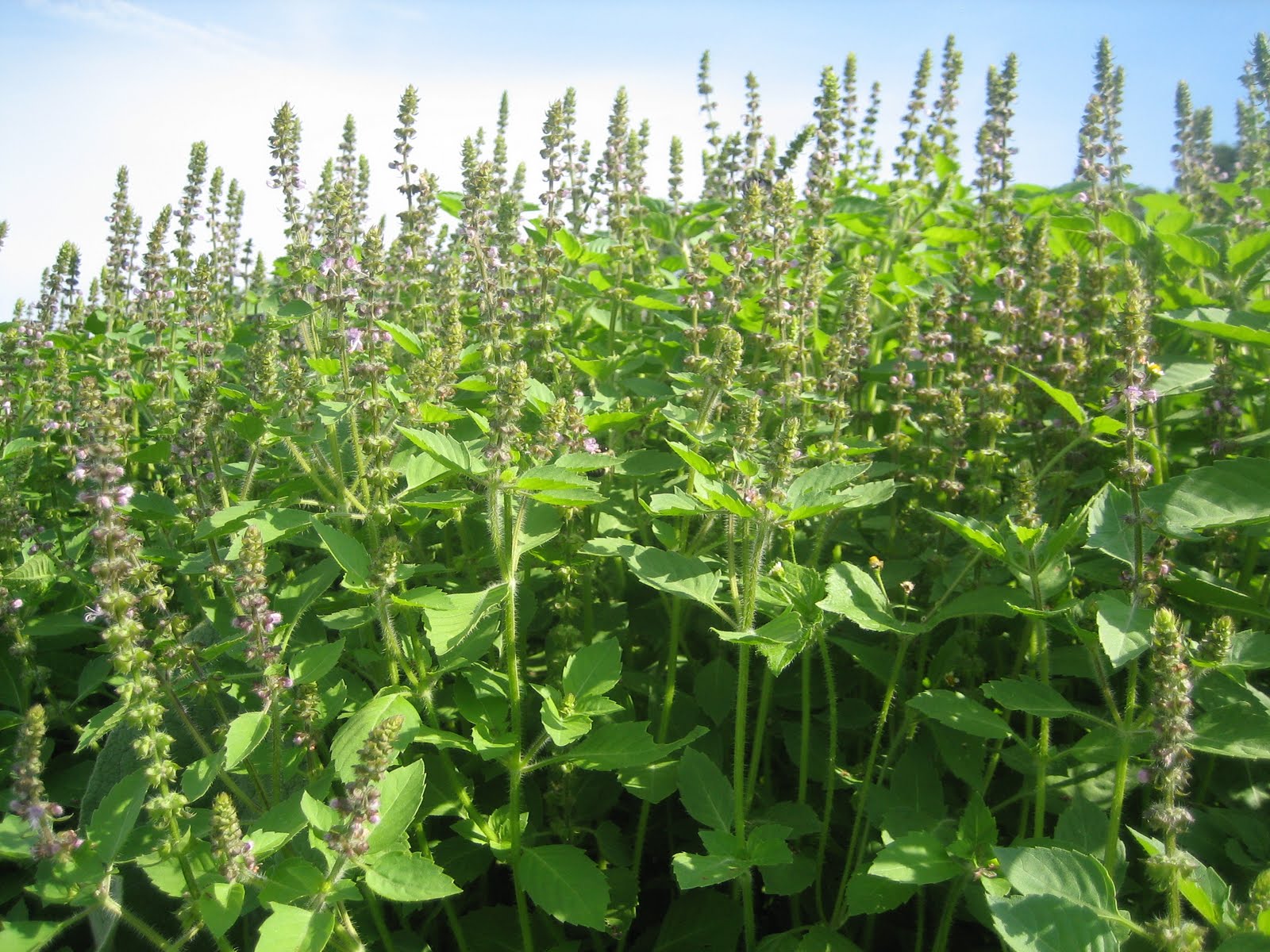
We remember the days when our elders would ask us to bring some tulsi leaves, a medicinal and sacred plant in India, from the courtyard garden during the nighttime puja ceremony. And we usually pick or pluck the leaves without snapping our fingers. Our elders would scold us and argue that the plants are in slumber, so don’t pluck them without letting them know first. According to the Sanskrit text, Vayu Purana, picking Tulsi leaves without bathing renders one’s worship ineffective. Leaves or soft mañjarīs should be plucked carefully with the right hand while chanting:

tulasy amṛta-janmāsi sadā tvaṁ keśava-priyā

keśavārthaṁ cinomi tvāṁ varadā bhava śobhane

English translation:

Oh Tulasi, born of nectar and ever dear to Keśava, I collect your leaves for His worship. Please bless me with success.

We learned that being is prioritized over knowing in the sense that knowledge is not pursued for control or mastery, but as a means of sustaining harmony with the sprit, ecology, and the cosmos. Decades later, when we started to understand the natural environment, we came to understand the “scientific” rationale of their words and understood the fact that we are a part of and dependent on nature – the Tulsi leaves require a reciprocity of care. Nature’s existence decides the existence of the human being, not we are who decides the fate of nature.

Another aboriginal reality in practice today occurs in Darbhanga, a district of Bihar. During the period of the rainy season, people are prevented from the consumption of fish on the ground of spirituality and religiosity, while the region is well known for its fish production and consumption. Prima facie, this seems to be a credulous practice, but in actuality, by avoiding the consumption of those fishes, they avoid eating polluted and non-edible fish that are tainted by massive floods or rains. Monsoon floods often pollute water bodies with sewage and industrial waste, making fish unsafe to eat due to potential contamination. Fish during this time may thus be diseased or low in quality, posing health risks. This period also marks the breeding season for many fish species, and abstaining from fishing helps preserve their reproductive cycle, supporting ecological balance and sustainability. Avoiding fish consumption during the rainy season, though often seen as a religious or spiritual practice, has strong scientific reasoning behind it. Thus, this culturally rooted practice serves as an effective traditional method of environmental and public health protection.

The negative depiction of the mythological beliefs in the above-mentioned cases was due to the colonial legacy; nevertheless, the larger part of the society never erased their traditional bonding with nature. For them, lived experiences are central; they feel the reality with their soul. Due to the cultural politics of capitalism and state initiatives, modern science tried to engage sensitively, without outright rejecting or dismissing traditional practices or rural worldviews. It attempted to interpret rural life not just with cold, objective analysis, but with a sense of compassion and cultural appreciation. However, despite this intent, it had only limited success, possibly due to deeper cultural differences, methodological limitations, or an inability to fully grasp lived rural realities. It often marginalizes or erases the rural worldviews and promotes one-size-fits-all modernization.

Aboriginal-realism asserts that rural lived rationalities and economies, grounded in local knowledge and socio-spiritual norms, are not “irrational” as modern science may suggest. For example, traditional housing techniques applied by local peoples and architects demonstrate superior climatic responsiveness that modern architects may overlook, signifying epistemic realism anchored in place-based knowledge rather than abstract expertise.6 In the case of developmentalism, a study shows how and why a tribe of Jharkhand resists developmental projects, through everyday acts of refusal. The local community’s resistance emerges from their relational bond with land and ancestors. Their small, daily, and persistent actions challenge state-driven development and extraction, not just politically but ontologically.7 This calls for epistemic humility: a recognition that science, while valuable, is not universal.

Tribal and Aboriginal perspectives offer alternative epistemologies that are not “pre-modern,” but grounded in living knowledge — knowledge that is ethical, situated, and deeply connected to the world. There is less possibility of knowing these local realities from an outsider’s perspective. In addition, the need for discussing and understanding the aboriginal practices and actions local doesn’t mean the negation of reality, but this is all about plurality. To deconstruct homogenous colonial legacies, there is a need to institutionalize local knowledge through empirical and existential interference. Here aboriginal-realism provides a deep insight regarding the issue. In a larger part of rural India, lived realities are celebrated by local people; unfortunately, they are misunderstood or overlooked in public policies. There are folk stories, which guide the moral structure of the society; there are folk poetry, which whispers in the spirit of the communities. There are stories of trees and songs of animals and birds; they relate themselves with the wider natural world. Producing realities of knowledge must be rational but at the same time it must be relational and reciprocal. The scientific analysis must respect the system of belief of a community, which binds the community to the larger natural world. We conclude that aboriginal-realism sees the rural as a dynamic space where tradition and modernity co-evolve and inform one another, offering a non-dualist realism that is both critical and constructive.

Aboriginal-realism as a perspective offers a profound framework for understanding rural India’s social, ecological, and spiritual fabric as an integrated reality. Recognizing and engaging with aboriginal-realism is crucial for ethical development, policy-making, and scholarly inquiry into India’s rural societies, rendering visible the real lived worlds of millions that are often obscured by Eurocentric, deficit-based narratives.

1 Here, the rise of relational ontology is used to refer to a way of being in which existence is co-constituted through mutual dependence and care.

2 The disenchantment of the world and the concept of the “iron cage” was given by Max Weber to describe the consequence of rationalization in modern society.

3 The seminal work of Smith (2021) Decolonizing methodologies: Research and Indigenous peoples (3rd ed.), serves to highlight the importance of centering Indigenous knowledge and science, promoting cultural sensitivity.

4 For more discussion, see Shiva’s (1998) book Staying Alive: Women, Ecology and Survival in India; also reviewed by Subudhi and Keyoor (2019) “Staying Alive: Women, Ecology and Development.”by Vandana Shiva. North Atlantic Books. In Journal of International Women’s Studies: Vol. 20(7). https://vc.bridgew.edu/jiws/vol20/iss7/29

5 Kincenteric ecology refers to the ecological assemblage of human and non-human as a part of extended family. For more refer Salmón, E. (2000). Kincentric Ecology: Indigenous Perceptions of the Human-Nature Relationship. Ecological Applications, 10(5), 1327–1332. https://doi.org/10.2307/2641288

6 “Epistemic realism” here refers to knowledge that is realistic, grounded, and tested in actual conditions—as opposed to “abstract expertise,” which may rely on universal models that don’t always fit local contexts. Science, when attentive to context, can validate and learn from such vernacular wisdom. Traditional housing techniques, developed through generations of lived experience, trial and error, and long-term adaptation reflect a deep, place-based understanding of climate and environment – often applying scientific principles like ventilation and thermal regulation without formal training.

7 See Kumar, Dhiraj ( 2024) Political Ecology of Everyday Resistance and State Building: A Case of the Ho of Jharkhand, Routledge.


Dhiraj Kumar obtained an MPhil degree from Pondicherry Central University and a PhD from the National Institute of Technology, Rourkela, India. At present, he serves as an Assistant Professor in the Sociology section at MMV, Banaras Hindu University. He has widely published in reputable international journals and has contributed to edited books. He authored a book, titled “Political Ecology of Everyday Resistance and State Building: A Case of the Ho of Jharkhand,” published by Routledge.

Keyoor Pathak is an Environmental Sociologist & Assistant Professor at Department of Sociology, University of Allahabad, India. He completed Post-Doctorate from Council for Social Development, Hyderabad. He has published many research papers in the journal of international repute, and book chapter in international publication house. Also, he frequently writes columns on developmental and environmental issues for national magazines and portals in India.


Photo credit: Holy Basil (Ocimum Sanctum) http://www.haveyoueverpickedacarrot.com/2010/08/holy-basil-tulsi-dont-leave-home.html

Blog

Is the UNFCCC climate governance truly pluralist? Examining the Loss and Damage Fund

The UNFCCC has struggled to be effective in driving ambitious climate action due to several structural and procedural limitations. In the follow up to the Paris Agreement 2015, its reliance on consensus-based decision making has been impeded by divisions between developed and developing and small island nations due lack of inclusivity, lack of accountability, and use of technocratic dominant systems over Indigenous, traditional knowledge systems, etc. (Hermwille et. al., 2015; Kuyper et. al., 2018; Nautiyal and Kinsky, 2022). While the UNFCCC remains the central institution for global climate governance, the efficacy and inclusivity in its pluralistic governance processes are widely debated. Pluralism posits that power in stable democratic nations is dispersed across a variety of actors and not monopolized by more elite actors (Rengger, 2015). In global climate governance, pluralism refers to the coexistence and equality of engagement of diverse actors, systems, values and approaches to address negative impacts of climate change at the global level (Boyd, 2010; de Ridder et. al., 2023; Okereke et. al., 2009). This essay is about whether pluralism exists in practice in the UNFCCC framework of climate governance such that developing and small island countries have equality in participation of the management of the Loss and Damage Fund (LDF). To assess the legitimacy of inclusivity, the essays analyzes pluralism in the Mult-level Governance (MLG) framework of UNFCCC using document analysis and analysis of field observations undertaken by the authors during their participation in three consecutive Conference of Parties (COP) of UNFCCC.

The process of governance of climate change was introduced in 1992 at the UN Rio Summit. It was conceptualized as global governance organization comprising of a broad spectrum of actors working towards the Sustainable Development Goals (SDG) (Janicke and Martin, 2017; UN, 1992). It was during this summit that the concept of multi-level governance (MLG) was introduced. The UNFCCC later operationalized MLG as a framework to combat climate change, incorporating national, regional, and local governments, international organizations, the private sector, and civil society (UNICEF, 2020). Geels (2011) and Lundvall (2007) have emphasized the usefulness of MLG in analyzing socio-technical transitions, particularly when dealing with technologies, policies, and institutions. The Paris Agreement (UNFCCC, 2015) exemplifies this approach when it achieved consensus of the signatory parties to the Agreement to agree upon goals, instruments, technologies, finance, and other tools of combating climate change by keeping the global temperature rise below 20C. The Paris Agreement was the first significant multilaterally created climate governance system. Nevertheless, questions persist regarding whether this multilevel structure genuinely empowers all actors, especially small island nations, or if global climate governance is a place for nation states to display their hegemony over other relatively weaker states who may have a seat on the table, but not a share in the pie.

Findings from our research show that UNFCCC’s climate governance process is determined by the extent to which a developed country is willing to bargain its hegemonic power. This hegemonic power is symbolically represented in relative share of developed nation member states vis-à-vis developing nation members in decision making; share of resources provided towards implementation of instruments; and ability to use the UNFCCC process to delay consensus and implementation. The higher the extent to which a developed country cedes power, the better is the chance of achieving pluralism in practice in the governance process. Even though the climate governance landscape exhibits the characteristics of pluralist governance via diversity of actors and multiplicity of initiatives, an actor can dismantle the process if it holds hegemony over other actors.

History and Development of the Loss and Damage Fund (LDF)

Since the first Conference of Parties (COP) in Berlin in 1995, COPs have served as platforms to review climate actions and negotiate global commitments. Climate finance emerged as a key mechanism under this multilevel governance framework. In 1990, the Association of Small Island States (AOSIS) first proposed an international insurance pool to support nations vulnerable to sea-level rise. But the proposal was not accepted, and L&D was not mentioned at the Rio Summit in 1992 because developed countries were hesitant to address financial compensation and liabilities related to L&D (Beylier, 2024). It took over three decades and multiple COPs for this vision to materialize. Incidentally, the Paris Agreement did not contain a formal definition of L&D, which made the process more complex and harder to follow policy-wise, making “non-economic loss and damage (including loss of knowledge, social cohesion, identity, or cultural heritage)” hard to incorporate into the fund (Broberg and Romera, 2020). Nonetheless, there were notable milestones achieved by AOSIS including the establishment of the Green Climate Fund at COP16 in Cancun (2010), the Warsaw International Mechanism on Loss and Damage in 2022 (Kattumuri et al. 2022), and finally, the LDF agreement at COP27, with operationalization put into effect in COP 29 (Beylier, 2024). These developments illustrate the delayed nature of climate finance negotiations that resulted from divergent vested interests that lead to non-binding negotiations.

COP29: Observations from the Field

Aritra Chakrabarty, and Alexis Tater, from Michigan Technological University (MTU) had the opportunity to attend COP 27, COP 28 and COP29. While Aritra was part of RINGO and represented MTU as an observer institution in COP 27 & 28, Alexis attended COP29, as part of her study on presence/absence of local indigenous knowledge in climate negotiations. Attending these COPs provided us with a clear understanding as to how negotiations happen at the global scale. We conducted firsthand participant observation of negotiations that happen behind closed doors. Behind each closed door is a political theater that illustrates the pluralistic process. As one moves from one negotiating room to another, you realize that the very existence of this pluralistic process is stalling the negotiation. Negotiated words become promises, which later turn into pledges, and finally result in a report -which thus far has not mentioned “accountability.” While each participatory nation of the Paris Agreement has a voice in the negotiation room, they are not equally weighted in decisions. Also, because the process gives equal chance to every nation, the process is stretched out, proceeding at a slow pace, made even slower when more powerful nations want to “review the motions of an agreement” again and again. The authors observed that the developed countries expressed their power by single-handedly elongating or stalling negotiation processes. Developing nations, and small island nations share the mutual frustration of these delays and on the lack of action on promises made at COPs. For example, the agreement on LDF was achieved in COP 27, 32 years after it was initiated in 1990 by AOSIS. Furthermore, although the COP29 website noted that “significant decisions towards the Fund’s full operationalization” were made, no concrete timelines for disbursement were announced (COP29AZ, 2024). UN Secretary-General Antonio Guterres echoed similar concerns, stating that climate disasters disproportionately affect those least responsible and that the initial capitalization of $768 million for the LDF is far from adequate (United Nations, 2024).

Governance of L&D

The LDF is a piece of climate governance instrument made up of an aggregated set of rules, procedures, and precedents, decided upon by a committee using normative elements of negotiation. It reflects different conceptions of what climate finance is; what should do, and therefore does not have a single binding objective nor is binding on any of the nations that have pledged their resources (Nardin, 2000). The operationalization of the LDF exposes the governance gaps in the UNFCCC regime. In March 2025, the United States (U.S) pulled out from the management of the fund with immediate effect (Gastelumendi, 2025). This withdrawal was seen by many state and non-state actors as a major setback to the implementation of the LDF. However, analysis of the status report on the Fund shows that as out of the total $321.24 million received by the Fund as of March 2025, the pledged share of the U.S was only five percent ($17.56 million) which it has paid. On the other hand, the oil resource rich nation of the United Arab Emirates (UAE), which had pledged $100 million has provided $25 million so far. The difference in the pledged and the received amount is enormous: $768.40 million pledged is more than two times of the received amount so far. Interestingly, out of the 26 nation states that have pledged to contribute to the LDF, the first and the third largest greenhouse gas (GHG) emitting nations are absent; both from the list of pledged nations to the committed resources as well as from the membership to the Board of the Fund. The membership of the Board responsible for the management of the Fund also shows a lack of equity in representation. Out of the 26 members, 12 are from developed countries; three from Asia-Pacific states; three from African states; three from Latin American and the Caribbean states; two from Small Island developing states; two from the least developed states; and one from a developing country that is not part of any the above groups. For the small island nations to have only two members, who initiated the conversation and discussion on a funding mechanism back in 1990 represents how hegemonic power makes it way in this pluralistic world of climate governance.

While the U.S exit from the LDF represents only 5% of the total received funds, it’s a symbolic power display that significantly undermines the Fund’s perceived legitimacy. From a pluralist perspective, this action reveals that while the governance framework may appear inclusive, actual influence is still disproportionately concentrated. The U.S exit signals other developed nations who have pledged to the Fund to also reconsider their economic contribution, as there’s no accountability attached with non-commitment. While the Paris Agreement has created universal participation, its mechanism for mitigation and adaption of polycentric framework suffers from higher ambition but low compliance (Falkner, 2016; Torstad, 2020). The process of non-binding voluntary pledges that can be compared and reviewed with the hope of ‘naming and shaming’ as a measure of accountability does not hold ground, as proved in this instance of the U.S exit from the LDF. According to a realist perspective, the voluntary commitment and pledge to the governance process can work if the member nation can gain dominance over other members through that process (Donelly, 2005).

Reimagining Global Climate Governance (GCG)

To make the LDF an effective and just instrument of global climate governance, true to its pluralist foundation, its design must prioritize principles of equitability, accountability, and sustainability (Gurung et. al., 2020). Gurung et. al. (2020) argue that funding arrangements should offer new and additional financial resources beyond existing mitigation and adaptation funds. This distinction is crucial for addressing the unique challenges posed by loss and damage, particularly in vulnerable regions. The success of the Fund lies in navigating these intricacies, aligning financial mechanisms with the dire needs of the most vulnerable, and fostering a collaborative, inclusive approach. The UNFCCC framework, through mechanisms like the LDF, aspires to pluralist governance by involving diverse actors. However, its current structure falls short of enabling genuine influence by small island nations. While these countries have a voice in negotiations, the lack of binding commitments and uneven power dynamics hinder substantive participation. To transform the LDF into an accountable and inclusive instrument, reforms must address these structural inequities and center the voices and knowledge systems of those most affected.


References

  • (UNFCCC), United Nations Framework Convention on Climate Change (2015). Paris Agreement. https://unfccc.int/sites/default/files/english_paris_agreement.pdf
  • (UNFCCC), United Nations Framework Convention on Climate Change (2025). Fund for responding to Loss and Damage: Status of Resources. UNFCCC. https://unfccc.int/sites/default/files/resource/FRLD_B.5_6_Status_of_resources_report_of_the_Trustee.pdf
  • Boyd, W. E. (2010). Climate Change, Fragmentation, and the Challenges of Global Environmental Law: Elements of a Post-Copenhagen Assemblage. International Environmental Law eJournal.
  • de Ridder, K., Schultz, F. C., & Pies, I. (2023). Procedural climate justice: Conceptualizing a polycentric solution to a global problem. Ecological Economics, 214, 107998. https://doi.org/https://doi.org/10.1016/j.ecolecon.2023.107998
  • Donnelly, J. (2019). What Do We Mean by Realism? And How—And What—Does Realism Explain? In R. Belloni, V. Della Sala, & P. Viotti (Eds.), Fear and Uncertainty in Europe: The Return to Realism? (pp. 13-33). Springer International Publishing. https://doi.org/10.1007/978-3-319-91965-2_2
  • Falkner, R. (2016). The Paris Agreement and the new logic of international climate politics. International Affairs, 92(5), 1107-1125. https://doi.org/10.1111/1468-2346.12708
  • Gastelumendi, J. (2025). The US pullout from the climate loss and damage fund will prove costlier in the long run. Atlantic Council. Retrieved 04/25/2025 from https://www.atlanticcouncil.org/blogs/new-atlanticist/us-pullout-from-the-climate-loss-and-damage-fund-will-prove-costlier/
  • Geels, F. W. (2011). The multi-level perspective on sustainability transitions: Responses to seven criticisms. Environmental Innovation and Societal Transitions, 1(1), 24-40.
  • Gurung, P., Ojha, H., Naushin, N., Singh, P. M., Bhattarai, B., Banjade, P., Adhikari, A., Bartlett, C., Koran, G., & Camara, I. (2023). Designing loss and damage fund: Insights from vulnerable countries. In.
  • Hermwille, L., Wolfgang, O., E., O. H., & and Beuermann, C. (2017). UNFCCC before and after Paris – what’s necessary for an effective climate regime? Climate policy, 17(2), 150-170. https://doi.org/10.1080/14693062.2015.1115231
  • Jänicke, M. (2017). The Multi-level System of Global Climate Governance – the Model and its Current State. Environmental Policy and Governance, 27(2), 108-121. https://doi.org/https://doi.org/10.1002/eet.1747
  • Kuyper, J., Schroeder, H., & Linnér, B.-O. (2018). The Evolution of the UNFCCC. Annual Review of Environment and Resources, 43(Volume 43, 2018), 343-368. https://doi.org/https://doi.org/10.1146/annurev-environ-102017-030119
  • Lundvall, B. Å. (2007). National innovation systems—analytical concept and development tool. Industry and innovation, 14(1), 95-119.
  • Nardin, T. (2000). International pluralism and the rule of law. Review of International Studies, 26(5), 095-110.
  • Nautiyal, S., & and Klinsky, S. (2022). The knowledge politics of capacity building for climate change at the UNFCCC. Climate policy, 22(5), 576-592. https://doi.org/10.1080/14693062.2022.2042176
  • Okereke, C., Bulkeley, H., & Schroeder, H. (2009). Conceptualizing Climate Governance Beyond the International Regime. Global Environmental Politics, 9(1), 58-78. https://doi.org/10.1162/glep.2009.9.1.58
  • Reid, M. G., Hamilton, C., Reid, S. K., Trousdale, W., Hill, C., Turner, N., Picard, C. R., Lamontagne, C., & Matthews, H. D. (2014). Indigenous Climate Change Adaptation Planning Using a Values-Focused Approach: A Case Study with the Gitga’at Nation. Journal of Ethnobiology, 34(3), 401-424. https://doi.org/10.2993/0278-0771-34.3.401
  • Rengger, N. (2015). Pluralism in International Relations Theory: Three Questions1. International Studies Perspectives, 16(1), 32-39. https://doi.org/10.1111/insp.12090
  • Tørstad, V. H. (2020). Participation, ambition and compliance: can the Paris Agreement solve the effectiveness trilemma? Environmental Politics, 29(5), 761-780. https://doi.org/10.1080/09644016.2019.1710322
  • United Nations (1993). Report of the United Nations Conference on Environment and Development. U. Nations. https://docs.un.org/en/A/CONF.151/26/Rev.1(vol.I)

Aritra Chakrabarty obtained his PhD from Michigan Technological University (MTU) in the Environment and Energy Policy (EEP) program in 2025. His research focuses on justice and equity in the renewable energy transition in the in the Global South. Apart from energy and environmental policy, Aritra also engages with climate governance as an issue through on ground interaction with stakeholders across geographies ranging from Europe, Latin America, and Asia. His participation at COP 27 & 28 of UNFCCC provided with on ground perspective of international relations in the context of climate change and how multi-level governance processes work. Aritra is well versed with international relations practices in the context of climate change and energy justice, and his past experience as a renewable energy sector consultant in South Asia, across both sides commercial grids and decentralized solutions gives him the leverage to understand stakeholder negotiations at multiple levels.

Alexis Belle Tater is a new Ph.D. student in Environmental and Energy Policy at Michigan Technological University. Her research focuses on Tribal sovereignty, ethical community engagement, and environmental justice. She is an active member in her community, leading campaigns and protests through Keweenaw Against the Oligarchy (which she founded), creating community spaces for organizing and for people to use their voices in a safe and constructive way. She is also an active leader in Keweenaw Youth for Climate Action, an action-based community and student organization working to urge university divestment from fossil fuels. Her work is rooted in her strong knowledge in and passions for socio-environmental justice and the belief that amplifying Indigenous voices and knowledges is crucial in the fight for climate justice.

Blog

Introducing a New Blog Editor and the Revitalized EnviroSociety Blog

Hello, my name is Emily Hite, and I’m an Assistant Professor of Anthropology at Saint Louis University. I am thrilled to now serve as the blog editor for EnviroSociety.

My research focuses on understanding how human-water relationships are shaped and challenged by climate governance, with particular attention to the justice and equity of decision-making processes related to hydropower across local-to-global scales. My work spans from ethnographic research at international climate meetings, where global policies are shaped, to collaborating with Indigenous communities in Costa Rica, where these projects are implemented. Recently, I’ve expanded my work to the United States, particularly focusing on the human-water-climate nexus in the Colorado and Mississippi River basins. I am a board member of Save the World’s Rivers and a Primary Investigator at the Saint Louis University Water Institute.

In 2021, I helped establish the Climate Change Interest Group (CCIG) within the American Anthropological Association (AAA). CCIG emphasizes the essential role of anthropologists in understanding and addressing the human dimensions of climate change. By building on the legacy of the AAA’s Climate Change Task Force, CCIG continues to push for the integration of anthropological insights into global climate governance and policy. Through this work, we have helped ensure anthropologists’ participation in major international climate events, such as the United Nations Framework Convention on Climate Change (UNFCCC) COP meetings. The group works to highlight how human societies are impacted by and engage with environmental changes, particularly through the social, political, and cultural dynamics at play. CCIG’s ongoing efforts amplify the voices of those impacted by climate change and promote discussions rooted in human experiences.
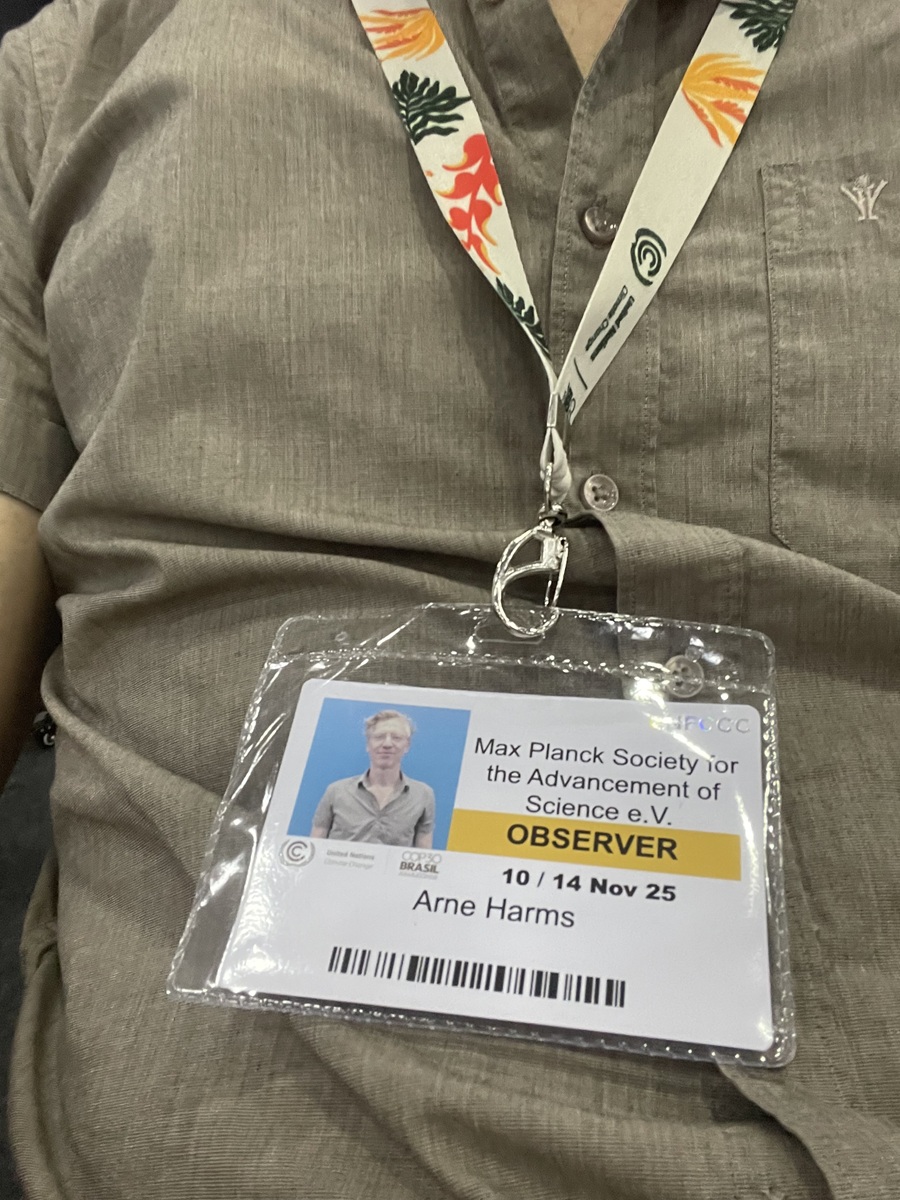
I’m excited to now take on the role of editor for the EnviroSociety blog and contribute to this important platform. The blog serves as a vital space for discussions around environmental anthropology, climate change, and the broader human and other-than-human dimensions of the environment. Moving forward, we’ll be featuring themed sections, with a strong focus on climate change, while remaining open to contributions on other critical environmental and societal issues. Essays will cover a wide range of topics, including, but are not limited to, biodiversity concerns, the food-energy nexus, health and the environment, and natural resources. This is an exciting opportunity to broaden the conversation and explore a wide range of topics that impact our understanding of the intersections between environments and societies.

We are now soliciting essays from scholars, including students, junior and senior faculty, as well as practicing anthropologists. Contributions should aim to deepen our collective understanding of human-environmental experiences. We encourage submissions that bring fresh perspectives on the intersections of society and the environment, investigate new technologies, assess governance influences and impacts, among others. We are eager to showcase the important work being done in this field.

We look forward to sharing your insights on EnviroSociety.

If you are interested in contributing an essay or have inquiries about the blog, please reach out to us at envirosociety@berghahnjournals.com for more information.

Directions on how to submit:

We ask that submissions are 1000-2000 words, sent in a word doc, include an image (at least) with author/photographer permission (or copyright free with attribution), and 3-5 key words.

Blog

Rising from the Ashes: Rural Communities in Portugal’s Fiery Landscapes

On June 17th, 2017, Ferraria de São João (hereafter Ferraria), a small-sized village in central Portugal remotely located at the top of a hill, was encircled by flames. The two available fire engines, one at each end of the village, were unable to refill with water at some point. There were no helicopters either. The tragedy, as the few residents would come to realise the morning after, was of a regional scale. Left to their own devices, the unprepared local population fought the flames by themselves with what they had at hand: garden hoses, water buckets, branches.

Wildfires are common in this region, but this time it was different. Indeed, 2017 was the worst wildfire year in Portugal’s recent history. A record area of over half a million hectares burned, leaving in its wake record damages and fatalities. Two unprecedented wildfire events, before (mid-June) and after (mid-October) the so-called critical fire period, were particularly disastrous, with over one hundred casualties and hundreds of injured people. These events were the first of a new kind recorded not only in Portugal, but also in Europe, in terms of extreme behaviour, intensity and impacts. In a way, Portugal was the “canary in the mine”, providing a stark warning of what the future holds for Mediterranean ecosystems.

A valley landscape with large burn patterns across the hillside.
Figure 1. Burnt landscape in the aftermath of the 2017 wildfires. Photo Credit: Feli García, via Flickr (CC BY-SA 2.0)

The roots of the wildfire problem in Portugal, and across Southern Europe more generally, are deep and complex, entangling social, economic, ecological, and political factors, further exacerbated by climate change. These roots date back to the 1960s, when significant socioeconomic and land-use changes radically changed fire regimes.[1] Since then, wildfires have become larger, more frequent, and more destructive. In the wake of a rapid, albeit late, industrialisation process, most rural inland areas of northern and central Portugal witnessed a massive rural exodus that left behind increasingly depopulated and almost abandoned villages. As a result, former agricultural areas have been occupied by fire-prone shrublands and forests. Forest composition has also shifted, due to plantations of native maritime pines and, more recently, non-native eucalyptus trees – two fast-growing, fire-prone species. Adding to this, forest ownership in Portugal is overwhelmingly private. In northern and central Portugal, where wildfires are more frequent, properties are also highly fragmented and small-sized. The owners of many of these properties are unknown, as most properties therein have no official land registry title – an issue that is only now being tackled.

A forest of eucalyptus trees, with a pile of felled trees in the foreground.
Figure 2. Eucalyptus plantation in Portugal. Photo Credit: Global Forest Coalition (used with permission)

The eucalyptus is a controversial species in Portugal, where it is currently the most common tree. Native to Australia, it was introduced to Portugal in the 1850s, but it was only by the mid-20th century that it became a protagonist, often a vilified one, in the history of Portuguese forests and wildfires. Since then, the area it occupies has rapidly and steadily expanded to feed the booming paper pulp industry, not without protest, creating extensive monocultures, many of which un/mismanaged. Currently, Portugal has the largest land area planted with eucalyptus in Europe and, in relative terms, in the world. It is not only through planting that this species spreads, though. The eucalyptus thrives and takes hold with fire. In other words, wildfires encourage their natural regeneration. As many private properties are left unmanaged or abandoned, eucalyptus trees grow ‘wildly’, rendering landscapes increasingly flammable.

Like most villages in the region, the surroundings of Ferraria were almost exclusively occupied by eucalyptus, all of which burned down in 2017. Closer to the village, however, the flames eventually stopped in a 200-year-old stand of cork oaks, a heritage bequeathed by the ancestors that saved many houses.

A small village with white houses and tiled roofs sits below a burned hillside. The trees around the village are green, while the hillside is brown and blackened.
Figure 3. The village of Ferraria de São João after the 2017 wildfires, surrounded by cork oaks and, further afield, burnt eucalyptus trees. Photo Credit: Nuno Antunes/Revelamos (used with permission).

After experiencing the wildfires, and inspired by the oaks, the residents realised that something had to change. One week after the wildfires, the Residents’ Association promoted the first of over 20 community meetings with residents and forest owners to discuss what could be done to protect the village from future wildfires. Through a continuous participatory process of discussion and collective decision-making, the unanimous solution arrived at was the creation of a ‘village protection zone’ (VPZ): a 100-metres strip around the village collectively managed, where eucalyptus trees were replaced with more fire-resistant native trees.

The limits of the VPZ were collectively planned and mapped, as were the intervention areas therein. Given that the plots within the VPZ are mostly private, landowners’ consent was needed. The challenge was to identify them, as there was no land registry and many landowners are absentees. Yet, with the help of the residents, the Association was able to identify over 250 plots, mostly with less than 1 hectare, and their respective owners (around 80). Provided with the owners’ consent, the Association registered their lands and started removing eucalyptus trees in a designated area within the VPZ. Afterwards, over 1,000 native trees were planted. The areas and species to plant were also collectively chosen and mapped: fruit trees closer to the village; cork oaks and oaks further away. These plantations were made possible with the help of several volunteers from all over the country, taking advantage of the wave of solidarity that followed the catastrophic wildfires.

Figure 4. The Village Protection Zone of Ferraria, with the different intervention areas. Source: Associação de Moradores da Ferraria de São João (used with permission)

This pioneering and innovative initiative became an example at the national level, to be replicated in other villages, as has already happened in the neighbouring village of Casal de São Simão. These villages were two case studies in a research we conducted on local communities’ responses to the 2017 wildfires in Portugal,[2] as part of a larger interdisciplinary project on wildfire mitigation and adaptation in the country (People&Fire[3]).

With global temperatures on the rise and a projected increase of extreme wildfires due to climatic and land-use changes, to which Mediterranean ecosystems are particularly vulnerable, pressures mount to find ways to learn to coexist with wildfires. In a context of dwindling, aging population and widespread land abandonment, such as Southern Europe, what might this mean? What happened in Ferraria provides some answers. For the residents, it meant being proactive and restoring native landscapes through a bottom-up, participatory process that involved the whole community. The damaged, fiery landscapes of the present are not only “our disaster”, but also “our weedy hope”.[4]


[1] For a summary of these changes, see: Lourenço, L. (2018) Forest fires in continental Portugal: Result of profound alterations in society and territorial consequences. Méditerranée 130; Moreira, F. et al. (2011) Landscape–wildfire interactions in Southern Europe: Implications for landscape management. Journal of Environmental Management 92(10): 2389–2402.

[2] This research focused on ten initiatives that were implemented in one of the most seriously hit regions in 2017 (Pinhal Interior) by local communities, local associations and/or local governments. Drawing upon qualitative research methods (surveys of local government presidents, document analysis, and semi-structured interviews), it explored the underpinning motivations, actions undertaken, opportunities, and challenges.

[3] “People&Fire: Reducing Risk, Living with Risk” is a research project funded by Portuguese national funds through FCT–Fundação para a Ciência e Tecnologia, I.P. (PCIF/AGT/0136/2017), between 2019 and 2022. It is carried out at the University of Lisbon (School of Agriculture, Institute of Social Sciences, and Institute of Geography and Spatial Planning) and is coordinated by Professor José Lima Santos. The aim of the project is to develop a new analytical framework to support people-centred policies through changing practices and choices at the policy, collective, and individual levels.

[4] Gan, E., Tsing, A., Swanson, H., & Bubandt, N. (2017). Introduction: Haunted landscapes of the Anthropocene. In A. L. Tsing, H. Swanson, E. Gan, & N. Bubandt (Eds.), Arts of living on a damaged planet: Ghosts of the Anthropocene (pp. G1–G14). University of Minnesota Press.


Filipa Soares is a researcher at the Instituto de Ciências Sociais da Universidade de Lisboa. Originally trained as an anthropologist, she holds a DPhil (PhD) in Environmental Geography from the University of Oxford. She has done research in Portugal and the UK on various topics, such as the politics and histories of wildlife conservation, including rewilding, and forest management and human-environment relations. Email: filipafs@gmail.com

Luísa Schmidt is a sociologist and Principal Researcher at the Instituto de Ciências Sociais da Universidade de Lisboa. In Portugal, she pioneered environmental sociology research and outreach. She coordinates OBSERVA–Environment, Territory and Society Observatory and co-founded (2009) the PhD on “Climate Change and Sustainable Development Policies”.

Ana Delicado is a Research Fellow at the Instituto de Ciências Sociais da Universidade de Lisboa. Trained as a sociologist, she works mainly in social studies of science and technology. She has done research on environmental risks, energy technologies, public engagement with science, among other topics. She teaches at the PhD Programme in Climate Change and Sustainable Development and at the Master in Scientific Culture and Science Dissemination.

Blog

Cascade Learning for Environmental Justice

Environmental Justice as a Pedagogical Problem

Consider the Park Avenue Elementary School in Cudahy, located ten miles from downtown Los Angeles. Or shift your attention to the Rani Jhansi Sarvodaya Kanya Vidyalaya in east Delhi, a few miles away from the Indian capital city’s most affluent neighborhoods. Though continents apart, what ties these two schools together is their shared exposure and experience to compounding environmental hazards. The former is built on top of a capped unregulated landfill/dump and the latter is surrounded by a massive, operational landfill, an interstate container depot, and waste processing facilities. Students at both schools have experienced adverse health effects related to chemical contamination— developing chronic asthma or even being hospitalized after a gas leak from a nearby container depot. 

Classrooms and educational spaces can be sites of environmental injustice due to toxic chemical exposure, and classrooms can also be sites of disinformation in which environmental injustice is reproduced. First graders in Oklahoma, for example, read stories about Petro Pete, who had a bad dream in which many plastics in his life – his toothbrush, the tires on his bike, his hard hat – go missing. The message is clear: without petrochemical products, life isn’t good. Along the same lines, in New Mexico, the oil and gas industry leverages their investment in public education infrastructure to push science curricula that uses fracking to teach about the slope of a graph. Across the US, bills are underway that ban even the mention of race and gender in classrooms, which also impacts the teaching of environmental justice and climate change. Production of disinformation and apathy in classrooms extends globally: grade 12 students in Bhopal, India, for example, learn little in their classrooms about the 1984 Union Carbide chemical plant disaster which killed thousands in Bhopal (Iyenagar & Bajaj 2011). 


Figure 1. First graders in Oklahoma listen to a story about Petro Pete, who dreams that all by-products of the petrochemical industry have disappeared. He cannot brush his teeth or use soap. He cannot go to school because there is no school bus anymore. Source: Oklahoma Energy Resources Board Homeroom website.

My work contends with how teaching and learning produce and reproduce environmental problems and responses. When something is “stuck”— be it a discourse or a literal cog in the machine— we need to ask what it is that confounds our understanding, and what is the way forward? I will describe here an experimental environmental justice education program in the United States that works within the challenges of a pedagogy in late industrialism, a pedagogy of “cascade learning” that interrogates entrenched structures of feeling and thinking, even as it urges into formation communities of thought and practice that activate learners as stakeholders and stewards of shared environmental futures

Against Estranged Learning 

Environmental justice researchers address complex environmental issues with no straightforward answers or solutions. We examine analytic chains linking polluting industries and racialized governance to habits of thinking and doing— examples of what anthropologist Kim Fortun calls “late industrialism”, necessitating “modes of thought, collaboration and practice that we haven’t yet figured out” (Fortun 2012). In my research on the ways scientists, environmental advocates, and entrepreneurs are responding to the enormous socio-ecological and political complexity of air pollution in Delhi, I worked with urban studies scholar Rohit Negi to understand how their responses were shifting habitual ways of thinking and doing science, advocacy, and corporate responsibility (Negi & Srigyan 2021). We were frequently asked to explain our ethnographic research to diverse audiences, with people listening carefully to understand how our expertise can be useful for them. Turning to pedagogy is one way to do that— even more so when spaces of education become critical sites of environmental injustice. 

Figure 2. The EcoEd Research Group website.  Source: The Asthma Files

The EcoEd program is a learning collective that started in 2012 at the Rensselaer Polytechnic Institute in New York, bringing together university-based faculty and undergraduate and graduate students to address the challenges presented by late industrialism. A persistent challenge of late industrialism is to understand environmental injustice as a multi-scalar and complex problem. To respond to this challenge, the program’s evolving list of literacy goals include recognizing complex causation, cross-scalar relations, organization and analysis of information, collaborative tactics, and creative strategies to communicate research findings, developing what anthropologist Angela Jenks calls “justice-oriented civic capabilities” supporting students in their transitions as social agents (Jenks 2022). 

And there are compelling reasons to advocate for these literacy goals. Learning to recognize and understand where things get stuck— and how to get them moving towards different ends so that systems (and people) don’t repeat what they always have— is what Gregory Bateson calls deutero learning or “learning to learn.” To understand how pedagogy reproduces environmental injustice, and how it can be a pathway to address it, deutero learning requires deep thinking, doing, and enacting a series of experiments to figure out what can work and what cannot. There are a number of pathways that don’t work: for example, we know through the works of educators Paulo Freire (1968) and bell hooks (1994) that commodification of learning in silo-ed off institutions has produced teachers and learners to become invested in the “banking model of education”, framing an educator as a transmitter and a learner as a passive recipient of knowledge.

The model fails in part because learners are obviously not passive, and educators are always doing more than mere “transfer.” Resistance to learning and teaching emerges in a skewed and stuck dyadic relationship. It also fails because it positions learners as opposed to one another, where the possession of knowledge becomes something that causes worry rather than excitement. Learning theorists Jean Lave and Ray MacDermott (cite) call this “estranged learning”, reading Marx’s theory of estranged labor to understand how alienation (of work from the worker’s body, of time from narrative, of the self from the world, of categories from their meanings) produces subjectivities of learning and teaching that actively resists coming together for reflection and conversation. In places where settler/colonial logics have set forth racialized, classed, and gendered ways of thinking and being (Grande 2015, Shange 2019), estranged learning maintains barriers that prevent collective reflection and action. 

Estranged learning means that students are learning that petrochemical products are here to stay, and are being socialized to ignore or tolerate compounding factors. They are not learning about how their bodies and neighborhoods are affected by the oil and gas industry. They are not learning to dream about alternatives to fossil fuels. Combined with the banking model of education’s skewed-and-stuck knowledge transfer paradigm, estranged learning means that learners will in fact be resistant to such change—which is one reason why “straight facts” don’t work, especially in a post-truth age where “which truths count and which are ignored is a central question” (Davies & Mah 2020). Cultivating justice-oriented civic capabilities is then a matter of undercutting mechanisms that produce estranged learning. The question then becomes: which pedagogical tactics cultivate this capacity? 

Cascade Learning in EcoED 

The EcoEd program enrolled undergraduate students to be mentors to elementary and middle school students. In their roles as mentors, undergraduate students developed and communicated research projects about environmental issues through undergraduate courses like Sustainability Education. By analyzing existing environmental education programs and curricula in the US, they designed curriculum modules and lesson plans that connected local issues to global networks. A curriculum module for K-5 on watersheds and environmental sustainability, for example, also provided a lesson on local, regional, and global flows of resources by having students “visualiz[e] problems, consequences, sources, and solutions for watershed pollution in their towns” (Balas 2012). This lesson was followed up with a poster presentation session where students communicated their findings about watershed pollution with a message on why water conservation is important. As a whole, the module cultivated creative research and communication skills, and positioned K-5 students as environmental stakeholders. 

Figure 3. A group of second grade students write out the plot of children’s book “Michael Bird Boy” and show how air pollution is in the book. Source: The Asthma Files

By activating the capacity of a learner to see themselves as stakeholders with investment in an environmental issue, cascade learning sets off “communities of practice” (Lave & Wenger 1991) with shared literacy and research goals. Picture books and news shows created and curated by elementary and middle school learners cultivate storytelling practices that are also imaginative and speculative spaces to inscribe and enact responses and solutions. Consider the picture story produced by elementary school students Nicholas and Andrew: based on the illustrated story Michael Bird-Boy by Tomie dePaola, the story “Nicholas Bird-Boy” considers a range of solutions to address the air pollution coming from a factory that makes teddy bears and dolls in their town.

By learning how to identify the problems of late industrialism with K-5 learners, undergraduate students become researchers and educators in their own right, seeing where things become stuck through pedagogical practice. This is “cascade learning”, “wherein university students come to really understand the conceptual and cultural challenges posed by environmental problems by really thinking through how to cultivate capacity to deal with those challenges in younger students.” (Reddy & Fortun 2014). 

Figure 4. Grad student teaching first and second grade students the children’s book “Michael Bird Boy” and the environmental aspects of it. Source: The Asthma Files

Placed in cascading communities of practice— as researchers, journalists and storytellers— learners come to see themselves as social and political agents, learning how their research findings are meaningful to diverse publics, both anticipated or unanticipated. By co-designing curriculum modes and enacting them with younger learners, undergraduate students learn to see environmental issues as pedagogical problems that will not be resolved merely by putting the facts out there, or assuming knowledge will go where it is supposed to go, reach who it is supposed to reach, or be learned and taught in specific ways. 

Teaching Outside the Lines 

Organizing programs like EcoED requires significant investment from a community of researchers, educators, and parents willing to cultivate life-affirming, civic-oriented, experimental sensibility in themselves as learners and in people they will teach. The unsettling of sedimented ways of thinking and being that this process induces could itself produce inertia. In I Love Learning; I Hate School, anthropologist Susan Blum notes the extractive desire constitutive of estranged learning: students want to get “learning” out of their way to get to somewhere else, and teachers aim to get “learning” out of students to see their role as educators fulfilled (Blum 2017). The challenge of cascade learning is to be in productive tension with this extractive desire and reorder it to reflect critically on how we learn to learn and to teach. 

Intersecting injustices produced by the abandonment of communities to extractive resource and governance relations actively undermine capacity building in communities. As educators, we need to teach our students to analyze sources of mistrust, disinformation, and active harm in their communities. We also need to teach them how to find ways of moving forward. The challenge in cascade learning is to push back against entrenched and internalized characterizations of communities and their residents. 

Environmental justice pioneer Charles Lee calls this the challenge of “second-generation environmental justice”, identifying, characterizing, and integrating the analysis of disproportionate burdens, systemic racism, and cumulative impacts that renders communities highly vulnerable to environmental harm (Lee 2021). How can cascade learning contend with broader community capacity, especially when it has been actively and intentionally undercut? What pedagogies can illuminate long histories of resistance and organizing against supremacist and extractive logics? At a time when learning is more estranged than ever, what pedagogical tactics can nourish learners and communities in their capacity as people with tools, skills, and resources necessary to make the way forward?


References

Balas, Erin., 2012. “EcoEd Curriculum RPA Watersheds Curriculum.” Personal Communication. 

Blum, Susan D. 2017. I Love Learning; I Hate School: An Anthropology of College. Cornell University Press. 

Davies, Thom, and Alice Mah, eds. 2020. “Introduction: Tackling Environmental Injustice in a Post-Truth Age.” In Toxic Truths. Manchester University Press. 

Fortun, Kim. 2012. “Ethnography in Late Industrialism”. Cultural Anthropology 27(3): 446-464

Freire, Paulo. 1968. Pedagogy of the Oppressed. Bloomsbury Press. 

Grande, Sandy. 2015. Red Pedagogy: Native American Social and Political Thought. Rowman & Littlefield.

hooks, bell. 1994. Teaching to transgress: education as the practice of freedom. Routledge. 

Iyengar, Radhika, and Monisha Bajaj. 2011. “After the Smoke Clears: Toward Education for Sustainable Development in Bhopal, India.” Comparative Education Review 55 (3): 424–56. 

Jenks, Angela. 2022. “Reshaping General Education as the Practice of Freedom.” In Applying Anthropology to General Education, edited by Jennifer R. Wies and Hillary J. Haldane, 61-79.

Lave, Jean, and Etienne Wenger. 1991. Situated Learning:  Legitimate Peripheral Participation. New York, NY, US: Cambridge University Press. 

Lave, Jean and Ray McDermott. 2002. “Estranged Labor Learning.” Outlines 1: 19–48.

Lee, Charles. 2021. “Confronting Disproportionate Burdens and Systemic Racism in Environmental Justice Policy.” Environmental Law Reporter, 19.

Negi, Rohit, and Prerna Srigyan. 2021. Atmosphere of Collaboration: Air Pollution Science, Politics and Ecopreneurship in Delhi. Taylor & Francis.

Reddy, Beth and Kim Fortun. 2014. “Doing Critique in K-12: Kim Fortun on Ethnography, Environment, and the EcoEd Research Group”. Platypus: The CASTAC Blog. 

Shange, Savannah. 2019. Progressive Dystopia: Abolition, Antiblackness, and Schooling in San Francisco. Durham, NC: Duke University Press.


Prerna Srigyan is a PhD researcher studying education to science and governance pathways, focusing on environmental and social justice education. She is developing a range of collaborative projects on science, STS, and pedagogy using ethnographic and archival research methods. She works at the Department of Anthropology at the University of California, Irvine.